Quanzhou: China's Medieval Port of World Religions (2026)
Quanzhou: China's Medieval Port of World Religions
Before Shanghai, before Guangzhou — there was Quanzhou. In the Song and Yuan dynasties (10th–14th centuries), this Fujian port was one of the world's great trading cities, the eastern terminus of the Maritime Silk Road. Marco Polo called it one of the two greatest ports in the world. Today Quanzhou is a UNESCO World Heritage Site ("Quanzhou: Emporium of the World in Song-Yuan China") and a living museum of cross-cultural history — a Chinese city where a Confucian temple, a Taoist mountain, a Buddhist pagoda, a mosque and a Christian cathedral all stand within walking distance of each other.
Heritage sites, opening hours and local tips verified August 2026.
The UNESCO Sites: 22 Heritage Components
Quanzhou's World Heritage listing covers 22 sites across the city, reflecting its role as a global trading hub. Highlights include:
- Kaiyuan Temple — the city's great Buddhist temple, founded in 686 AD, with twin stone pagodas that are among the finest in China
- Qingjing Mosque — one of China's oldest mosques, built in 1009 by Arab traders; its sandstone gate is pure medieval Islamic architecture
- Luoyang Bridge — a 731-meter stone bridge across the sea-estuary, built in 1053 and still standing
- Qingyuan Mountain — the Taoist sacred mountain of the city, with giant rock-carved statues including the famous 5-meter Laozi statue
- Deji Gate and the old city walls — traces of the Song-dynasty port city that Marco Polo described
Food: The Original Fusion Cuisine
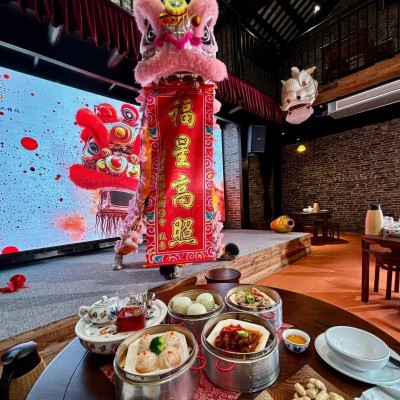
Quanzhou's position on the Maritime Silk Road gave it centuries of culinary exchange, and the food here is unlike anywhere else in China — a fusion of Chinese, Arab, Indian and Southeast Asian influences:
- Mianxianhu (面线糊) — a silky wheat-noodle soup, usually eaten for breakfast with fried oysters, intestines and a dash of pepper
- Rouyan (肉燕) — "meat swallow" dumplings with paper-thin wrappers made from pork and flour
- Oyster omelette — the Fujian take on this classic, heavier on fresh oysters than the Xiamen version
- Anhai tuchao (土笋冻) — a savory jelly made from a sea worm, served cold with garlic and soy — an acquired taste but a local icon
Planning Your Visit
- How long — 2 days is ideal: one for the old city temples and food streets, one for Qingyuan Mountain and Luoyang Bridge
- Getting there — high-speed rail from Xiamen takes about 30–40 minutes; Quanzhou East Station is the main hub
- Combine with — Quanzhou pairs perfectly with Xiamen and the tulou: Xiamen for the island, Quanzhou for history, the tulou for the mountains
About the Author — Sam · Senior Travel Planner
Sam designs custom itineraries for solo travelers, families and food lovers, delivering a complete plan within 48 hours.
Recommended China Travel Tours
Ready to Plan Your China Trip?
Email Sam for customized tour planning.
Email Luppy for group bookings (10+ travelers).
Visit ChinaTravelPlus.com for the full collection.
More Than Travel. It's the Plus That Matters.
▶View All Fujian Attractions (8 Provinces Overview)