One in Four Guests: How Huzhou Won Foreign Travellers
One Guest in Four Comes From Abroad
One guest in four at the Xisai Mountain resort area this National Day was not Chinese. The lodge team puts the foreign share at 25 to 26 percent of total visitor traffic, on a hillside outside Huzhou, a prefecture-level city in northern Zhejiang that few overseas travellers could place on a map.
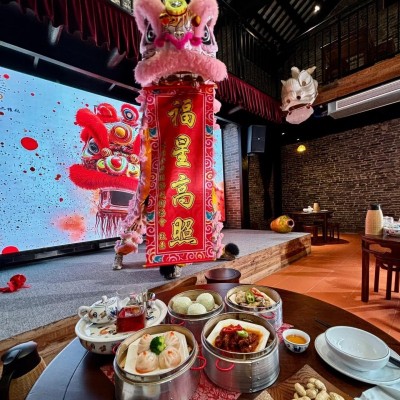
Two families from Yekaterinburg spent the break there. Anna and Natalia fed giraffes from a lodge balcony, ate local pastries, and sat through a tea session where the master explained each step through a phone translation app - warming the pot, waking the leaves with a short pour, then steeping in rounds while the same leaves turned from green brightness to something honeyed.
They flew into Shanghai and went to the hills first, the city after. That order is the story. According to the lodge, a Russian travel blogger stayed, posted about the giraffes and the tea table, and his followers followed; foreign bookings have climbed all year.
The Numbers Behind a Quarter Foreign Share
The share is not an accident of one holiday. From January to August 2026 Huzhou received 106,200 overnight international visitors, 34.74 percent more than the same stretch a year earlier. Domestic demand rose too: over Mid-Autumn the city logged 2.04 million trips across attractions, hotels, rural sites and cultural venues, 32.4 percent above the 2024 base.
The national backdrop explains how a small city manages this. In the first half of 2026 China recorded 22.9 million foreign entries, up by more than a fifth, and 17.8 million of those - 77.7 percent - came in visa-free, a category growing at 30.6 percent. A CGTN survey found 92.8 percent of respondents saying social media posts about China travel make them more likely to come.
What makes the figure unusual is who is arriving: families from Russia's regions rather than Moscow or St Petersburg, travelling on the visa-free arrangement that runs to the end of 2027, and booking around short videos instead of brochures. Our review of 2026 source markets shows the same shift at national scale.
Four Frictions, Closed One at a Time
Cities turn a viral moment into a market through dull work. Huzhou ran its 2026 push on three fronts. For traffic, it built immersive poetry-and-painting programmes for international students, treating them as amplifiers once they went home, and pushed on as a provincial pilot zone for inbound tourism.
For spending, it issued coupons for foreign visitors and for guests from Hong Kong, Macao and Taiwan, valid across the city's tourism businesses. For service, it went after the four points where overseas travellers usually stumble - lodging registration, luggage transfer, foreign-currency payment and departure tax refunds - and closed them one at a time, while the resort added multilingual signage and event programmes.
None of that is glamorous, which is why it works. Shanghai and Beijing solved these problems with volume; a city of Huzhou's size solves them with a checklist. The payoff is a complete loop: land in Shanghai, train to a hill town, check in while a passport is processed without argument, pay by foreign card or phone wallet, and claim the tax refund on the way out.
The County Matrix Behind the Headline
Xisai Mountain is the headline. The depth sits in the counties around it. Moganshan, an hour from Hangzhou, is the country's original mountain resort village, with bamboo over more than 90 percent of the slopes, century-old stone villas, and a homestay cluster people call the source code of Chinese rural tourism.
Anji pairs white-tea plantations with cliffside bamboo lodges, and one family resort there held 90 percent average occupancy across the holiday. Citywide, 70 monitored quality homestays averaged 56.89 percent, a dozen provincial-rated houses sold out two nights running, and a theme-park hotel cluster moved 21,800 room-nights.
Nanxun, the least commercialised of the Jiangnan canal towns, drew 320,000 visitors over Mid-Autumn with costumed parades and evening banquets, and has begun marketing abroad, with an online travel agency roadshow in South Korea this autumn. Village workshops in indigo dyeing and weaving more than doubled revenue on experience sales. Guests who stay the night spend on activities, not just tickets, and staying put is the point of the place.
Getting There, and How to Spend the Days
Reaching the cluster is no longer awkward. A city terminal branded with Nanjing airport's name opened in Huzhou in early September, so bags can be dropped and boarding passes printed before the drive up. High-speed rail puts Hangzhou about half an hour away and Shanghai under ninety minutes, with taxis for the last stretch.
A five-day shape works well: two days in Shanghai for arrival, a train to Huzhou for two days of lodge life and tea sessions, a night in Moganshan or Anji, then Nanxun's canals before the flight home.
Autumn is the window. Bamboo turns, the white-tea season winds down, and the early October and late January peaks fill the good houses, so the November shoulder is calmer. Book lodges with English-speaking hosts, because signage has improved faster than county-level staffing. For the delta half of the trip, five days of Shanghai and water towns covers the transport logic, and a semi-self-guided plan sets the hill days against your flights.
A Border Town With the Same Logic
Three thousand kilometres north, Manzhouli tells the same story with a different accent. China's largest land port on the Russian line passed one million entries and exits in 2026 by 1 October, a record, with more than 3,500 travellers processed on that single day. The arrival card can be filed online, and short cross-border trips for hotpot and street life have become routine.
Both places run on one formula: a policy opening, an experience that feels local rather than staged, and social media doing the distribution. Neither needed a new airport or a glass tower. What they needed was the unglamorous service loop that Huzhou has written down, and that is why the list of Chinese places worth a detour has grown quietly longer.
Frequently Asked Questions
Is Xisai Mountain worth two nights, or can it be a day trip?
Two nights. The lodge, the tea sessions and the bamboo walk fill a day, and the slow morning is the point. A day trip from Shanghai puts you on the road for five hours.
Do Russian travellers need a visa for a Huzhou add-on?
Not under the current arrangement, which runs to the end of 2027 for Russian citizens. Other passports can use the 240-hour transit rule if the routing and exit point line up.
How do I get from Shanghai to Huzhou without hiring a car?
High-speed rail, under ninety minutes, then a taxi to the lodges. Flying into Nanjing, the city terminal in Huzhou lets you check bags and collect a boarding pass first.
Where the Hills Fit Into a Trip
- Zhejiang: Taste of Jiangnan, 5-Day Local Life and Food Tour - county kitchens, seasonal produce and canal towns, the same countryside read through its table.
- Luxury Yangtze Delta: Shanghai, Suzhou and Hangzhou in 5 Days - the delta loop by rail, with a Huzhou add-on at either end.
About the Author — Sam · Custom Travel Planner
Sam plans semi-self-guided China trips and spends a lot of time in places that are not on the standard route, working out which counties deserve two nights and which deserve a train stop.
Adding a County or Two to the Route
Tell us your dates and what you want out of the trip, and we will build the days around the hills rather than the airports - how semi-self-guided planning works →
Email Sam for private itineraries, or Luppy for groups of ten and above.
More Than Travel. It's the Plus That Matters.