144-Hour Transit: 6 Days in Guangzhou Without a Visa
1. The Scenario That Makes This Policy Brilliant
Picture this.
You are flying from London to Bangkok, or from Sydney to Tokyo, or from New York to Singapore. Your airline offers a stopover in Guangzhou — and the layover is long enough that you actually have time to leave the airport, explore a city, eat incredible food, and sleep in a real hotel.
But here is the catch: you did not apply for a China visa before leaving home. Your passport is in your bag, your onward ticket is booked, and you are standing at the check-in counter wondering if this is even possible.
The answer is yes — and it is surprisingly simple.
China's 144-hour visa-free transit policy lets eligible international travelers stay in Guangdong Province for up to six days without applying for a visa in advance. No forms to fill before departure. No visa fee. No trip to the embassy. You clear immigration at Guangzhou Baiyun Airport with your passport and onward ticket, and you are free to explore one of the most dynamic regions in China.
I have guided dozens of travelers through this exact process — from the moment they land at Baiyun Airport T1 or T2, to the day they fly out having eaten their weight in dim sum, walked through 2,000-year-old temples, and stood on the observation deck of one of the tallest towers in the world.
This guide walks you through it all: the eligibility rules (brief — our companion guide covers the full list), the real on-the-ground procedure at Baiyun Airport, and a complete 6-day itinerary that takes you across Guangzhou, Shenzhen, Foshan, and Dongguan. You will finish this article knowing exactly what to do — and feeling confident that you can pull it off.
📖 For a complete reference on the national 144/240-hour transit policy, eligible country list, and all ports across China, read our comprehensive guide: 144-Hour Transit Visa China 2026 — Complete Guide for International Travelers.
2. What Exactly Is the 144-Hour Transit Policy for Guangdong?
Let me clarify what this policy is — and what it is not — specifically for travelers entering through Guangzhou.
The 144-hour visa-free transit policy allows citizens of 55 eligible countries to enter China without a visa and stay for up to six days (144 hours), provided they are in transit to a third country or region. This is not a visa waiver for direct round trips — you must follow the A → B → C route.
The A → B → C Rule in Practice
- Country A: The country where your journey originates
- Country B: China (you enter through Guangzhou Baiyun Airport)
- Country C: A different country or region from Country A
For example:
- ✅ Valid: London → Guangzhou → Bangkok
- ✅ Valid: Singapore → Guangzhou → Frankfurt
- ✅ Valid: Sydney → Guangzhou → Hong Kong (SAR)
- ❌ Invalid: London → Guangzhou → London (returning to origin)
Hong Kong, Macau, and Taiwan count as separate "third regions," so routing through them satisfies the requirement.
The Guangdong Advantage
Unlike some transit zones that restrict you to a single city, the 144-hour transit through Guangzhou allows you to travel freely across the entire Guangdong Province. This is a game-changer. You are not confined to Guangzhou city limits. You can:
- Take a 20-minute high-speed train to Foshan for Kung Fu temples and ceramic markets
- Ride the express rail to Shenzhen in under 30 minutes for a tech and innovation fix
- Visit Dongguan for manufacturing heritage and forest parks
- Explore Shunde, a UNESCO City of Gastronomy
This is what makes the 144-hour transit through Guangzhou one of the best-value stopover options in China. Six cities worth of experiences, zero visa paperwork.
144 vs. 240 — Which One Applies?
As of December 2024, China expanded the transit policy from 144 hours to 240 hours (10 days) across all participating regions. However, the 144-hour option is still widely available and remains the most practical choice for travelers who:
- Have a tight stopover window of 5–6 days
- Prefer the simpler, more established application process
- Are flying with airlines that still reference the 144-hour policy in their systems
Both timeframes follow the same rules. If your itinerary allows for the full 144 hours, you have a comfortable 6-day window — and that is exactly what this itinerary is built for.
3. Am I Eligible? A Quick Self-Check
Here is the eligibility checklist. You need to pass all four of these conditions:
1. Your passport is from an eligible country.
The 55 eligible countries include the UK, all EU/Schengen states, the United States, Canada, Australia, New Zealand, Japan, South Korea, Singapore, Brazil, Argentina, Russia, and more. For the complete list, refer to our full guide.
2. Your passport has at least 3 months of remaining validity.
This is strictly enforced. If your passport expires in less than three months, you will be denied boarding.
3. You hold a confirmed onward ticket to a third country.
This must be a booked ticket with a specific date and seat assignment. Open-dated tickets or waitlisted bookings are not accepted. Print your e-ticket or have it ready on your phone.
4. You have no record of visa violations in China within the past 5 years.
Previous visa denials, illegal overstays, or unauthorized employment will disqualify you.
Who Should Not Use This Policy
- Travelers who need to work for a Chinese company or study at a Chinese institution
- Journalists or anyone engaging in news reporting
- Travelers planning a round trip that returns to their origin country
- Passengers arriving without a confirmed onward ticket
If any of these apply to you, you need a proper visa. Contact your nearest Chinese embassy or consulate before traveling.
4. Step by Step: Arriving at Guangzhou Baiyun Airport (CAN)
This is where the rubber meets the road. Having been through this process multiple times with travelers, I can tell you exactly what to expect at Baiyun Airport.
Before You Fly
At check-in, tell the airline agent that you are using the "144-Hour Visa-Free Transit" policy. Some airline systems may display "240-Hour Transit" — both terms are accepted. The agent will verify your onward ticket and eligibility before issuing your boarding pass. Airlines are responsible for checking transit eligibility, and they take this seriously — so have your documents ready.
Pack a printout of your onward ticket and hotel bookings. While digital copies are generally accepted, having paper backups saves time if your phone battery dies or the airport Wi-Fi is slow.
Upon Arrival at Baiyun Airport
Guangzhou Baiyun International Airport (CAN) operates two main terminals for international arrivals: Terminal 1 (T1) and the newer Terminal 2 (T2). As of 2026, Terminal 3 (T3) is also operational for select international routes.
Step 1: Do NOT join the main immigration queue.
Look for signage that reads "144/240-Hour Visa-Free Transit" or "Transit Visa-Free" in English and Chinese. These are dedicated lanes specifically for transit passengers. The signs are clearly marked in blue and white — follow them.
Step 2: Fill out the correct arrival card.
Ignore the standard yellow arrival card handed to other passengers. Ask for the blue and white "Arrival Card for Temporary Entry Foreigners." Fill it out accurately with your flight details, hotel address in Guangdong, and onward ticket information.
Step 3: Proceed to the transit counter.
Present the following to the immigration officer:
- Your passport (with at least 3 months validity)
- Your completed blue/white arrival card
- Your confirmed onward ticket (printed or on your phone)
- Your hotel booking confirmation (recommended)
The officer will verify your A → B → C route, check your eligibility, and ask a few questions — typically about your itinerary, where you plan to stay, and when you will depart. Answer clearly and honestly.
Step 4: Receive your entry stamp.
If approved, the officer will place a temporary entry permit stamp in your passport showing your authorized stay period. The 144-hour countdown begins at 00:00 (midnight) on the day after your arrival — not from the moment you land.
🕐 Example: If you arrive at Guangzhou Baiyun Airport at 2:00 PM on a Monday, your 144-hour period starts at midnight on Tuesday and ends at midnight on Sunday. That gives you until Sunday evening to depart — effectively more than 144 hours of usable time.
Step 5: Collect your luggage and exit.
After clearing immigration, proceed to baggage claim, then customs, and you are free to enter Guangdong.
What to Expect at Immigration
The immigration officers at Baiyun Airport process a high volume of transit passengers daily — over 22,000 transit travelers used the policy in its first year alone. They are professional and efficient. As long as your documents are in order and your answers are consistent, you should clear immigration in 15–20 minutes.
Common questions the officer may ask:
- "Where are you flying to after China?"
- "How long are you staying in Guangzhou?"
- "What hotels have you booked?"
- "What is the purpose of your visit?"
Keep your answers short and aligned with your documents.
5. The 6-Day Guangdong Itinerary — Maximum Experience, Minimum Stress
This itinerary is designed for a traveler arriving at Guangzhou Baiyun Airport and departing from the same airport six days later. It covers four cities in Guangdong — Guangzhou, Foshan, Shenzhen, and Dongguan — using the province's excellent high-speed rail network.
The pacing is intentional: you are never in transit for more than 45 minutes between cities, and each day has a clear theme so you can pack light and move efficiently.
Day 1: Arrival in Guangzhou & Pearl River Evening
Theme: Settle in, get your bearings, and let the Canton Tower skyline do the talking.
Morning to Afternoon: Your flight lands at Baiyun Airport. After clearing immigration (see Section 4), take the Guangzhou Metro Line 3 from the airport to your hotel in the city center. The ride to Zhujiang New Town (珠江新城) takes about 45 minutes. I recommend staying in the Tianhe District — it is central, well-connected, and has a wide range of accommodation from international chains to boutique Chinese hotels.
Check into your hotel. Rest. Shower. Adjust.
Late Afternoon: Take a walk through Huacheng Square (花城广场), Guangzhou's answer to a civic green space, flanked by the city's most iconic modern architecture. The Canton Tower (广州塔) rises 600 meters to your south — go ahead and take the first photo. You will take many more.
Evening: Book a Pearl River Night Cruise (珠江夜游) . These 60–90 minute cruises depart from multiple piers along the river and offer a spectacular view of the illuminated skyline. The Canton Tower changes colors throughout the night — a simple pleasure that never gets old.
Dinner: Walk to Beijing Road (北京路) pedestrian street, one of Guangzhou's oldest commercial districts with layers of history beneath your feet — quite literally, as the street has a glass floor revealing ancient road layers from the Song Dynasty. Try your first proper Cantonese dinner here: white-cut chicken (白切鸡), steamed fish, and stir-fried water spinach.
Practical Note: Download Alipay or WeChat Pay before you arrive in China. While international credit cards are accepted at major hotels and some restaurants, local eateries and metro ticket machines are much smoother with mobile payments. You can link your international Visa or Mastercard to Alipay.
Day 2: Old Guangzhou — Temples, Tea, and Dim Sum
Theme: The cultural and culinary heart of the city.
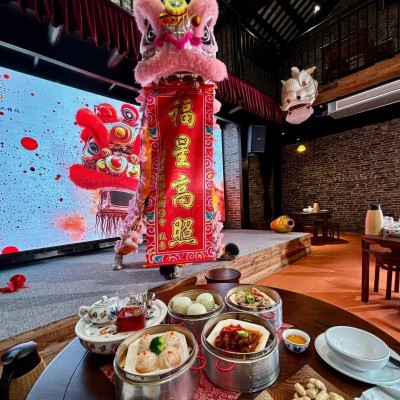
Morning (8:00 AM – 10:30 AM): Start early with dim sum (点心) at a traditional tea house. Skip the hotel buffet — go to Lian Xiang Lou (莲香楼) on Dishifu Road or Tao Tao Ju (陶陶居) , both century-old establishments. Order shrimp dumplings (虾饺), siu mai (烧卖), char siu bao (叉烧包), and egg tarts (蛋挞). Drink tieguanyin (铁观音) tea. Take your time — dim sum is meant to be a slow, social meal.
Late Morning (11:00 AM – 1:00 PM): Walk off the calories at Chen Clan Ancestral Hall (陈家祠) , one of the finest examples of Lingnan architecture in Guangdong. Built in 1894, this complex is a masterclass in wood carving, stone carving, brick carving, ceramic, and ironwork. It is a working museum now — plan for about 90 minutes inside.
Lunch: Head to Shangxiajiu Pedestrian Street (上下九步行街) in Liwan District. This is old Guangzhou at its most vibrant — narrow alleys, neon signs, street food, and traditional medicine shops. Grab Wonton Noodles (云吞面) from a street-side stall.
Afternoon (2:00 PM – 5:00 PM): Take a taxi or metro to Shamian Island (沙面岛) , a former British and French concession that feels like a colonial-era European town dropped into subtropical Guangzhou. Tree-lined avenues, 19th-century consulate buildings, and quiet cafes make this the perfect place for an afternoon walk. Visit the Guangdong Museum of Art if you want a dose of contemporary Chinese art.
Evening: Attend a Cantonese Opera performance at the Guangdong Cantonese Opera Theater or, for something more accessible, a light and sound show at the Canton Tower. End the night with a bowl of sweet double-skin milk (双皮奶) at a dessert shop in the old town.
Day 3: Foshan & Shunde — Kung Fu, Ceramics, and UNESCO Gastronomy
Theme: A day trip into the soul of Cantonese culture.
Getting There (8:00 AM): Take the Guangzhou–Foshan Metro Line (Guangfo Line) from Xilang Station in Guangzhou to Zumiao Station (祖庙站) in Foshan. Travel time: approximately 30 minutes. Cost: around ¥10.
Morning (9:00 AM – 12:00 PM): Visit Ancestral Temple (祖庙) , a complex built in the 11th century that houses Confucian, Taoist, and Buddhist halls. More importantly, this is where Wong Fei-hung (黄飞鸿) , the legendary martial artist and folk hero, trained and taught. Watch a live Lion Dance (舞狮) performance — Foshan is the birthplace of the Southern Lion Dance tradition, and the athleticism is breathtaking.
Late Morning: Walk to the adjacent Wong Fei-hung Memorial Hall and the Liang Garden (梁园) , one of the four great classical gardens of Guangdong. Traditional Lingnan gardens are more intimate than their Suzhou counterparts — smaller, more personal, with a focus on water and rock arrangements.
Lunch: Take a 15-minute taxi to Shunde District (顺德区) — a 15-minute drive from central Foshan. Shunde is one of only six UNESCO Cities of Gastronomy in China, and many Cantonese chefs consider it the true culinary heart of the province. Eat at Tai Hing (太兴) or a local sijiacai (private kitchen) — order Shunde-style steamed fish (顺德蒸鱼) , deep milk (炸牛奶) , and conpoy and chicken porridge (江瑶柱鸡粥) .
Afternoon (2:00 PM – 5:00 PM): Visit Shiwan (石湾) , the ceramics district of Foshan. The Shiwan Ceramics Museum showcases centuries of pottery tradition. If you have room in your luggage, the factory outlets sell high-quality ceramic figurines at factory-direct prices.
Return to Guangzhou: Metro back to Guangzhou by 6:00 PM. Have a casual dinner at a dai pai dong (大排档) — an open-air Cantonese food stall. Try beef chow fun (干炒牛河) and salt-and-pepper squid.
Day 4: Shenzhen — The City of Tomorrow
Theme: China's Silicon Valley — tech, contemporary art, and a skyline that grew in a generation.
Getting There (8:00 AM): Take the Guangzhou–Shenzhen High-Speed Railway from Guangzhou South Station (广州南站) to Shenzhen North Station (深圳北站) . Travel time: approximately 30 minutes. Trains run every 10–15 minutes. Book your ticket on 12306 (China Railway's official app, available in English) or buy at the station with your passport.
Morning (9:00 AM – 12:00 PM): Visit OCT Loft (华侨城创意文化园) , a creative arts district built from former factory buildings. Galleries, design studios, independent bookstores, and cafes fill the industrial spaces. This is Shenzhen's answer to Beijing's 798 Art District — smaller, but with a distinctly South China energy.
Late Morning (11:00 AM – 1:00 PM): Walk through Shenzhen's Civic Center area and see the city's modern architecture up close. The Shenzhen Museum of Contemporary Art and Urban Planning (MoCAUP) is a must-see — the building itself is a work of art, and the exhibitions track Shenzhen's transformation from fishing village to 20-million-person megacity in 40 years.
Lunch: Eat in Shekou (蛇口) , Shenzhen's former fishing village turned international district. Find a seafood restaurant along the waterfront — the Sea World (海上世界) area has plenty of options with English menus.
Afternoon (2:00 PM – 5:00 PM): Visit Dameisha Beach (大梅沙) if the weather is warm, or explore Lianhua Mountain Park (莲花山公园) for a panoramic view of the city skyline. For tech enthusiasts, a visit to Huawei's or Tencent's visitor centers (advance booking required) offers a fascinating look at China's innovation ecosystem.
Evening: Return to Guangzhou by high-speed rail (last trains depart around 10:00 PM). Dinner in Guangzhou's Nansha district or a casual meal near your hotel.
Day 5: Dongguan & Return to Guangzhou
Theme: Manufacturing heritage, forest parks, and a relaxed final full day.
Getting There (8:30 AM): Take the high-speed rail from Guangzhou East Station (广州东站) to Dongguan Station (东莞站) . Travel time: approximately 30 minutes.
Morning (9:00 AM – 12:00 PM): Visit Keyuan Garden (可园) , one of the four great classical gardens of Guangdong. Smaller and more intimate than Foshan's Liang Garden, Keyuan is a masterpiece of Qing Dynasty garden design, with pavilions connected by covered walkways around a central pond.
Late Morning (11:00 AM – 1:00 PM): Explore Opium War Museum (鸦片战争博物馆) in Humen Town, which documents a pivotal chapter in modern Chinese history. The museum complex includes the former naval battle sites and offers a sobering but essential historical perspective.
Lunch: Dongguan's food scene is less known than Shunde's but equally rewarding. Try Dongguan-style fried rice noodles (东莞炒米粉) and braised goose (烧鹅) at a local restaurant in the city center.
Afternoon (2:00 PM – 5:00 PM): Visit Yinping Mountain (银瓶山) or Songshan Lake (松山湖) for a nature break. Songshan Lake has a 30-kilometer cycling path around the water — rent a bike and enjoy the green space before returning to Guangzhou.
Return to Guangzhou (5:00 PM – 6:00 PM): Take the high-speed rail back to Guangzhou East Station.
Final Evening in Guangzhou: This is your last full night. Make it count:
- Option A (Food-focused): A farewell dinner at Bing Sheng (炳胜) , one of Guangzhou's most celebrated Cantonese restaurants. Order the signature char siu and salt-baked chicken.
- Option B (Scenic): Go up the Canton Tower observation deck for a 360-degree nighttime view of the city.
- Option C (Cultural): Watch an acrobatics or martial arts show at the Guangzhou Grand Theater.
Day 6: Morning Tea & Departure
Theme: A gentle morning, one last meal, and a smooth exit.
Morning (8:00 AM – 10:30 AM): One last dim sum breakfast. Go to Guangzhou Restaurant (广州酒家) — another century-old institution — and order everything you loved on Day 2, plus a few dishes you missed.
Late Morning (10:30 AM – 12:00 PM): Last-minute souvenir shopping at the Yide Road (一德路) wholesale market or the Beijing Road shopping area. Dried seafood, Chinese tea, ceramic tea sets, and Cantonese-style pastries all make excellent gifts.
Afternoon (12:00 PM – 2:00 PM): Check out of your hotel. Take the metro to Guangzhou Baiyun Airport. Allow 45 minutes for the metro ride from the city center, plus at least 2 hours for international check-in and security.
The Exit Procedure: At the airport, proceed to international departures as normal. Your transit entry permit will be checked at immigration — the officer will confirm that you are departing within the authorized 144-hour window. There is no exit fee or additional form. Show your passport and boarding pass, clear security, and you are on your way.
Alternative Itinerary Options
Family with Kids: Replace Shenzhen (Day 4) with Chimelong Safari Park (长隆野生动物世界) in Guangzhou's Panyu District — one of the largest and most impressive safari parks in Asia. Replace Foshan (Day 3) with Zhuhai's Chimelong Ocean Kingdom, accessible by high-speed rail from Guangzhou South Station.
Business Traveler: Combine the Shenzhen tech tour (Day 4) with a visit to Guangzhou Canton Fair Complex if your visit coincides with the Canton Fair (April/October). The Pazhou complex is the largest trade fair venue in China, and same-day visitor registration is available for international buyers.
Culture Enthusiast: Add a half-day at the Guangdong Museum (广东省博物馆) in Guangzhou's Zhujiang New Town. The museum's permanent collection on Lingnan culture, Chaozhou wood carving, and Cantonese opera history is world-class. It is free to enter but requires advance booking.
6. Frequently Asked Questions — Guangdong-Specific Answers
Q1: Can I enter through Guangzhou Baiyun Airport but depart from Shenzhen Bao'an Airport?
Yes. Because the entire Guangdong Province is the permitted travel area, you can enter at one port and exit from another within the province. For example, you could arrive at Guangzhou Baiyun Airport and depart from Shenzhen Bao'an International Airport (SZX). Just make sure your onward ticket to a third country is confirmed.
Q2: What if I want to visit Hong Kong during my 144-hour transit?
This is a nuanced question. Hong Kong is a Special Administrative Region and counts as a "third region" for the A → B → C rule. However, if you leave mainland China to enter Hong Kong, you exit the transit policy. To re-enter Guangdong, you would need to start a new transit period or use another visa arrangement. My recommendation: keep your 144-hour stay entirely within Guangdong and visit Hong Kong on a separate trip.
Q3: Do I need a separate visa to visit Shenzhen or Foshan?
No. The 144-hour transit policy for Guangzhou covers the entire Guangdong Province. You can freely travel between Guangzhou, Shenzhen, Foshan, Dongguan, Zhuhai, Zhongshan, and all other cities in Guangdong without additional permits.
Q4: How do I buy high-speed rail tickets with my passport?
You can buy tickets at any railway station ticket counter using your passport. Alternatively, download the 12306 app (official China Railway app) which now supports English and international passport registration. You can also book through Trip.com (formerly Ctrip), which offers an English interface and accepts international credit cards, with a small booking fee.
Q5: Is the 144-hour transit policy the same as the 240-hour policy?
They follow the same rules. The 240-hour policy (effective December 2024) extended the maximum stay from 6 days to 10 days for all ports. The 144-hour option is still valid and commonly used by travelers with shorter stopover windows. If you ask for the "144-hour transit" at Baiyun Airport, the immigration officer will process you under the same framework and grant the appropriate stay duration based on your itinerary.
Q6: What happens if I overstay?
Overstaying, even by a few hours, is treated seriously. You may face a fine of ¥500–¥2,000 per day of overstay, possible detention, and a record that could affect future visa applications. Be conservative with your departure planning — arrive at the airport at least 3 hours before your flight.
Q7: Can I extend the 144-hour transit while in Guangdong?
No. The 144-hour transit permit cannot be extended under normal circumstances. If you need more time, you must apply for a proper visa at a Chinese embassy before your trip.
Q8: Is travel insurance required?
It is not mandatory for the transit policy, but I strongly recommend it. Medical costs in China for uninsured travelers can be high, and travel insurance also covers trip interruption, lost luggage, and flight delays. Make sure your policy covers China.
Q9: What is the best time of year to visit Guangzhou?
The best months are October to December and March to May, when temperatures are mild (18°C–28°C) and humidity is lower. July through September is hot and humid (30°C–35°C, with frequent rain), and January–February can be cool and damp (10°C–18°C). That said, Guangzhou's food and culture are excellent year-round — just pack accordingly.
Q10: I am traveling as a couple or small group. Does anything change?
No. Each traveler in your group must individually meet the eligibility criteria. You can go through immigration together, and the same 144-hour rules apply to everyone. For group tour information, see our post on Hunan Port Visa Reform: 2-Person Groups and Dual Airport Access, which covers the latest developments in group transit flexibility.
7. Ready to Plan Your 6-Day Guangdong Stopover?
The 144-hour visa-free transit policy transforms Guangzhou from a simple layover city into a genuine travel destination. In six days, you can experience the full spectrum of Guangdong — from ancient Lingnan temples and UNESCO-recognized cuisine to futuristic tech hubs and world-class urban design. And you do it all without a visa appointment, without paperwork, and without the stress that usually comes with last-minute travel planning.
Here is what I recommend as your next step:
- ✅ Check your passport validity — at least 3 months from your intended entry date
- ✅ Confirm your route — your itinerary must follow A → B → C (e.g., London → Guangzhou → Bangkok)
- ✅ Book your flights with a confirmed onward ticket showing a specific seat and date
- ✅ Reserve hotels in Guangzhou (Tianhe District), with flexibility for the Shenzhen overnight if you choose the extended itinerary
- ✅ Set up Alipay and link your international credit card before departure
- ✅ Save this guide and our companion 144-Hour Transit Visa China 2026 Complete Guide for reference
- ✅ Use our free GoChinaKit tools — check your eligibility, explore transit routes, and access handy travel resources at our GoChinaKit Free China Travel Query Tools page
Recommended Product — Guangdong 6-Day Transit Explorer Package
Designed specifically for 144-hour transit travelers. Includes airport pickup, 5 nights accommodation (Guangzhou + Shenzhen), private guide for select days, and all intercity transport. From \$899/person.
For custom tour inquiries: 📧 Sam@ChinaTravelPlus.com
For group bookings (4+): 📧 Luppy@ChinaTravelPlus.com
Have questions about your specific travel route? Drop us a message through our Help Center. At ChinaTravelPlus, we help international travelers navigate China's visa-free policies every day — and we would love to help you plan your 144-hour Guangdong adventure.
More Than Travel. It's the Plus That Matters. — ChinaTravelPlus
Recommended Tours
▶ China Speed: Greater Bay Area Travel Discovery Tour – 5D4N
▶ Guangdong Cantonese Food & Intangible Heritage Tour – 6 Day
Plan Your China Adventure With Us
Private, flexible tours designed around your interests. Let our local experts craft your perfect China experience.
Custom Tours — Sam@ChinaTravelPlus.com
Group Bookings — Luppy@ChinaTravelPlus.com
Disclaimer: Prices, opening hours, and policies are subject to change. Always verify with the venue or your ChinaTravelPlus guide before visiting. This content is for informational purposes and does not constitute a formal tour quotation.