Chaoshan: The Chinese Food Destination the World Is Just Discovering in 2026
Chaoshan: The Chinese Food Destination the World Is Just Discovering in 2026
Key Takeaways
- Chaoshan's "extreme freshness" philosophy — demanding the finest ingredients and precise heat control — sets it apart from every other Chinese regional cuisine
- People's Daily and international media have featured Chaoshan as a sensory awakening: fresh flavours that awaken the palate, drums that awaken the soul
- ASEAN visa-free entry now includes Jieyang Chaoshan Airport, making the region directly accessible to travellers from 10 Southeast Asian countries
- The Yingge Dance, a warrior-dance tradition with thunderous drumming, is going viral on TikTok and becoming a cultural must-see alongside the food
- Chaoshan forms the third point of China's "Food Travel Triangle" alongside Chengdu and Changsha — but remains the most authentic and least commercialized
Content Outline
1. Why Chaoshan Is Different From Every Other Food City
2. The Extreme Freshness Philosophy: How Chaoshan Redefines Flavor
3. Five Dishes That Will Change How You Think About Chinese Food
4. Beyond the Table: Yingge Dance and the Soul of Chaoshan
5. How to Get There: Visa-Free Access and Practical Tips
6. Plan Your Chaoshan Culinary Adventure
Why Chaoshan Is Different From Every Other Food City
Every serious food traveller knows Chengdu for its numbing spice and Changsha for its bold street snacks. But there is a third vertex to China's culinary triangle, and it has remained largely hidden from international visitors — until now.
Chaoshan, a coastal region in eastern Guangdong Province centred on the cities of Shantou, Chaozhou, and Jieyang, has been perfecting its food culture for centuries without feeling the need to advertise it. There are no Michelin-guide campaigns, no international food festival branding, no influencer partnerships. There is simply the food — and the food speaks for itself.
In February 2026, People's Daily published a feature titled "South China's Chaoshan, fresh flavours awaken the senses, drums awaken the soul," bringing the region to the attention of an international audience for the first time. IOL, South Africa's largest independent online publisher, syndicated the article, extending its reach to English-speaking readers across Africa and beyond. The response was immediate: travel forums lit up with questions about how to visit this previously unknown food paradise.
What makes Chaoshan different is its refusal to compromise. While other food destinations have adapted their cuisines to suit tourist palates — milder spice levels, simplified techniques, Instagram-friendly presentations — Chaoshan serves its food exactly as it has been served for generations. The result is an authenticity that is increasingly rare in global food travel.
The Extreme Freshness Philosophy: How Chaoshan Redefines Flavor
At the heart of Chaoshan cuisine lies a principle so fundamental that it borders on obsession: freshness. Not the Western notion of "farm-to-table" freshness, but something far more exacting — a demand that ingredients be at their absolute peak from the moment they leave the water or the farm to the moment they reach the table.
People's Daily described it as a philosophy where "everything rests on strict demands for freshness and careful control of heat." This is not an exaggeration. In Chaoshan, beef for hotpot is slaughtered and sliced within hours — sometimes minutes — of processing. Fish for soup is selected from tanks in the restaurant and prepared immediately. Vegetables are purchased from morning markets where the produce was harvested that same dawn.
The concept of "fresh" in Chaoshan extends beyond ingredients to technique. Chaoshan chefs practice a form of culinary restraint that is the opposite of showmanship. The goal is not to transform ingredients through complex techniques but to reveal their essential character through precise, minimal intervention. A fish steamed with ginger and spring onion is not a simple dish — it is the most difficult dish, because there is nowhere to hide. The fish must be perfect, the timing must be exact, and the heat must be controlled to the second.
This philosophy produces flavors that international visitors often describe as revelatory. Not because the food is exotic or extreme, but because it is pure — a direct line from ingredient to palate, unmediated by heavy sauces, aggressive seasonings, or theatrical presentations.
Five Dishes That Will Change How You Think About Chinese Food
Chaoshan Beef Hotpot
This is not the hotpot you know. There is no bubbling cauldron of spicy oil, no dipping in numbing broth. Instead, a clear bone broth sits at the centre of the table, and plates of freshly sliced beef — each cut from a specific part of the animal, each with a specific name and optimal cooking time — are lowered into the simmering liquid for seconds, not minutes. The beef is so fresh that it practically melts. The dipping sauce is simple: Sha Cha sauce, a Chaoshan specialty made from dried shrimp, peanuts, and spices, ground into a savory paste that adds depth without overwhelming the meat's natural flavor.
Clay Pot Rice
Cooked over a charcoal fire in a traditional clay pot, this dish achieves something that electric rice cookers never can: a layer of crispy, golden rice at the bottom known as "fan jiao." The rice is topped with marinated meats — typically chicken, pork spare ribs, or waxed sausage — and the whole pot arrives at the table sizzling. The trick is in the timing: the rice must be perfectly cooked, the meats tender and flavorful, and the crispy bottom intact. Chaoshan cooks have been perfecting this timing for generations.
Oyster Omelette
A street food staple that showcases Chaoshan's coastal abundance. Fresh oysters are folded into a batter of sweet potato starch and eggs, pan-fried until the edges are crispy while the center remains soft and custardy. The starch gives the omelette a unique chewy texture that distinguishes it from any other egg dish you have tried. It is served with a splash of fish sauce and a sprinkle of cilantro.
Fish Soup with Rice Noodles
Breakfast in Chaoshan often means a bowl of fish soup so fresh it tastes like the ocean. Slices of white fish swim in a clear broth with rice noodles, tomatoes, and celery. The broth is made from fish bones simmered for hours, yet it tastes light and clean. This is Chaoshan freshness in its purest form.
Gongfu Tea Ceremony
No meal in Chaoshan is complete without Gongfu tea — a traditional brewing method that uses small clay pots and tiny cups to extract the fullest flavor from oolong tea leaves. The ceremony is performed at the table, often by the host, and the tea is poured in a continuous stream from a height, aerating the liquid and releasing its aroma. It is both a digestive ritual and a social one, extending the meal into a leisurely conversation that can last for hours.
Beyond the Table: Yingge Dance and the Soul of Chaoshan
Food is only half the story. Chaoshan is also home to the Yingge Dance, a traditional warrior-dance that combines martial arts, opera, and percussion into a performance of extraordinary energy and precision.
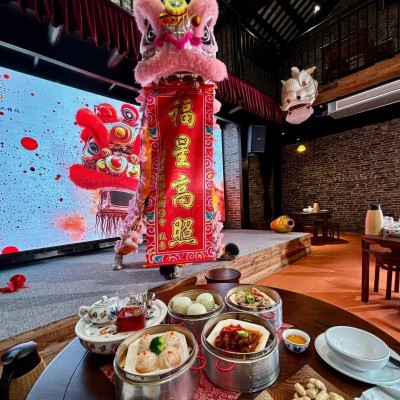
Dancers paint their faces in bold, dramatic patterns reminiscent of Peking Opera, carry short sticks or swords, and move in synchronized formations to the relentless beat of drums and gongs. The name "Yingge" translates roughly as "hero's song," and the dance tells stories of ancient warriors and legendary battles.
In 2026, the Yingge Dance has found a new audience on TikTok and Instagram, where videos of performances regularly accumulate millions of views. Foreign travellers who encounter the dance describe it as one of the most visceral cultural experiences in China — the thunderous drumming, the painted faces, the coordinated movements of dozens of dancers creating a wall of sound and motion that is impossible to forget.
The Yingge Dance is performed regularly in Chaoshan's towns and villages, particularly during festivals. For international visitors, it offers something increasingly rare in global tourism: a cultural tradition that is performed not for tourists but for the community — and tourists are simply welcome to witness it.
How to Get There: Visa-Free Access and Practical Tips
Visa-Free Entry
A major development in 2026: Jieyang Chaoshan Airport has been added to the list of entry ports for ASEAN group visa-free travel. Travellers from the 10 ASEAN countries can now enter Guangdong Province through Chaoshan directly, with a stay of up to 6 days without a visa. For travellers from the 48 countries covered by China's unilateral visa-free policy, entry through any Guangdong port — including Chaoshan — is straightforward.
Getting Around
Chaoshan is compact and well-connected. The three main cities — Shantou, Chaozhou, and Jieyang — are within 60 kilometres of each other, connected by frequent buses and a growing ride-hailing network. High-speed rail connects Shantou to Guangzhou in about 2.5 hours and to Shenzhen in about 2 hours.
Language
English is not widely spoken in Chaoshan. Download translation apps and learn a few key phrases in Mandarin. The local dialect is Chaoshan Min, which is mutually unintelligible with Mandarin, but all locals speak Mandarin as well.
Best Time to Visit
Autumn (October-November) offers the best weather and the freshest seafood. Spring (March-April) is pleasant and coincides with several traditional festivals featuring Yingge Dance performances. Summer is hot and humid but brings the best fruit season.
Plan Your Chaoshan Culinary Adventure
Ready to discover the Chinese food destination that the world is just beginning to talk about? Our travel consultants can design a custom Chaoshan itinerary that goes beyond restaurant hopping — experience beef hotpot at its source, witness Yingge Dance in its community setting, and brew Gongfu tea with local masters.
Email Sam for a Customized Chaoshan Itinerary