Why Shenzhen Became China's Third APEC Host City — What It Means for Business Travel
About the Author — Sam · Senior Travel Planner
Sam designs custom itineraries for solo travelers, families and food lovers, delivering a complete plan within 48 hours.
Ready to Plan Your China Trip?
Email Sam for customized tour planning.
Email Luppy for group bookings (10+ travelers).
Visit ChinaTravelPlus.com for the full collection.
More Than Travel. It's the Plus That Matters.
Historic Announcement: Shenzhen Named China's Third APEC Host City
On a momentous day for southern China, the Asia-Pacific Economic Cooperation (APEC) officially announced that Shenzhen will serve as China's third host city for the APEC Economic Leaders' Meeting, joining the ranks of Shanghai (2001) and Beijing (2014). This landmark decision, confirmed by China's Ministry of Foreign Affairs in coordination with the APEC Secretariat, places Shenzhen at the center of the Asia-Pacific stage and signals a new chapter in the city's already remarkable global ascent.
The announcement came after months of diplomatic preparation and infrastructure evaluation. APEC's 21 member economies, representing approximately 60% of global GDP and nearly half of world trade, voted overwhelmingly in favor of Shenzhen's bid. The decision reflects not only China's confidence in Shenzhen's world-class infrastructure but also the symbolic power of a city that has become the living embodiment of economic reform and opening-up.
Shenzhen's hosting bid was built on three pillars: its status as a global technology and innovation hub, its proven track record of hosting major international events, and its strategic location adjacent to Hong Kong and the Greater Bay Area. The APEC 2026 calendar will include dozens of ministerial meetings, senior officials' meetings, and working group sessions throughout the year, culminating in the Economic Leaders' Week in the fourth quarter.
"Choosing Shenzhen is choosing the future. This city did not exist as a modern metropolis 45 years ago, and today it is one of the most dynamic, innovative, and globally connected cities on earth. That is the spirit of APEC — growth through openness, innovation, and connectivity." — APEC Secretariat spokesperson, March 2025
For business travelers, this announcement carries immediate and long-term significance. The APEC host designation accelerates infrastructure projects, including the expansion of Shenzhen Bao'an International Airport's Terminal 3, the opening of new metro lines connecting the city's key business districts, and the construction of several new world-class convention venues. The Shenzhen World Exhibition and Convention Center in the Bao'an district, already one of the largest exhibition venues globally, is undergoing further expansion to accommodate the influx of international delegations.
The timing of the announcement is also strategic. As global supply chains continue to reconfigure post-pandemic, and as businesses across the Asia-Pacific region seek new hubs for trade, investment, and collaboration, Shenzhen's elevation to APEC host city sends a powerful signal: this is a city ready to lead the next era of Asia-Pacific economic integration.
From Fishing Village to Tech Titan: Shenzhen's Unprecedented Transformation
To understand the magnitude of Shenzhen's APEC hosting role, one must first appreciate the astonishing trajectory of its development. In 1979, Shenzhen was a cluster of fishing villages with a population of roughly 30,000 people. There were no paved roads, no modern buildings, no universities, and no industry to speak of. It was, by every measure, an unremarkable corner of Guangdong Province's Pearl River Delta.
Then came Deng Xiaoping's economic reforms. In 1980, Shenzhen was designated as China's first Special Economic Zone (SEZ), a bold experiment in market-oriented capitalism within a socialist framework. The SEZ status granted Shenzhen preferential tax policies, relaxed foreign investment regulations, and the freedom to experiment with economic governance models that would later be replicated across China.
The results were nothing short of miraculous. Within two decades, Shenzhen had transformed from a rural backwater into a manufacturing powerhouse, producing everything from textiles to electronics. By the 2000s, the city began its second transformation — from "the world's factory" to a globally recognized innovation hub. Companies like Huawei, Tencent, BYD, DJI, and ZTE made Shenzhen their headquarters, building global brands that would reshape entire industries.
Today, Shenzhen is home to more than 17.5 million people, making it one of the most densely populated cities in the world. Its GDP surpassed 3.4 trillion RMB (approximately $470 billion USD) in 2024, placing it among the top 25 largest metropolitan economies globally — larger than many countries, including Ireland, Israel, and Portugal. The city's per capita GDP now exceeds $30,000, comparable to that of Portugal or the Czech Republic.
| Metric | Shenzhen 1980 | Shenzhen 2025 | Growth Factor |
|---|---|---|---|
| Population | ~30,000 | 17.6 million | 586x |
| GDP (RMB) | ~270 million | 3.6 trillion | 13,333x |
| Number of HQ'd Fortune 500 Companies | 0 | 10 | — |
| Skyscrapers (100m+) | 0 | ~380 | — |
| Metro Lines | 0 | 16 | — |
| PCT Patent Filings (Annual) | 0 | ~23,000 | — |
What makes Shenzhen's story particularly relevant to APEC is its role as a living laboratory for economic integration. The city's success was built on its openness to foreign investment, its willingness to adopt international business practices, and its relentless focus on innovation. These are the very principles that APEC champions: free and open trade, economic cooperation, and sustainable development.
For business travelers visiting Shenzhen for the first time, the city's physical landscape tells the story of its transformation. The skyline of Nanshan District, where Tencent's headquarters rises alongside hundreds of tech startups, stands in stark contrast to the preserved Dapeng Fortress in the city's east, a reminder of the region's 600-year-old maritime history. The Shenzhen Museum of Contemporary Art and Urban Planning (MoCAUP) provides an excellent overview of this journey, with exhibitions that track the city's growth from village to megacity.
The city's innovation ecosystem is equally impressive. Shenzhen is home to over 300 incubators and accelerators, more than 10,000 national high-tech enterprises, and a venture capital ecosystem that manages over $200 billion in assets. The Shenzhen Stock Exchange, one of China's two main stock exchanges, has a combined market capitalization exceeding $5 trillion, making it one of the top 10 stock exchanges globally.
The Economic Case for Shenzhen as APEC Host
Shenzhen's selection as APEC host city is not merely ceremonial — it carries profound economic logic. The city sits at the epicenter of the Guangdong-Hong Kong-Macao Greater Bay Area (GBA), a megalopolis of more than 86 million people with a combined GDP of over $2 trillion. If the GBA were a country, it would rank among the top 15 economies in the world, ahead of Australia, South Korea, and Spain.
The economic rationale for Shenzhen's APEC hosting extends across several dimensions. First, the city is a global leader in precisely the sectors that APEC has identified as priorities for the coming decade: digital economy, green technology, advanced manufacturing, and biotechnology. Shenzhen's R&D spending as a percentage of GDP exceeds 5.5%, putting it ahead of Israel (4.9%) and South Korea (4.8%), the two highest-ranked countries globally. This concentration of innovation makes Shenzhen an ideal venue for APEC's working groups on digital trade, technology transfer, and sustainable development.
Second, Shenzhen's position as a logistics and trade hub is unmatched in southern China. The Port of Shenzhen, comprising the Yantian, Shekou, and Chiwan port areas, handled over 30 million TEUs (twenty-foot equivalent units) of container traffic in 2024, making it the third busiest port in the world after Shanghai and Singapore. The city's airport serves over 260 destinations across 50 countries, with direct flights to all APEC member economies. This connectivity ensures that APEC delegates, business travelers, and media representatives can access the city with ease.
| Economic Indicator | Shenzhen | Shanghai (2001 APEC Host) | Beijing (2014 APEC Host) |
|---|---|---|---|
| GDP (USD, 2024) | $470 billion | $680 billion | $620 billion |
| Population | 17.6 million | 24.9 million | 21.8 million |
| Fortune 500 HQs | 10 | 12 | 60 |
| PCT Patent Filings (2023) | 23,000+ | 8,500+ | 6,200+ |
| Container Port Volume (TEUs) | 30.3 million | 47.4 million | — (inland) |
| International Airport Routes | 260+ | 360+ | 290+ |
| R&D Spending (% of GDP) | 5.5% | 4.4% | 6.8% |
Third, the APEC hosting designation is expected to catalyze further economic integration between Shenzhen and Hong Kong, just across the border. The Shenzhen-Hong Kong collaboration has already produced remarkable results: the two cities collectively filed more international patents than any other metropolitan region in the world in 2023. The APEC meetings will provide a platform to showcase the "one country, two systems" model of economic cooperation, which has allowed Hong Kong's international financial expertise to complement Shenzhen's manufacturing and innovation capabilities.
For businesses across the Asia-Pacific region, Shenzhen's APEC hosting creates immediate opportunities. The city's government has announced a $15 billion infrastructure investment package tied to the APEC preparations, including new convention facilities, expanded metro and rail links, and upgraded telecommunications networks. These investments will benefit not only APEC attendees but also the broader business community that relies on Shenzhen as a hub for trade fairs, supply chain management, and corporate operations.
International trade experts have noted that Shenzhen's APEC hosting could accelerate negotiations on the Free Trade Area of the Asia-Pacific (FTAAP), a long-standing APEC goal. Shenzhen's demonstrated success as an open, export-oriented economy provides a powerful case study for the benefits of trade liberalization. The city's experience with digital trade, cross-border e-commerce, and technology transfer offers practical models that APEC member economies can adapt and implement.
What APEC Shenzhen Means for Business Travelers
For business travelers, the APEC host city designation transforms Shenzhen from a destination you might visit for a factory inspection or trade fair into a must-visit global business hub with world-class infrastructure, services, and connectivity. The implications are tangible and immediate across several key areas.
Visa and Entry Facilitation. One of the most significant benefits for business travelers is the streamlined visa processing that accompanies APEC host city status. China has announced that, in coordination with APEC, it will introduce expedited visa processing for business travelers from APEC member economies during the APEC year. Additionally, the APEC Business Travel Card (ABTC), which provides visa-free entry and fast-track immigration processing across participating APEC economies, remains one of the most valuable tools for frequent business travelers to the region. Shenzhen's airports and land border crossings with Hong Kong will be equipped with dedicated ABTC lanes, reducing entry times to under 15 minutes.
Hotel and Accommodation Developments. The APEC preparations have triggered a wave of hotel development in Shenzhen. Major international brands including Four Seasons, Mandarin Oriental, Marriott, and InterContinental have either opened new properties or announced expansions in the city. The new Shenzhen Qianhai Marriott and the recently opened Mandarin Oriental Shenzhen have set new standards for luxury business accommodation in the city. Business travelers can expect increased room availability, competitive pricing due to the expanded supply, and enhanced service standards as hotels prepare for the influx of international delegates.
Business Facilities and Co-working Spaces. Shenzhen's business infrastructure is already world-class, but the APEC hosting has accelerated improvements. The city's three major business districts — Futian (the financial center), Nanshan (the tech hub), and Qianhai (the emerging financial services zone) — have all seen significant upgrades to co-working spaces, international business centers, and meeting facilities. WeWork, Regus, and local operators like Kr Space and ATLAS have expanded their footprints, offering flexible workspace solutions for short-term business visitors.
Here are the key advantages for business travelers visiting Shenzhen during the APEC period and beyond:
- Enhanced Connectivity: New direct flight routes to Shenzhen from APEC member economies, including expanded service from Sydney, Vancouver, Singapore, Tokyo, Seoul, and San Francisco. The airport's new Terminal 3 expansion will increase passenger capacity to 80 million annually.
- Improved Ground Transport: The Shenzhen Metro system is adding 100 kilometers of new lines in preparation for APEC, including direct express service from the airport to the convention districts. The Guangzhou-Shenzhen-Hong Kong Express Rail Link offers 15-minute service to Hong Kong West Kowloon station.
- Digital Nomad Readiness: Shenzhen offers some of the fastest internet speeds in the world, with average fixed broadband speeds exceeding 250 Mbps. The city's 5G coverage is near-universal, and the government has invested in free public Wi-Fi across all major business districts and transport hubs.
- International Banking and Payment: All major international banks have branches in Shenzhen, and the city has fully embraced mobile payment systems that work with international credit cards and foreign bank accounts. The Shenzhen branch of the People's Bank of China has streamlined cross-border business account opening procedures.
- Bilingual Business Services: The Shenzhen government has launched a "Business English Ready" initiative, training thousands of hospitality and service staff in professional English. The Shenzhen International Business Service Center, located in Futian, provides free translation, legal referral, and business registration assistance for international visitors.
- Trade Fair and Exhibition Calendar: Shenzhen hosts over 100 major trade fairs and exhibitions annually, including the China International High-Tech Fair (CHTF), the Shenzhen International Electronics Fair, and the China (Shenzhen) International Cultural Industries Fair. APEC hosting has attracted additional international exhibitions to the city's calendar.
For corporate travel managers, Shenzhen's APEC status also means improved travel cost predictability. The expanded hotel supply and improved airline competition are expected to keep business travel costs competitive, particularly compared to Shanghai and Beijing. The Shenzhen Convention and Exhibition Bureau has introduced a "Business Traveler Welcome Package" that includes discounted public transport passes, free museum entry, and exclusive dining offers at partner restaurants across the city.
"Shenzhen has always been a city that gets things done. For the business traveler, that means efficient logistics, reliable infrastructure, and a can-do attitude that makes every meeting more productive. The APEC designation just amplifies what was already there." — David Chen, Regional Director, Asia-Pacific Business Travel Association
Shenzhen Beyond Business: Culture, Cuisine, and Coastal Life
While the primary purpose of an APEC-related business trip may be meetings and networking, Shenzhen offers a wealth of experiences that make it a compelling destination for business travelers looking to extend their stay or add a cultural dimension to their visit. The city's relatively young history — just over four decades as a modern metropolis — has created a unique cultural identity that is less about ancient traditions and more about innovation, creativity, and the fusion of influences from across China and beyond.
A Culinary Powerhouse. Shenzhen's food scene is a reflection of its population, which has been drawn from every province in China. While Cantonese cuisine is the local foundation, you can find authentic regional specialties from Sichuan, Hunan, Shaanxi, Xinjiang, Yunnan, and beyond. The city's status as a wealthy, cosmopolitan hub has also attracted world-class international dining. The Shekou district, with its large expatriate community, offers excellent Western, Japanese, Korean, and Southeast Asian restaurants. For a uniquely Shenzhen experience, visit the city's seafood markets, where you can select live seafood and have it cooked to your preference at on-site restaurants. The coastal location means oysters, crabs, prawns, and fish are exceptionally fresh year-round.
Green Spaces and Coastal Walks. Despite its reputation as a dense urban center, Shenzhen is remarkably green. The city has over 1,200 parks, earning it the nickname "the City of a Thousand Parks." The Shenzhen Bay Park, stretching 15 kilometers along the coastline, offers breathtaking views of the Shenzhen Bay Bridge and the Hong Kong skyline beyond. It is a favorite spot for evening walks and jogging among business travelers staying in the Nanshan and Futian districts. Lianhuashan Park (Lotus Hill Park) in the city center provides a panoramic view of the skyline and is a popular weekend destination for families and fitness enthusiasts. For those seeking more adventurous outdoor experiences, Wutong Mountain, the highest peak in the Shenzhen area, offers hiking trails that reward climbers with spectacular views of the city and the sea.
Art and Design District. Shenzhen's creative scene has exploded in recent years. The OCT-LOFT (Overseas Chinese Town Loft) district, a converted industrial area in Nanshan, is now the city's premier creative hub, featuring art galleries, design studios, independent bookstores, and avant-garde cafes. The Dafen Oil Painting Village in Longgang District is a unique phenomenon where thousands of artists produce original and replica paintings for the global art market. The annual Shenzhen Design Week has become a major event on the international design calendar, attracting architects, product designers, and digital artists from around the world. For business travelers with an interest in design and innovation, the UABB (Shenzhen-Hong Kong Bi-City Biennale of Urbanism and Architecture) is a must-see event that showcases cutting-edge thinking on urban development.
Weekend Escapes. Shenzhen's location is ideal for day trips and weekend excursions. The nearby Dapeng Peninsula, just an hour's drive from the city center, offers pristine beaches, hiking trails, and the historic Dapeng Fortress, a Ming Dynasty military settlement that predates Shenzhen itself by 400 years. The Overseas Chinese Town (OCT) East resort area combines theme parks, hotels, and golf courses in a beachfront setting. For a quick international getaway, the high-speed rail connection to Hong Kong West Kowloon takes just 15 minutes, making it possible to spend an evening exploring Hong Kong's Tsim Sha Tsui waterfront, dining at Michelin-starred restaurants on the island, or visiting the Hong Kong Palace Museum.
Nightlife and Entertainment. Shenzhen's nightlife is among the most vibrant in China. The Sea World area in Shekou, built around a retired French cruise ship, offers a concentration of bars, clubs, and restaurants with a distinctly international atmosphere. The Coco Park area in Futian is the center of the city's clubbing scene, with venues ranging from rooftop lounges to underground techno clubs. For a more refined evening, the city's first-class performing arts venues, including the Shenzhen Concert Hall and the Shenzhen Poly Theater, host orchestras, operas, and Broadway-style productions throughout the year.
Frequently Asked Questions About APEC Shenzhen and Business Travel
When exactly will the APEC Economic Leaders' Meeting take place in Shenzhen?
The APEC Economic Leaders' Week is scheduled for the fourth quarter of 2026, typically in November. The exact dates will be confirmed by the APEC Secretariat and China's Ministry of Foreign Affairs approximately 12 months before the event. Throughout 2026, Shenzhen will host numerous APEC-related meetings, including the Senior Officials' Meeting (SOM), ministerial meetings on trade, finance, health, and other sectors, and various working group sessions.
Do I need a special visa to attend APEC-related events in Shenzhen?
APEC delegates and accredited participants will receive expedited visa processing. For business travelers not directly affiliated with APEC, standard China visa requirements apply. However, the APEC Business Travel Card (ABTC) provides streamlined entry for eligible travelers from participating economies. We recommend consulting with the Chinese embassy or consulate in your country at least three months before your planned travel to ensure you have the appropriate documentation.
What is the best way to get from Hong Kong International Airport to Shenzhen?
There are three main options. The fastest is the high-speed rail from Hong Kong West Kowloon Station to Shenzhen North Station or Futian Station (15 minutes to Futian, about 20 minutes to Shenzhen North). The second option is the Shenzhen Bay Port bus service, which connects Hong Kong International Airport directly to Shenzhen's Nanshan and Futian districts, with a total travel time of approximately 45 minutes including border crossing. The third option is the MTR East Rail Line from Hung Hom Station to Lo Wu Station, which connects directly to the Shenzhen Metro system at Luohu Station. For business travelers with significant luggage, the door-to-door limousine services available at Hong Kong Airport provide a comfortable but more expensive alternative.
How has Shenzhen's hotel market changed in preparation for APEC?
The APEC designation has accelerated hotel development significantly. Several new luxury properties have opened or are under construction, including the Four Seasons Shenzhen, Waldorf Astoria Shenzhen, and an additional Mandarin Oriental property in the Qianhai district. The existing hotel stock has undergone extensive renovations, with many properties upgrading their business centers, meeting facilities, and in-room technology. Business travelers can expect booking availability to be tight during the main APEC weeks, particularly in November 2026, so early reservation is strongly advised.
What are the most convenient business districts for APEC attendees?
The main APEC venues will be distributed across three key areas. The Futian Central Business District, home to the Shenzhen Convention and Exhibition Center and most of the city's major financial institutions, will host the bulk of ministerial meetings. The Nanshan Science and Technology Park, adjacent to Tencent's headquarters and the Shenzhen Bay Super Headquarters Base, will host technology-focused working groups. The Qianhai Cooperation Zone, with its modern convention facilities and proximity to the Shenzhen Bay port, will host sessions related to financial services and cross-border trade. All three districts are well-connected by the Shenzhen Metro system.
What language services are available for business travelers in Shenzhen?
While Mandarin Chinese is the official language, Shenzhen is one of China's most bilingual cities. The APEC preparations have included a comprehensive language services upgrade, with all major hotels, convention centers, and transport hubs now offering English-speaking staff. The Shenzhen International Business Service Center provides free interpretation and translation services for business visitors. Most signs in the metro, airports, and major business districts are bilingual (Chinese and English). However, for business negotiations and legal matters, we strongly recommend hiring a professional interpreter, which can be arranged through your hotel or through the business service center.
What is the weather like in Shenzhen during the APEC Leaders' Week?
November is one of the best months to visit Shenzhen. The summer heat and humidity have subsided, and the city enjoys mild, dry weather with average daytime temperatures ranging from 18°C to 24°C (64°F to 75°F). Evening temperatures can drop to around 15°C (59°F), so a light jacket or sweater is recommended for evening events. Rainfall is minimal in November, making it ideal for both business activities and leisure exploration. The pleasant weather conditions were, in fact, one of the factors that made Shenzhen an attractive choice for the November APEC meetings.
Can I combine a business trip to Shenzhen with visits to other Chinese cities?
Absolutely. Shenzhen's high-speed rail network connects the city to all major Chinese destinations. Guangzhou is just 30 minutes away by train, making it easy to visit the capital of Cantonese culture and cuisine. The Guangzhou-Shenzhen-Hong Kong Express Rail Link provides seamless connectivity across the entire Pearl River Delta. For longer journeys, Shenzhen Bao'an International Airport offers direct flights to over 200 domestic destinations. Many business travelers choose to combine a Shenzhen trip with visits to Guangzhou, Hong Kong, Macau, or even Shanghai (about 2.5 hours by flight). The China Travel Plus team specializes in creating multi-city itineraries that optimize your business schedule while incorporating the best cultural and leisure experiences each destination has to offer.
Recommended Tours
Extend your business trip to Shenzhen with one of our curated tour experiences. These tours are designed for business travelers who want to experience the best of southern China's culture, cuisine, and wellness traditions without compromising their work schedule.
1. Guangdong Wellness Journey: Guangzhou Luxury Bathhouse & Lingnan Culture 5-Day Healing Tour
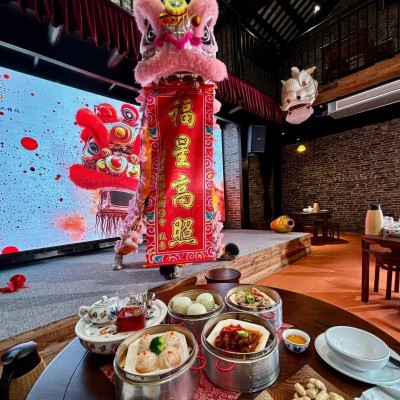
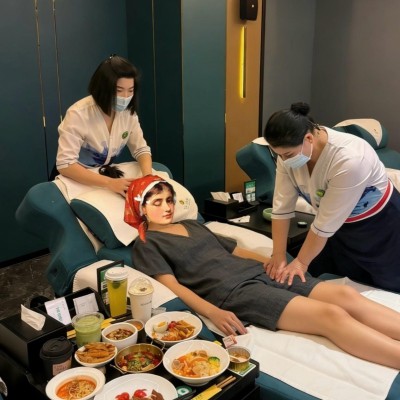
Experience the finest in Cantonese wellness and culture on this 5-day journey through the Pearl River Delta. Begin in Guangzhou, the historic heart of Lingnan civilization, where you will visit the Chen Clan Ancestral Hall and the Shamian Island colonial district. The highlight of the tour is a full-day immersion in one of Guangzhou's legendary luxury bathhouses, where you can experience traditional Chinese bathing rituals, massage therapies, and hydrothermal treatments that have been perfected over centuries. The tour also includes a visit to a traditional Cantonese tea house, a dim sum masterclass, and a serene cruise along the Pearl River. Perfect for business travelers seeking rejuvenation after a demanding work schedule.
View details →
2. Cantonese Slow Life: 5-Day Culinary & Garden Secret Tour
Discover the elegant side of Cantonese culture on this 5-day tour that combines world-class cuisine with the exquisite garden traditions of southern China. The tour takes you through the hidden culinary gems of Guangzhou and the surrounding region, from Michelin-recommended restaurants to family-run eateries serving recipes that have been passed down through generations. You will visit the classical Lingnan gardens of Foshan, explore the Qinghui Garden and Liang's Garden, and learn about the philosophy of Cantonese tea culture. A private cooking class with a master chef will teach you the secrets of authentic Cantonese dishes. This tour is ideal for business travelers who appreciate the finer things in life and want to bring home a deeper understanding of Cantonese culture.
View details →
Plan Your China Business Trip With Us
Combine business with leisure. Let us help you plan the perfect Shenzhen itinerary.
Custom Tours: Contact Sam for personalized business travel itineraries. ✉ Sam@ChinaTravelPlus.com
Group Bookings: For corporate groups, trade delegations, or APEC-related business travel, contact Luppy for group rates. ✉ Luppy@ChinaTravelPlus.com
Disclaimer: This article is for informational purposes only. Information is accurate as of the publication date. Travel conditions, visa policies, prices, and schedules may change. Please confirm all details before booking.