Tracing Your Roots - A Complete Guide for Overseas Chinese Returning to Guangdong
Why Guangdong Matters for Overseas Chinese
If your family is part of the overseas Chinese diaspora, there is a good chance your roots trace back to Guangdong Province. More than 30 million people of Cantonese, Teochew, Hakka, and other Southern Chinese descent now live abroad, and the vast majority of them come from this one region. That is not a coincidence. For centuries, Guangdong has been the primary departure point for Chinese emigration, and it remains the place where the strongest connections between the diaspora and the homeland are preserved. The ancestral halls still stand, the family records are still kept, and the villages that your great-grandparents left behind are still there, often with people who remember the family name.
What makes Guangdong different from other Chinese provinces is how deliberately it has maintained these connections. The Kaiping Diaolou, which became a UNESCO World Heritage Site in 2007, is the most visible proof of this relationship. These are not ordinary Chinese buildings. They are fortified towers, three to nine stories tall, that blend Chinese roof lines with Roman columns, Gothic windows, and Islamic arches. They were built by overseas Chinese who made their fortunes abroad and returned home to build something that would last. Each tower tells a specific story: a man who worked on the Canadian railway and came back with enough savings to build a house for his entire clan, a family who ran a restaurant in San Francisco and sent money back for decades until the tower was finished. There are over 3,000 of these towers scattered across the Kaiping countryside, and they are unlike anything else in China.
Understanding Your Family's Migration History
Before you start planning your trip, it helps to understand the broader patterns of why your family left Guangdong in the first place. The emigration from this province did not happen all at once. It came in three major waves, each driven by completely different circumstances. The first wave started around the 1840s, after the Opium Wars, when the Qing Dynasty's collapse created chaos and poverty throughout the region. People left because staying meant starvation. The second wave ran from the 1880s through the 1920s, when news of the California Gold Rush and the demand for labor on North American railways reached Guangdong villages. This was the wave that created the Chinatowns of San Francisco, Vancouver, and New York. The third wave happened between the 1920s and the 1940s, driven by the warlord period and the Japanese invasion, and it pushed people toward Southeast Asia in larger numbers than before.
The reason this matters for your trip is that each wave left different traces in the ancestral villages. Families from the first wave often built elaborate ancestral halls before they left, because they had time and resources. Families from the second wave built the diaolou towers, because they had money to send back but could not return themselves. Families from the third wave left more abruptly, and their villages often show signs of hasty departure. Knowing which wave your family belongs to helps you understand what you will find when you get there.
Preparing for Your Ancestral Journey
An ancestral journey is different from a regular trip to China, and the preparation is correspondingly more involved. The first thing to do is talk to your family. This sounds obvious, but many people put it off because they think they already know the stories. In practice, the older generation often holds details that they have never thought to mention: the exact name of the village in Chinese characters, the name of the ancestral hall, the profession of the family member who first left. These small details can make the difference between finding your village in a day and spending a week searching.
Once you have gathered what you can from family sources, the next step is to cross-reference that information with the available records. The Guangdong Provincial Archives and the Overseas Chinese Affairs Office both maintain databases that can help. If you know the village name in Chinese characters, your chances of locating it are significantly higher. Many villages have changed names over the past century, so it helps to work with someone who understands the local geography and history. There are also online resources worth exploring, including the Chinese Genealogy Forum, which has a dedicated section for Guangdong ancestral searches, and the Guangdong Provincial Government's overseas Chinese services website, which offers practical guidance for people planning their first return visit.
Key Destinations for Root Tracing
Even if you are not sure exactly where your ancestral village is, there are several places in Guangdong that every overseas Chinese visitor should see. They are distributed across the region in a way that makes it possible to visit several of them in a single trip, and each one adds a different layer to your understanding of the overseas Chinese experience.
Kaiping is the most obvious starting point. The diaolou clusters are spread across four main villages, and the best approach is to spend a full day visiting two of them rather than rushing through all four. Zili Village has the most concentrated collection of towers, including one that was used as a filming location for the movie "Let the Bullets Fly." Majianglong is quieter and more atmospheric, with towers that feel genuinely abandoned rather than restored. The Li Garden, a short drive from the main clusters, is a beautifully preserved estate built by a returned overseas Chinese magnate, and it gives you a sense of how the successful returnees lived.
Taishan is the second essential destination. It is known as the Number One Hometown of Overseas Chinese because it has sent more emigrants abroad than any other county in China. The Taishan Overseas Chinese Museum is a good place to start, because it documents the county's emigration history in detail. The streets of Taishan city are lined with qilou, arcaded buildings that reflect the architectural influence of returned overseas Chinese, and many of the surrounding villages still have active ancestral halls maintained by family associations. If your family name is Chen, Li, Huang, or Lin, there is a good chance your ancestral village is in the Taishan area.
Guangzhou itself should not be overlooked. The Dongshan district was traditionally home to returned overseas Chinese families, and the area is still characterised by Western-style villas set along tree-lined streets. The Guangdong Overseas Chinese Museum, located in the city center, offers a comprehensive overview of the overseas Chinese experience from the 19th century to the present day, and it is particularly good at explaining the connections between specific Guangdong villages and specific overseas communities.
Cultural Reconnection Experiences
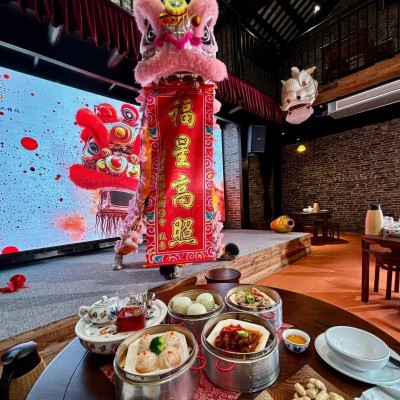
There is more to an ancestral journey than finding the right village. The cultural experiences that come with being in Guangdong can be just as meaningful as the genealogical research. Cantonese opera, for example, originated in this province and spread throughout Southeast Asia alongside the diaspora. Performances are still held regularly in Guangzhou and the surrounding counties, and the experience of watching a live performance in the dialect your grandparents spoke at home can be unexpectedly emotional. The same goes for the food. The cuisine of the Pearl River Delta is the direct ancestor of what overseas Chinese communities have been cooking for generations, and tasting it in its original form creates a connection that is hard to describe in words.
If you can time your visit to coincide with the Qingming Festival, which falls in early April, you will witness ancestor worship on a scale that is rarely seen outside of China. Villages throughout Guangdong hold ceremonies during this period, and overseas Chinese families are welcome to participate. The Guangdong Provincial Government has also established specific programs for diaspora visitors, including the World Guangdong Kinship Conference and the Overseas Chinese Ancestral Journey Program, which provide logistical support and cultural guidance for people making their first return trip.
Practical Tips for First-Time Visitors
The practical side of planning an ancestral journey to Guangdong has become significantly easier in recent years. China's visa policies have been evolving to accommodate diaspora visitors, and the 144-hour visa-free transit policy now applies to the entire Guangdong Province, which means citizens of 53 countries can stay for up to six days without applying for a visa in advance. For longer stays, the Q2 visa is designed specifically for family visits and allows multiple entries over a ten-year period. The Chinese Embassy in your country will have the most current information on which option works best for your situation.
The best time to visit is between September and November, when the weather is mild and the humidity drops to a bearable level. Spring is also workable but expect rain. Summer is genuinely difficult, with temperatures above 35 degrees Celsius and humidity that makes walking through villages exhausting. Winter is the quiet season, which has its own appeal if you prefer to explore without crowds. Guangzhou Baiyun International Airport is the main entry point, with direct flights from most major cities in Southeast Asia, North America, and Europe. From there, the high-speed rail network connects to Kaiping, Taishan, and other key destinations within an hour or two.
Recommended Tours
If you are ready to start planning your ancestral journey, we have two routes that work well as starting points. The Guangdong Heritage Trail - 3 Days focuses on the Kaiping Diaolou and ancient villages, which is ideal if your family roots are in the Jiangmen area. The Cantonese Slow Life Tour - 5 Days goes deeper into Lingnan culture, combining ancestral village visits with food and garden experiences. Both can be customized once you have identified your specific ancestral village.
Plan Your Ancestral Journey With Us
Private, flexible tours designed around your family history and interests.
Custom Tours — Sam@ChinaTravelPlus.com
Group Bookings — Luppy@ChinaTravelPlus.com
More Than Travel. It's the Plus That Matters.
* Prices, schedules, policies, seasons and festival details in this article are subject to change. Always confirm current rates, dates and availability with us at the time of booking — the information here reflects the situation as of publication. ChinaTravelPlus reserves the right of final interpretation.
About the Author — Sam · Senior Travel Planner
Sam designs custom itineraries for solo travelers, families and food lovers, delivering a complete plan within 48 hours.
Ready to Plan Your China Trip?
Email Sam for customized tour planning.
Email Luppy for group bookings (10+ travelers).
Visit ChinaTravelPlus.com for the full collection.
More Than Travel. It's the Plus That Matters.