Paul George's China Tour: An NBA Star's Travel Experience in Beijing and Changsha
Key Highlights
- American NBA star Paul George landed in China for five days, splitting time between Beijing and Changsha
- In Beijing, his local friends stuck to a local rhythm: hutong food, Peking duck, live cross-talk, the Great Wall
- In Changsha, he walked Pozi Street — 2,000+ late-night food stalls, 24-hour bathhouses, and a 1,000-year-old academy
- His Changsha host was a retired basketball coach who took him to Pozi Street and the 1,000-year-old Yuelu Academy
- The lesson: a real visit to China is not about ticking off landmarks, but living a few hours like a local
The Day Paul George Landed in Beijing
Paul George decided to add China to his trip after a long stay in the United States. Like many first-time visitors, he imagined Beijing as a checklist: airport, Great Wall, Forbidden City. The reality was different.
His local host did not plan a packed itinerary. "It's his first time in China. Feed him first, then we talk." That sentence ended up setting the tone for the whole trip.
Day One: A Welcome Meal, 26 Glasses
The first meal was at a small, ordinary hutong restaurant. In thirty minutes, the table added five baijiu glasses, twenty-six in total. By American drinking etiquette, "the more glasses, the more friends." By Chinese etiquette, "a full glass honors the host, finishing the glass shows respect." George drank all twenty-six and said the practice was "rough on the body, but satisfying."
His first impression of a Beijing dinner table: fast pace, large portions, no filter. Foreign guests who cannot drink baijiu should say so up front — the server will switch to beer or soft drinks without awkwardness.
Day Two: Old Beijing Walks, Then Peking Duck
Day two was about walking, not sightseeing. From the Drum Tower hutong down to Shichahai (Houhai), every corner had a story — someone playing chess at a doorway, someone drinking douzhi (bean milk) at the alley entrance. The slow, lived-in rhythm of the street was the opposite of George's life in the United States.
Lunch was at a classic Peking Duck restaurant. When the carving master wrapped the duck skin with scallions and cucumber into a thin pancake, George said, "This is exactly what I saw in our NBA player group chat." But the taste — crisp skin, juicy fat, lingering sweetness — was something no photo could capture.
Most Beijing duck restaurants have English menus and a "for foreign guests" carving service. Simply say "for foreign guests" when ordering.
Day Three: Live Cross-Talk — The Surprise Guest
The surprise of day three was a live cross-talk (xiangsheng) performance. George did not understand Chinese, but in fifteen minutes he laughed a dozen times. Walking out, he asked: "They speak so fast, but where are the punchlines?" That is the cross-cultural magic of xiangsheng: you don't need to understand every word, but you feel the rhythm.
China's nightlife is not just bars. Houhai and Wudaoying host live houses that regularly feature English-language performances, friendly to international visitors.
Day Four: Great Wall and a Quiet Photo
Day four took him to the Mutianyu section of the Great Wall. He arrived at 9 a.m., when the crowds were light and the light was right. He barely spoke — but took a lot of photos. What came out of his camera was not the typical Forbidden City red wall, but shadow under the hutong trees and the quiet at the foot of the Wall. Quiet observation was the mood.
Back in the city, his host took him to 798 Art District. He paused in front of a large graffiti wall — he had once thought street art was a Western thing, and now saw Chinese young people expressing their own.
Day Five: Paul George Lands in Changsha
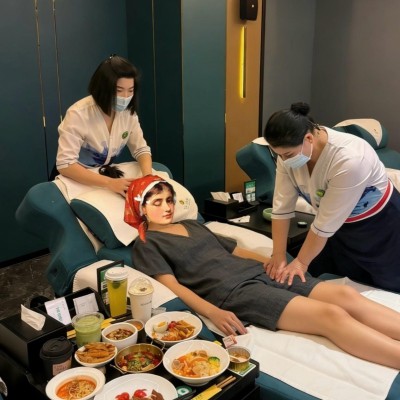
On day five, Paul George flew down to Changsha, the capital of Hunan Province. The timing was deliberate — Changsha's night economy is the kind that does not sleep: 2,000+ late-night food stalls, 24-hour bathhouses, and a street rhythm that ignores the clock. Two worlds away from NBA time zones, this was the China he had not expected.
Changsha has a couple of things NBA players respond to immediately. First, the table — Changsha gatherings run long, the toasts come fast, and the conversation never stops. Paul's local host in Changsha was a retired basketball coach who had spent years in the Hunan provincial youth system. He took Paul to Pozi Street (坡子街), the historic food alley, where they ate stinky tofu (a Changsha classic) and watched late-night card players at 3 a.m. — a culture that values the moment far more than the schedule.
The second thing Paul's Changsha host showed him was Hunan breakfast culture. The next morning, they made a stop at a neighborhood rice noodle (米粉) shop that had been operating since 1987. The owner, a 68-year-old woman, did not speak English, but recognized the word "NBA" and showed him a small TV in the corner replaying a 2018 playoffs highlight. Paul bought bowls for the entire shop and signed a paper napkin for the owner's grandson. This is the kind of small, unscripted moment that does not appear in any guidebook.
In the afternoon, the host took Paul to Yuelu Academy (岳麓书院) — one of the oldest academic institutions in China, founded in 976 AD. Paul walked the bamboo-lined paths, paused at the lecture hall, and stayed longer than anyone expected. He said later: "In LA, I see the house I grew up in. Here, I see the house that taught people how to read for a thousand years. Both are worth a visit."
Five Things That Made This Trip Different From a Standard Tourist Visit
1. No tour guide, just a local friend — avoids the "tourist photo" pattern
2. No rushing between landmarks — hutong in the morning, duck at lunch, cross-talk in the evening, Wall the next day
3. The host knew both George and China — could translate the small details between two cultures
4. No staged performances — everything was a place locals actually go
5. Day one was just food — let the body and rhythm adjust to China first
How Foreign Travelers Can Replicate This Beijing + Changsha Rhythm
For travelers who want a similar rhythm, a 6-day plan:
- Beijing 3-4 days: 1 day hutong + Peking duck + Houhai; 1 day Great Wall + 798; 1 day cross-talk or live house
- Changsha 2 days: night food walk at Pozi Street + 24-hour bathhouse; 1 day Yuelu Academy + Hunan breakfast culture (rice noodles)
Pick a local friend or cultural guide — that matters more than any sight list.
Accommodation: a courtyard homestay (Beijing hutong) or a business hotel in the CBD (for medical convenience). Changsha: a riverside hotel near Pozi Street. Both experiences are worth it.
Practical Tips for Foreign Visitors
- Visa: Chinese tourist visas (L visa) typically allow 30 days of stay
- Payment: Alipay and WeChat Pay both support Visa and Mastercard; set up at the airport or a convenience store
- Translation: WeChat has built-in chat translation, enough for daily conversation
- Safety: Major cities' nightlife and comedy venues have security; foreign visitors traveling alone are relatively safe
- Food: Eat with locals — it is ten times more useful than any "influencer shop" guide
Frequently Asked Questions
Where did Paul George travel in China?
Paul George spent four days in Beijing — eating local food, walking hutong alleys, watching crosstalk comedy and visiting the Great Wall and 798 Art District — then flew to Changsha for a fifth day of late-night food stalls, street culture and the 1,000-year-old Yuelu Academy.
What surprised Paul George most about China?
The night economy. Changsha's 2,000+ late-night food stalls, 24-hour bathhouses and non-stop street rhythm were a completely different China from the guidebooks.
How can foreign travelers replicate this trip?
Skip the race between landmarks. Use visa-free transit stays if eligible, set up mobile payments before landing, follow a local friend into hutong alleys and night markets, and leave room for unscripted moments — a shared meal, a signed napkin, a late-night street conversation.
Conclusion
Paul George says he will come back. Not because there are more landmarks to see, but because being treated as a friend and taken to places locals actually go has a kind of rare stickiness.
For China's inbound tourism, the Paul George itinerary shows something: travel does not need to be a race. A slow rhythm, a local friend, a few good meals, and a pocketful of unscripted moments can take China home with you.
Recommended China Travel Tours
Pair your reading with a hand-picked itinerary from our real tour collection:
- Hunan Food Tour · Land of Fish & Rice and Sleepless City Flavor Odyssey: 5 Days, 4 Nights Yueyang, — A deep flavor traceability tour in Hunan designed for gourmets. From the fresh and spicy fish and shrimp of Dongting Lak
- Hunan Wellness Journey: Changsha Luxury Bathhouse & Zhangjiajie Avatar Peaks 5-Day Healing Tour — Changsha Jiao Du bathhouse culture + Zhangjiajie Avatar peaks + Tujia herbal foot bath. 5-day Hunan dual therapy.
About the Author — Sam · Senior Travel Planner
Sam designs custom itineraries for solo travelers, families and food lovers, delivering a complete plan within 48 hours.
Ready to Plan Your China Trip?
Email Sam for customized tour planning.
Email Luppy for group bookings (10+ travelers).
Visit ChinaTravelPlus.com for the full collection.
More Than Travel. It's the Plus That Matters.
* Prices, schedules, policies, seasons and festival details in this article are subject to change. Always confirm current rates, dates and availability with us at the time of booking — the information here reflects the situation as of publication. ChinaTravelPlus reserves the right of final interpretation.