Lingnan Culture - What Makes Guangdong Unique for Overseas Chinese
What Is Lingnan Culture?
Lingnan (岭南, Lǐngnán) literally means "South of the Mountains" — referring to the Nanling Mountains that separate Guangdong and Guangxi from central China. This geographic isolation, combined with subtropical climate, maritime trade connections, and ethnic diversity, created a culture distinctly different from the Chinese civilization of the Yellow River and Yangtze valleys.
Lingnan culture is not monolithic. It encompasses several major sub-cultures:
| Sub-Culture | Region | Language | Key Characteristics |
|---|---|---|---|
| **Cantonese (广府)** | Pearl River Delta (Guangzhou, Foshan) | Cantonese (Yue) | Dim sum, Cantonese opera, Lingnan architecture |
| **Teochew (潮汕)** | Eastern Guangdong (Shantou, Chaozhou) | Teochew (Min Nan) | Teochew opera, intricate cuisine, merchant culture |
| **Hakka (客家)** | Eastern Guangdong (Meizhou) | Hakka | Round houses, mountain culture, scholarly tradition |
| **Leizhou (雷州)** | Western Guangdong (Zhanjiang) | Leizhou dialect | Stone dogs, folk religion, unique opera |
For overseas Chinese, understanding Lingnan culture means understanding the specific cultural world their ancestors came from — which may differ significantly from the "Chinese culture" they encounter in modern China or in Mandarin-dominated Chinese communities.
The Lingnan Worldview
Several core values distinguish Lingnan culture:
Pragmatism (务实, wùshí): Lingnan people are known for practical, business-oriented thinking. This pragmatism drove both the region's commercial success and the willingness to emigrate for economic opportunity.
Openness to Foreign Influence (开放, kāifàng): As China's gateway to maritime trade for centuries, Lingnan has always been more cosmopolitan than inland regions. This is visible in the fusion architecture of Kaiping Diaolou, the adoption of foreign crops and technologies, and the ease of cross-cultural interaction.
Family and Clan Loyalty (宗族观念, zōngzú guānniàn): Despite commercial orientation, family remains paramount. Ancestral halls, clan associations, and genealogy records are central to Lingnan social organization.
Food as Culture (饮食文化, yǐnshí wénhuà): In Lingnan, food is not mere sustenance — it is art, medicine, social bonding, and cultural identity. The saying "Born in Guangzhou, eating in Guangzhou" (生在广州,食在广州) captures this obsession.
Lingnan Architecture: Living Heritage
Lingnan architecture is one of the most distinctive regional styles in China, adapted to subtropical climate and reflecting the region's commercial and maritime connections.
Key Architectural Features
| Feature | Description | Purpose | Where to See |
|---|---|---|---|
| **Wok Ear Walls (镬耳墙)** | Curved gable walls resembling wok handles | Fire prevention, status symbol | Guangzhou, Foshan ancestral halls |
| **Arcade Buildings (骑楼)** | Covered walkways along streets | Protection from sun and rain | Guangzhou Shangxiajiu, Chikan |
| **Grey Sculpture (灰塑)** | Colorful sculptures on roof ridges | Decoration, storytelling | Chen Clan Ancestral Hall |
| **Wood Carving (木雕)** | Intricate carvings on beams and brackets | Decoration, status | Ancestral halls throughout Lingnan |
| **Ceramic Inlay (嵌瓷)** | Ceramic shard mosaics on roofs | Decoration, weather resistance | Teochew region temples |
| **Garden Design (园林)** | Lingnan-style gardens with water features | Aesthetics, cooling | Yu Yin Shan Fang, Li Garden |
Ancestral Halls: The Heart of Clan Culture
The ancestral hall (祠堂, cítáng) is the architectural and spiritual center of Lingnan village life. These buildings serve multiple functions:
Religious Function: Housing tablets of deceased ancestors, site of regular worship ceremonies
Social Function: Meeting place for clan business, dispute resolution, community gatherings
Educational Function: Traditional schools, storage of clan genealogy records
Cultural Function: Venue for opera performances, festival celebrations, clan banquets
Notable Ancestral Halls:
| Name | Location | Significance |
|---|---|---|
| Chen Clan Ancestral Hall (陈家祠) | Guangzhou | Best-preserved in Guangdong, now folk art museum |
| Foshan Ancestral Temple (佛山祖庙) | Foshan | Dedicated to Northern Emperor, martial arts heritage |
| Pang Family Ancestral Hall (庞氏大宗祠) | Zhongshan | Excellent example of Song dynasty architecture |
| Various village halls | Throughout Guangdong | Many still active, some 500+ years old |
Lingnan Gardens
Unlike the famous gardens of Suzhou, Lingnan gardens are adapted to subtropical climate and reflect the region's commercial prosperity.
Characteristics:
- Use of local materials (volcanic rock, tropical plants)
- Integration of water features (ponds, waterfalls)
- Fusion of Chinese and foreign elements
- Practical as well as aesthetic (shade, cooling)
Must-Visit Gardens:
- Yu Yin Shan Fang (余荫山房): One of four famous Lingnan gardens, in Panyu
- Liang Garden (梁园): In Foshan, classic Lingnan garden design
- Li Garden (立园): In Kaiping, built by overseas Chinese, fusion style
- Ke Garden (可园): In Dongguan, compact but exquisite
Cantonese Cuisine: A World Culinary Tradition
Cantonese cuisine (粤菜, Yuè cài) is one of the Four Great Traditions of Chinese cooking and arguably the most influential Chinese cuisine worldwide — because Cantonese emigrants carried their food culture to every corner of the globe.
The Philosophy of Cantonese Cooking
Freshness Above All (新鲜为主): Cantonese cooking emphasizes the natural flavors of fresh ingredients. Unlike heavily spiced regional cuisines, Cantonese food aims to enhance, not mask, the taste of the main ingredient.
Food as Medicine (药食同源): The boundary between food and medicine is blurred. Many Cantonese dishes incorporate ingredients valued for health properties: herbal soups, steamed dishes with ginger and medicinal herbs.
Texture Matters (口感): Cantonese cuisine pays unusual attention to texture — the crunch, the slipperiness, the tenderness. A dish must feel right in the mouth, not just taste right.
Balance (平衡): Yin-yang principles guide food choices. "Heaty" (热气) and "cooling" (凉) foods are balanced according to season and individual constitution.
Must-Experience Cantonese Foods
| Category | Dishes | Where to Experience |
|---|---|---|
| **Dim Sum (点心)** | Har gow (shrimp dumplings), siu mai, char siu bao, egg tarts | Morning tea restaurants in Guangzhou |
| **Roast Meats (烧味)** | Char siu (BBQ pork), roast goose, soy sauce chicken | Cantonese roast meat shops |
| **Seafood (海鲜)** | Steamed fish, salt-baked shrimp, ginger-scallion lobster | Coastal restaurants |
| **Congee (粥)** | Century egg and pork congee, fish congee, boat congee | Street stalls, congee shops |
| **Noodles (面)** | Wonton noodles, beef brisket noodles, rice noodles (cheung fun) | Noodle shops throughout |
| **Desserts (甜品)** | Double-skin milk, mango sago, tong sui (sweet soups) | Dessert shops |
The Yum Cha (Morning Tea) Experience
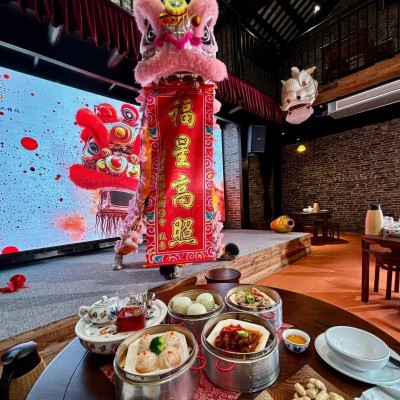
Yum cha (饮茶, literally "drinking tea") is the Cantonese tradition of morning tea with dim sum. It is far more than a meal — it is a social institution.
The Ritual:
- Families and friends gather at tea houses from early morning
- Tea is poured as a gesture of respect (tap fingers on table to say thank you)
- Dishes are shared from the center of the table
- Conversation flows over hours, not minutes
Etiquette for First-Timers:
- Arrive early (before 9 AM) for freshest selections
- Let elders order first
- Pour tea for others before yourself
- Don't stick chopsticks upright in rice (resembles funeral incense)
- Tap fingers when someone pours tea for you (silent thank you)
Famous Tea Houses in Guangzhou:
- Guangzhou Restaurant (广州酒家) — century-old establishment
- Panxi Restaurant (泮溪酒家) — garden setting
- Lian Xiang Lou (莲香楼) — traditional bakery and tea house
- Dian Du De (点都德) — popular modern chain
Cantonese Soups (老火汤)
Cantonese slow-cooked soups (老火汤, lǎohuǒ tāng) are simmered for hours with medicinal ingredients. They represent the intersection of cuisine and traditional Chinese medicine.
Common Ingredients:
- Herbs: Goji berries, red dates, dang shen (codonopsis)
- Meats: Pork bones, chicken, pigeon
- Vegetables: Winter melon, lotus root, water chestnuts
- Seafood: Dried scallops, abalone
Cultural Significance:
- Mothers and grandmothers prepare soups daily
- Different soups for different seasons and health needs
- Expression of care and love
- Connection to traditional medicine knowledge
Festivals and Rituals: The Calendar of Connection
Lingnan festivals follow the traditional Chinese lunar calendar but with distinctive regional characteristics. For overseas Chinese, these festivals maintain the connection to ancestral traditions.
Major Lingnan Festivals
| Festival | Date (Lunar) | Lingnan Characteristics | Overseas Chinese Connection |
|---|---|---|---|
| **Spring Festival (春节)** | 1st month, 1st day | Flower markets, lion dances, red envelopes | Celebrated in Chinatowns worldwide |
| **Lantern Festival (元宵节)** | 1st month, 15th | Lantern displays, lion dances, tang yuan | Community celebrations |
| **Qingming (清明节)** | Around April 5 | Tomb sweeping, ancestor worship | Most important for ancestral connection |
| **Dragon Boat Festival (端午节)** | 5th month, 5th day | Dragon boat races, zongzi (sticky rice dumplings) | Races held in many overseas cities |
| **Qixi (七夕)** | 7th month, 7th day | Chinese Valentine's Day | Growing popularity |
| **Ghost Festival (中元节)** | 7th month, 15th | Ancestor worship, burning offerings | Maintained in overseas communities |
| **Mid-Autumn Festival (中秋节)** | 8th month, 15th | Mooncakes, family reunion, lanterns | Mooncakes essential in Chinatowns |
| **Winter Solstice (冬至)** | Around Dec 22 | Family reunion, tang yuan | "As important as New Year" in Lingnan |
| **Dongguan Year-End Festival (尾牙)** | 12th month, 16th | Business thanksgiving banquet | Company celebrations |
Ancestor Worship (祭祖)
Ancestor worship is central to Lingnan spiritual life and perhaps the most important cultural practice for overseas Chinese connection.
Key Practices:
Qingming Tomb Sweeping (清明扫墓):
- Families visit ancestral graves in spring
- Clean the gravesite, offer food, burn incense and paper offerings
- Reconnect with extended family
- For overseas Chinese: may send money for relatives to maintain graves
Ancestral Hall Worship (祠堂祭祖):
- Regular ceremonies at clan ancestral halls
- Offerings of food, incense, paper money
- Chanting, bowing, burning of offerings
- Clan banquets after ceremonies
Home Altars (神台):
- Many Lingnan families maintain home altars with ancestor tablets
- Daily offerings of incense, fruit, tea
- Special ceremonies on death anniversaries, festivals
Lion Dance (舞狮)
The lion dance is perhaps the most visible Lingnan cultural export. Performed at festivals, business openings, and celebrations worldwide, it originated in Lingnan.
Southern Lion Dance Characteristics:
- Two-person lion (one operates head, one operates body/tail)
- Acrobatic movements, martial arts elements
- "Cai qing" (采青) — plucking the green lettuce offering
- Drum, gong, and cymbal accompaniment
Foshan: Birthplace of Southern Lion Dance:
- Foshan is considered the home of southern lion dance
- Wong Fei-hung, legendary martial arts master, was a Foshan lion dancer
- Annual lion dance competitions attract teams worldwide
- Many overseas lion dance teams trace lineage to Foshan masters
Language and Opera: Voices of Lingnan
Cantonese Language
Cantonese (粤语, Yuèyǔ) is one of the major Chinese languages, with over 80 million speakers worldwide. For overseas Chinese, Cantonese is often the heritage language passed down through generations.
Distinctive Features:
- 9 tones (compared to Mandarin's 4)
- Preserves many ancient Chinese pronunciations
- Rich vocabulary for food, commerce, maritime life
- Written form distinct from standard Chinese
For Overseas Chinese:
- Many second/third-generation overseas Chinese still speak Cantonese at home
- Cantonese associations overseas maintain language classes
- Return to Guangdong can be a language reconnection experience
Lingnan Opera Traditions
| Opera Form | Region | Characteristics | Overseas Presence |
|---|---|---|---|
| **Cantonese Opera (粤剧)** | Pearl River Delta | Elaborate costumes, martial arts, love stories | Performed in Chinatowns worldwide |
| **Teochew Opera (潮剧)** | Chaoshan region | Distinct music, folk stories | Southeast Asian communities |
| **Hakka Opera (汉剧)** | Meizhou region | Mountain themes, historical stories | Hakka communities |
| **Lingnan Puppet Shows** | Throughout | String puppets, shadow puppets | Festival performances |
Cantonese Opera:
- 700+ years of history
- UNESCO Intangible Cultural Heritage
- Performed in Cantonese dialect
- Themes from history, mythology, romance
- Elaborate face painting, costumes, acrobatics
Where to Experience:
- Cantonese Opera Art Museum (Guangzhou)
- Liwan Lake Park (Guangzhou) — free weekend performances
- Foshan Ancestral Temple — regular performances
- Local opera troupes perform during festivals
Traditional Crafts and Arts
Lingnan is home to numerous traditional crafts, many with centuries of history.
"Three Carvings and One Embroidery" (三雕一绣)
Ivory Carving (牙雕):
- Guangzhou has been center of ivory carving for centuries
- Intricate multi-layered ivory balls are signature product
- Now uses alternative materials due to ivory trade ban
Wood Carving (木雕):
- Used extensively in Lingnan architecture
- Decorative panels, furniture, religious statues
- Chaozhou wood carving particularly famous
Brick Carving (砖雕):
- Decorative brick panels on buildings
- Scenes from history, mythology, daily life
- Found on ancestral halls and temples
Embroidery (粤绣):
- Cantonese embroidery is one of China's four great embroidery traditions
- Gold and silver thread, vivid colors
- Used for clothing, ceremonial items, home décor
- Still practiced by artisans in Guangzhou
Other Notable Crafts
| Craft | Location | Description |
|---|---|---|
| **Foshan Paper Cutting (佛山剪纸)** | Foshan | Intricate paper cut designs, often gold foil |
| **Shiwan Ceramics (石湾陶瓷)** | Foshan (Shiwan) | Folk pottery, figurines, architectural ceramics |
| **Xinhui Bamboo Weaving (新会竹编)** | Jiangmen (Xinhui) | Functional and decorative bamboo items |
| **Chaozhou Wood Carving (潮州木雕)** | Chaozhou | Gold-lacquered wood carvings for temples |
| **Dongguan Grass Weaving (东莞草编)** | Dongguan | Baskets, hats, decorative items |
How Overseas Chinese Preserved Lingnan Culture
The global Lingnan diaspora has maintained cultural traditions in remarkable ways, often preserving practices that have faded in China itself.
Cultural Preservation Abroad
Clan Associations (宗亲会):
- Maintain ancestral worship traditions
- Organize festival celebrations
- Keep genealogy records
- Support cultural education
Dialect Associations (同乡会):
- Preserve regional dialects
- Organize cultural performances
- Maintain food traditions
- Connect new immigrants with established community
Religious Institutions:
- Buddhist temples maintain Lingnan religious practices
- Taoist temples preserve ritual traditions
- Folk religion (Mazu, Guan Yu worship) continues
Food Culture:
- Cantonese restaurants worldwide maintain authentic cooking
- Dim sum traditions preserved in Chinatowns
- Festival foods (mooncakes, zongzi) still made traditionally
Cultural Changes in China
Meanwhile, Lingnan culture in China has experienced significant changes:
Impact of Historical Events:
- Cultural Revolution (1966-1976): Many traditions suppressed
- Economic reform (post-1978): Rapid modernization
- Urbanization: Village life transformed
- Mandarin promotion: Dialect use declining among youth
What Survives:
- Food culture remains incredibly strong
- Festival traditions recovering after Cultural Revolution
- Ancestral halls being restored
- Opera and crafts receiving government support as "intangible heritage"
The Reconnection Opportunity
For overseas Chinese returning to Guangdong, there's a unique opportunity:
What You Bring:
- Cultural practices preserved abroad
- Dialect knowledge (sometimes better than locals)
- Family stories and oral history
- Photographs and documents from overseas
What You'll Find:
- Cultural traditions being revived
- Young Chinese interested in heritage
- Communities proud of overseas connections
- Physical heritage (buildings, halls) being restored
Experiencing Lingnan Culture Today
Cultural Experiences for Visitors
Architecture:
- Chen Clan Ancestral Hall (Guangzhou) — Lingnan architectural masterpiece
- Li Garden (Kaiping) — Overseas Chinese fusion architecture
- Shamian Island (Guangzhou) — Colonial-era architecture
- Chikan Ancient Town (Kaiping) — Arcade street architecture
Food:
- Morning tea (yum cha) in Guangzhou — essential experience
- Cooking classes — learn dim sum, Cantonese dishes
- Food tours — street food, night markets, local restaurants
- Herbal soup workshops — understand food-medicine connection
Performance:
- Cantonese opera — museums and parks in Guangzhou
- Lion dance — Foshan, festival performances
- Dragon boat races — during Dragon Boat Festival
Crafts:
- Shiwan ceramics workshops (Foshan)
- Paper cutting demonstrations
- Embroidery studios
- Traditional medicine shops
Planning Your Cultural Journey
Recommended Duration: 5-7 days for comprehensive Lingnan cultural experience
Key Cities:
- Guangzhou (2-3 days): Ancestral halls, food, museums, opera
- Foshan (1 day): Martial arts, ceramics, lion dance heritage
- Kaiping (1-2 days): Diaolou, overseas Chinese heritage
- Zhongshan/Zhuhai (1 day): Sun Yat-sen heritage, coastal culture
Best Time for Cultural Festivals:
- Spring Festival (Jan/Feb): Festival atmosphere, lion dances
- Qingming (April): Tomb-sweeping, ancestral worship
- Dragon Boat Festival (June): Races, zongzi
- Mid-Autumn (Sep/Oct): Mooncakes, lanterns
Conclusion: A Living Culture
Lingnan culture is not a museum piece — it is a living, breathing tradition that has survived centuries of change and spread across the globe. For overseas Chinese, connecting with Lingnan culture means connecting with the specific world their ancestors knew: the taste of morning tea, the sound of Cantonese opera, the sight of ancestral halls, the rhythm of festival celebrations.
This culture has been shaped by overseas Chinese as much as it has shaped them. The diaolou towers, the fusion architecture, the cosmopolitan food culture — all reflect the back-and-forth exchange between Lingnan and the world.
When you return to Guangdong, you're not just visiting a place — you're entering a cultural conversation that has been ongoing for centuries. You bring your family's story, preserved abroad. You receive the culture of your ancestors, still vibrant at home. And in that exchange, Lingnan culture continues to live and evolve.
---
Recommended Guangdong Ancestral Tours
Guangdong Heritage Trail - 3 Days
Explore UNESCO Kaiping Diaolou, ancient villages, and Lingnan heritage sites. Perfect for overseas Chinese seeking ancestral connections.
View Tour DetailsCantonese Slow Life Tour - 5 Days
Immerse yourself in Lingnan culture, ancestral halls, traditional villages, and authentic Cantonese lifestyle.
View Tour DetailsPlan Your Ancestral Journey With Us
Private, flexible tours designed around your family history and interests.
Custom Tours — Sam@ChinaTravelPlus.com
Group Bookings — Luppy@ChinaTravelPlus.com
More Than Travel. It's the Plus That Matters.
* Prices, schedules, policies, seasons and festival details in this article are subject to change. Always confirm current rates, dates and availability with us at the time of booking — the information here reflects the situation as of publication. ChinaTravelPlus reserves the right of final interpretation.
About the Author — Sam · Senior Travel Planner
Sam designs custom itineraries for solo travelers, families and food lovers, delivering a complete plan within 48 hours.
Ready to Plan Your China Trip?
Email Sam for customized tour planning.
Email Luppy for group bookings (10+ travelers).
Visit ChinaTravelPlus.com for the full collection.
More Than Travel. It's the Plus That Matters.