Korean Summer Bookings to China Surge 105%: What's Driving the Boom 2026
Content Outline
- Korean Summer Bookings to China Hit Record Growth
- The Data That Matters: Why China Surpassed Japan
- A Generation in Transition: From Filial Piety to Self-Discovery
- The Shanghai Weekend Effect: One Office Worker's Story
- Chinese Food: The Unexpected Marketing Engine
- What This Means for Inbound Tourism Content Strategy
- Plan Your Korean Market Strategy with ChinaTravelPlus
Korean Summer Bookings to China Hit Record Growth
The numbers tell an unmistakable story. According to data from Korean travel agency Modu, summer 2026 travel bookings from South Korea to China (July-August) have surged 105% compared to the same period last year. The growth is not just quantitative; it represents a structural shift in how Korean travelers view China as a destination.
Perhaps the most symbolic data point comes from Yellow Balloon, one of South Korea's largest package tour operators. For the first time, China's share of Yellow Balloon's overseas summer package products has reached 22.2%, overtaking Japan's 17.4%. This is not an incremental change — it is a reordering of Korea's outbound tourism hierarchy that has stood for decades.
The driving factors are multi-layered: price competitiveness, geographic proximity, infrastructure quality, and a cultural wave powered by Chinese food and entertainment content that has captured the imagination of Korea's younger generation.
The Data That Matters: Why China Surpassed Japan
Price advantage: A 3-day, 2-night 'flight + hotel + 1-day tour' package to Shanghai costs approximately 600,000 KRW (about 2,603 RMB). Korean travelers consistently describe China as offering 'better value than Japan, with less physical burden.'
Proximity and frequency: Direct flights from Seoul to Shanghai take just over 2 hours. Weekend trips are increasingly common — fly out Friday evening, return Monday morning.
Scale of demand: According to the Yanolja Research Institute, full-year 2025 Korean visitors to China are projected to reach 3.17 million, representing 37% year-over-year growth.
Korean low-cost carriers like Eastar Jet are reporting increased demand on China routes, and travel agencies are restructuring their product mix to favor China-bound packages.
A Generation in Transition: From Filial Piety to Self-Discovery
Traditionally, "China travel" for Korean tourists was associated with older generations. Young Koreans typically accompanied their parents, earning these trips the nickname "filial piety tours." That pattern is breaking. Korean young adults in their 20s and 30s are now actively choosing China as their own destination — heading to Shanghai for hotpot, Hong Kong Disneyland, and viral experiences.
The Shanghai Weekend Effect: One Office Worker's Story
A 33-year-old office worker from Seoul flew to Shanghai on a Friday, returned to work on Monday morning, and spent approximately 600,000 KRW on a 3-day, 2-night package. His assessment: "China's urban infrastructure is trendy, prices are cheap. It offers better value than Japan." This weekend-warrior model suggests short, affordable, experience-focused packages are the format most likely to resonate with Korea's emerging traveler cohort.
Chinese Food: The Unexpected Marketing Engine
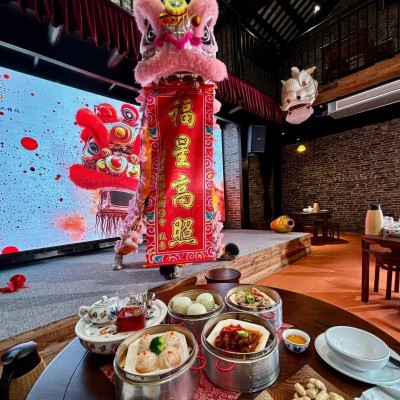
A representative from Eastar Jet observed that the rising popularity of Chinese food in South Korea is directly stimulating travel demand. As Korean consumers develop a taste for authentic Chinese cuisine through local restaurants and social media, the desire to experience the food at its source grows proportionally. Food-themed travel routes — hotpot tours, street food walks, dim sum masterclasses — have a demonstrable and measurable market in South Korea.
What This Means for Inbound Tourism Content Strategy
1. Content should skew younger: Korea's emerging traveler is Gen MZ, not retiree. Blog content and product packaging should reflect younger aesthetics.
2. Food is the wedge: Chinese cuisine is already driving travel intent. Food-focused content should be a top priority.
3. Short formats win: Emphasize 3-day and 4-day itineraries that fit a long weekend.
4. Price competitiveness is an asset: The value proposition of cheaper than Japan with higher quality infrastructure should feature prominently.
Plan Your Korean Market Strategy with ChinaTravelPlus
Understanding the data is the first step. Whether you are looking to develop Korean-language content, design food-focused itineraries, or capture the weekend-travel wave, ChinaTravelPlus can help.
📧 Contact Sam for Customized Market Strategy
📧 Contact Luppy for Group Bookings & Partnerships
More Than Travel. It's the Plus That Matters.