Indonesia to China: A First-Timers' Guide (2026)
Yes, You Can Visit China — Let's Get the Entry Rules Right First
China is one of the most exciting trips an Indonesian traveler can take: high-speed trains, ancient cities, incredible food, and a tourism infrastructure that has grown enormously over the past two years. But before anything else, the one thing every Indonesian needs to know is the entry rule — because there is a lot of confusing information online.
Here is the truth, checked against the National Immigration Administration's current policy:
Indonesian passports are not on China's 30-day visa-free list. Countries like Malaysia, Singapore and Thailand get true visa-free entry — Indonesia does not. If someone tells you Indonesians can enter visa-free for 30 days, that is wrong.
What Indonesians do get is the 240-hour visa-free transit. Since 12 June 2025, Indonesian citizens qualify for the 240-hour (10-day) visa-free transit policy. The conditions:
- You arrive in China with a confirmed onward ticket to a third country or region (it cannot be a return to Indonesia) within 240 hours.
- You enter and exit through one of the 65 designated ports across China.
- Since the 2025 update, you can move across provincial borders freely within the window — you are not locked to the entry region.
- Maximum stay: 240 hours (10 days) from arrival.
When you need a visa instead: if your trip is a simple out-and-back (fly from Indonesia, tour China, fly back to Indonesia), the transit policy does not apply — you need an ordinary L tourist visa. Apply at the Chinese embassy or visa center before you travel.
The Hainan option: Indonesia is also among the 59 countries covered by Hainan's separate 30-day visa-free entry — but that applies only to the island province of Hainan, not the mainland.
Policies can shift, so confirm with the National Immigration Administration (12367 hotline) before booking. But for most first-time visitors, the 240-hour transit is the practical door into China — and 10 days is exactly the right length for a two- or three-city semi-self-guided trip.
How the 240-Hour Transit Actually Works in Practice
The typical Indonesian traveler uses it like this:
- Jakarta → Beijing (enter) → Shanghai (exit) → Tokyo or Seoul — the onward ticket to a third country is what unlocks the policy.
- Or Jakarta → Guangzhou → Hong Kong, China — a city break plus a connecting leg.
- You can enter in one city and exit from another; the onward leg can be a flight or a ferry/train crossing to a third country or region.
Practical booking tips:
- Book your onward ticket before departure — immigration will want to see it.
- Keep your passport valid for at least 6 months and have a printed copy of hotel bookings (most hotels ask for registration).
- You may cross provinces within the 10 days: Beijing → Xi'an → Shanghai is a classic and fully allowed.
This is also exactly the kind of route we plan for semi-self-guided travelers — see the sample itinerary at the end.
Getting There: Flights from Indonesia
Direct routes connect Jakarta, Surabaya and Bali (Denpasar) with Beijing, Shanghai, Guangzhou, Shenzhen, Xiamen and Chengdu, on Garuda Indonesia, Citilink, Lion Air and Chinese carriers. Flight time to Beijing or Shanghai is around 6–7 hours; to Guangzhou it is about 5 hours.
What to know:
- Book 2–4 weeks ahead for better fares; weekend departures cost more.
- Bali and Jakarta are the main gateways — Surabaya has fewer direct options.
- Consider entering Beijing or Shanghai and exiting Guangzhou or Shenzhen to avoid backtracking.
Halal Food in China: It Is Genuinely Manageable
Indonesia has the world's largest Muslim population, and food is usually the biggest worry about China. Here is the reality: China has a Muslim community of about 20 million, and halal food is easy to find if you know the system.
The halal sign. Halal restaurants display (qīngzhēn, "pure and true"), usually in a green sign. See it — the kitchen is halal-certified.
The most reliable options:
- Lanzhou beef noodle shops — the most widespread halal restaurant chain in China; found in virtually every city and town.
- Xinjiang restaurants — lamb skewers, pilaf, naan; halal by tradition and easy to spot.
- Muslim quarters in big cities — Beijing's Niujie (Ox Street), Xi'an's Muslim Quarter (300+ halal stalls), Guangzhou's Guangta Road, Shanghai's West Zhejiang Road.
- Hotel halal breakfasts — most mid-range and upscale hotels offer a halal breakfast section; ask at check-in.
- Supermarkets — Carrefour, Walmart and local chains sell halal staples and imported goods; bread, eggs, rice, fruit and vegetables are safe.
Two phrases to save on your phone: (no pork) and (halal). Showing them works almost everywhere. Alcohol is not served in halal restaurants, and Chinese tea culture means you will never go thirsty.
Payments, Internet and Getting Around
Payments — the single biggest practical change. China is nearly cashless: pay for trains, taxis, restaurants and most shops with your phone. Before you fly:
- Set up Alipay or WeChat Pay and link your international Visa/Mastercard — both apps now accept foreign cards.
- Download the apps in Indonesia and complete identity verification before departure; it is much easier than doing it on arrival.
- Keep a small amount of cash as backup — some street vendors and small shops still take cash.
Internet and translation. Google services are blocked in mainland China. Install before you fly:
- A translation app that works offline (or use the built-in translation in Alipay).
- An eSIM or roaming plan from an Indonesian provider, or buy a Chinese travel SIM at the airport — do not assume your Indonesian SIM will roam automatically.
- A VPN if you need Google Maps/WhatsApp — note this is a personal responsibility.
Getting around. High-speed rail is the best way between cities — trains are fast, comfortable and run on time. Buy tickets through Trip.com or the 12306 app; your passport is the ticket. In cities, use Didi (the Chinese Uber) through its English interface, or the metro — Beijing, Shanghai, Guangzhou and Xi'an all have clean, easy metro systems.
Practicalities Most First-Timers Forget
- Plugs and voltage: Indonesia uses the same two-pin flat plug (Type A/C) and 220V — your Indonesian chargers work in China without an adapter.
- Water: tap water is not for drinking; hotels provide bottled water.
- Language: English is limited outside big tourist areas — the translation app is your best friend, and most hotel staff can handle basic requests.
- Weather: check the season — northern cities are cold in winter; southern cities are warm year-round. Autumn (September–October) is the most comfortable time in most of China.
A Sample 10-Day Transit Route: Beijing → Xi'an → Shanghai
This fits the 240-hour window perfectly and covers three very different sides of China:
- Days 1–3 · Beijing: the Great Wall, the Forbidden City, the Summer Palace — and Niujie (Ox Street) for halal food.
- Days 4–6 · Xi'an: the Terracotta Warriors and the Muslim Quarter — halal food capital of China.
- Days 7–9 · Shanghai: the Bund, Yu Garden, modern skyline — halal restaurants near West Zhejiang Road.
- Day 10: exit to a third country (Tokyo, Seoul, Singapore or Kuala Lumpur) from Shanghai Pudong.
Trains connect all three cities in under 5 hours each. If you prefer a quieter, food-focused route, Beijing → Changsha → Shanghai is another favorite — a first-time traveler from Dubai did exactly that with us recently, and loved it.
Want It Planned for You? That Is What We Do
You do not need to piece this together alone. We plan semi-self-guided China trips for travelers from Southeast Asia and the Middle East every week: your route, your pace, trains and hotels booked, halal restaurants pre-confirmed at every stop, and one person on call the whole way — from airport pickup to the last train. Full plan within 48 hours of your first message, and you approve the fee and every booking before anything is paid.
Frequently Asked Questions
Do Indonesians need a visa for China?
For a simple out-and-back holiday, yes — an L tourist visa. But if you hold an onward ticket to a third country within 240 hours, you qualify for the visa-free transit and can stay up to 10 days without a visa.
Can I visit multiple cities under the 240-hour transit?
Yes. Since 2025 you may cross provincial borders freely within the 10 days — Beijing → Xi'an → Shanghai is a fully valid route.
Is halal food easy to find in China?
Yes, with basic knowledge: the green sign, Lanzhou noodle shops everywhere, and dedicated Muslim quarters in every major city. We pre-confirm halal restaurants on every stop for our travelers.
Do I need to speak Chinese?
No. Alipay's built-in translator, an offline translation app and English at hotels handle 95% of situations. We also have someone on call who speaks English (and basic Malay/Indonesian-level help for emergencies).
What is the best time to visit?
Autumn (September–October) for most of China, spring (April–May) for the south. Avoid the National Day week (October 1–7) if you prefer fewer crowds.
Recommended China Travel Tours
Pair your reading with a hand-picked itinerary from our real tour collection:
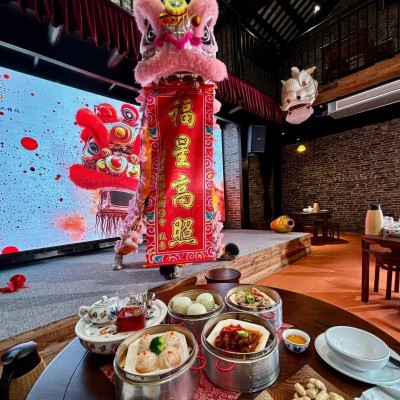
- Guangdong Express: Food Culture Kung Fu | 4-Day Private Tour — Guangzhou neon, Shunde private chef, Foshan kung fu, Shenzhen skyline. 4 cities, 1 province, 1 guide — our home turf.
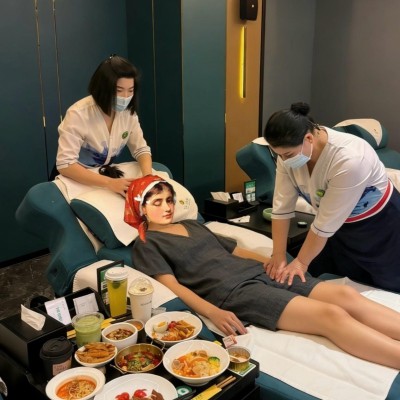
- Zhejiang Wellness Journey: Hangzhou Luxury Bathhouse & West Lake Zen 5-Day Healing Tour — Jiangnan Tang Quan tea-scented SPA, Yue-style Tui Na, West Lake Zen, Longjing tea. 5-day Zhejiang wellness.
About the Author — Sam · Senior Travel Planner
Sam designs custom itineraries for solo travelers, families and food lovers, delivering a complete plan within 48 hours.
Ready to Plan Your China Trip?
Email Sam for customized tour planning.
Email Luppy for group bookings (10+ travelers).
Visit ChinaTravelPlus.com for the full collection.
More Than Travel. It's the Plus That Matters.