Has Changsha Secretly Evolved? The City That Rewrites Your Biological Clock
The Viral Phenomenon: "Has Changsha Secretly Evolved?"
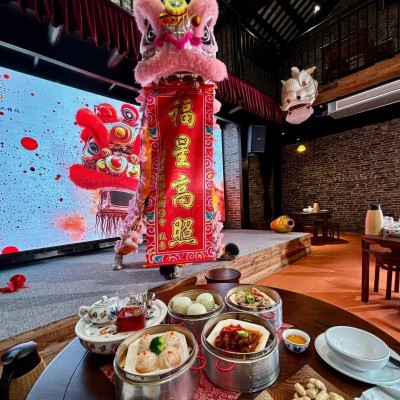
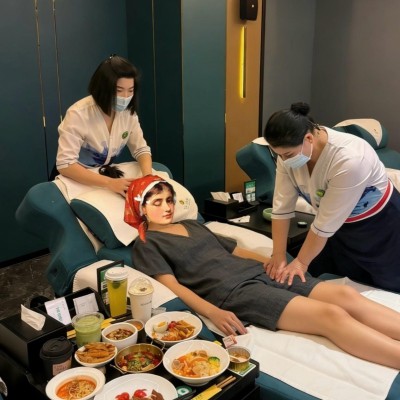
In July 2026, a topic called #HasChangshaSecretlyEvolved shot to the top of Weibo, China's biggest social platform. Millions of people weighed in. The conversation started with a simple observation from a visitor: do people in Changsha ever sleep? The thread exploded with replies from travelers who said the city fundamentally changed how they experience time and energy. One after another, people described arriving in Changsha with their normal routines and leaving with a completely different relationship with the clock.
This is not a marketing campaign. It is not a tourism board initiative. It is a genuine cultural phenomenon that has been building for years, and it finally broke through to national attention. For international travelers planning a trip to China, Changsha offers something that Beijing and Shanghai cannot replicate: an authentic, unfiltered look at how Chinese urban culture actually works when the sun goes down. The city does not put on a show for tourists. It simply lives its life, and visitors are invited to join in.
Understanding Changsha's 24-Hour Culture
Changsha sits in a river valley where the Xiang River flows north toward Dongting Lake. The subtropical monsoon climate creates summers that are genuinely punishing during the day, with temperatures regularly hitting 35 to 38 degrees Celsius. Historically, this pushed daily life into the cooler evening hours, and over centuries that practical adaptation became a cultural tradition. By the time the sun goes down and temperatures drop to a more manageable range, the city wakes up.
The city's identity as a commercial hub on the Xiang River goes back hundreds of years. Merchants and traders conducted business during daylight and socialized at night, establishing a rhythm that persists to this day. During the Ming and Qing dynasties, Changsha developed a reputation for tea houses, opera performances, and food stalls that operated well past midnight. That tradition never disappeared. It evolved.
Today, the nighttime economy has grown into a sophisticated ecosystem. Pozi Street stays active until 4 AM. Huangxing Road Pedestrian Street combines shopping and dining until midnight. Jiefang West Road is a bar district where live music continues until 3 AM. Convenience stores are on every corner. Ride-hailing services are plentiful at any hour. The infrastructure supports the lifestyle, and the lifestyle justifies the infrastructure. It is a self-reinforcing cycle that has been running for generations.
| Time of Day | Average Temperature | Activity Level |
|---|---|---|
| 12:00 PM | 35-38°C (95-100°F) | Indoor activities preferred |
| 6:00 PM | 30-33°C (86-91°F) | Outdoor activities begin |
| 10:00 PM | 27-29°C (81-84°F) | Peak social hours |
| 2:00 AM | 25-27°C (77-81°F) | Night market peak |
Midnight Crawfish: The Ritual That Defines Changsha Nights
If you want to understand Changsha's night culture, you have to start with crawfish. Every summer, from May to September, the city consumes an estimated 10,000 tons of the stuff. That number is not a marketing figure. It is the actual volume tracked by the city's agricultural and commercial authorities. Restaurants dedicated exclusively to crawfish line entire streets, and on a Friday night in July, every single table will be full.
The ritual follows a predictable pattern. Groups of friends begin texting each other around 10 PM to see who is free. By 11 PM, they are standing outside popular restaurants, waiting for their number to be called. The wait can be two hours at places like Wenhe You, a multi-story crawfish complex that feels more like a theme park than a restaurant. Nobody minds the wait. They drink beer, they chat, they build anticipation. When the food finally arrives in large metal basins, piled high and steaming, the table goes quiet for a moment. Then everyone digs in.
The crawfish comes in several preparations. The classic Hunan style uses Sichuan peppercorns and dried chilies. The garlic version is milder and lets the natural sweetness of the shellfish come through. The thirteen-spice preparation is a more complex blend that rewards slow eating. And the oil-braised style is rich and savory, best paired with cold beer. A full meal for a group of four runs about 100 to 150 RMB per person, which is remarkably affordable for the quantity and quality involved.
| Restaurant | Location | Why Visit | English Menu |
|---|---|---|---|
| Wenhe You | Haixin Square | Multi-story crawfish theme park | Yes |
| Shengfang Sibling | Pozi Street | Local favorite, authentic | Limited |
| Long Xia Wang | Multiple locations | Consistent quality | Yes |
| Lao Changsha Ren | Jiefang West Road | Traditional atmosphere | No |
The Biological Clock Reset
There is a concept in Chinese urban culture called re nao, which translates roughly to hot and noisy but means something closer to lively and vibrant. In Western cities, quiet streets at night signal safety and order. In Chinese cities like Changsha, quiet streets at night signal that something is wrong. The ideal state is re nao: lights on, people out, conversation flowing, food cooking. This is not a recent development. It is a deeply ingrained cultural preference that shapes how cities are designed and how people use public space.
When visitors from quieter cultures arrive in Changsha, the contrast can be disorienting. A traveler who is used to dinner at 7 PM and bed by 10 PM finds themselves in a city where 11 PM is considered early. The first night, they might go to bed at a normal hour and wake up at midnight to find the street below them still buzzing with activity. By the second night, curiosity gets the better of them. They go out. They eat. They stay up later than they have in years. By the third night, they are texting their friends back home about this city that never sleeps.
This is not about partying. It is about a different relationship with time. In Changsha, the night is not a period of inactivity between two days. It is a productive, social, meaningful part of the day in its own right. People conduct business, maintain friendships, and build community after midnight. The idea that this is unusual says more about the visitor's cultural assumptions than it does about Changsha.
Yuelu Mountain: Where Sunrise Hikers Meet Night Owls
Yuelu Mountain rises 300 meters above the city, serving as Changsha's green lung and spiritual anchor. The mountain has two distinct personalities that mirror the city's day-night duality. During daylight hours, it is a scholar's retreat, home to ancient academies and temples that date back to 976 AD. The Yuelu Academy, one of the four great academies of ancient China, sits on its eastern slope and has been operating continuously for over a thousand years. The mountain's forests are crisscrossed with trails that have been walked by poets, philosophers, and revolutionaries.
At night, the mountain transforms into something else entirely. Starting around 3:30 AM, groups of hikers begin gathering at the base. They carry flashlights and water bottles, chatting quietly in the dark. By 4 AM, they are on the trail, ascending through the forest as the city below gradually falls silent. The hike takes about 45 minutes to an hour, depending on fitness level. The destination is Ai Wan Pavilion, a famous historical structure that offers panoramic views of the city and the Xiang River.
What makes this remarkable is that many of these hikers were out until 2 AM the night before, eating crawfish and drinking beer. They did not go home to sleep. They went straight to the mountain. The sunrise hike is not a separate activity from the nightlife. It is part of the same continuum. In Changsha, the night does not end when the sun comes up. It transitions into something else.
Orange Island: The Iconic Landmark
Orange Island stretches five kilometers through the Xiang River, a narrow strip of land that has been a source of creative inspiration for centuries. In 1925, a young Mao Zedong stood at the head of the island and wrote one of the most famous poems in modern Chinese literature. The poem describes the scene in vivid detail: the reddening hills, the layered forests, the river flowing north. Today, a 32-meter-tall sculpture of Mao at age 32 stands at the southern end of the island, his hair flowing in the wind, his gaze fixed on the future.
The island is accessible by Metro Line 2 and admission is free. An electric shuttle runs the length of the island for 20 RMB. The sculpture is most impressive during the golden hour, when the setting sun illuminates the granite face and casts long shadows across the plaza. Photographers gather at the riverside walkways to capture the reflection of the sculpture in the water. The island is large enough that even on busy days, you can find a quiet spot to sit and watch the river flow past.
Why Changsha Affects People the Way It Does
There is research in social psychology that helps explain why Changsha has the effect it does on visitors. Nighttime social activities reduce self-consciousness. The darkness creates a sense of privacy and permission. People are more willing to be spontaneous, to try new things, to connect with strangers. Shared late-night experiences create stronger memories than daytime interactions. The combination of communal dining, physical activity, and social bonding triggers neurochemical responses that make people feel good.
But there is also something specific to Changsha that cannot be reduced to brain chemistry. The city is affordable. A night out with friends, including food, drinks, and transportation, costs between 100 and 200 RMB. That removes the financial anxiety that often accompanies socializing in more expensive cities. The nightlife districts are walkable, which creates a sense of flow and continuity. The culture is inclusive. And perhaps most importantly, the residents are genuinely proud of their city. That pride is contagious. Visitors find themselves adopting the local attitude that life is meant to be enjoyed, and that enjoyment is not something to postpone.
Practical Guide for International Visitors
The best time to visit Changsha is September or October, when the summer heat has subsided but the nightlife is still in full swing. Spring is pleasant but can be rainy. Summer is the peak season for crawfish and night markets, but the daytime heat is intense. Winter is quiet and cold, with most activity moving indoors. If you are coming for the nightlife, come in summer. If you want a balance of sightseeing and evening activity, come in autumn.
| Season | Temperature | Nightlife | Recommendation |
|---|---|---|---|
| Spring (Mar-May) | 15-25°C | Active | Good for sightseeing |
| Summer (Jun-Aug) | 30-38°C | Peak | Best for nightlife |
| Autumn (Sep-Nov) | 20-28°C | Active | Ideal balance |
| Winter (Dec-Feb) | 5-10°C | Indoor focused | Less nightlife |
Getting around the city is straightforward. The metro system has four lines that cover most major attractions, with fares ranging from 2 to 7 RMB. English signage is available at all stations. Ride-hailing through Didi is widely available and affordable. Taxis are plentiful but drivers rarely speak English, so it helps to have your destination written in Chinese. Many of the nightlife districts are within walking distance of each other, which is part of what makes the city so conducive to spontaneous evenings.
For budget planning, a mid-range traveler should expect to spend between 550 and 950 RMB per day, including accommodation, food, transportation, and attractions. Budget travelers can get by on 300 to 500 RMB by staying in hostels and eating at local restaurants. The biggest variable is accommodation, which ranges from 100 RMB for a hostel bed to 500 RMB for a mid-range hotel room.
Beyond Changsha: Exploring Hunan Province
Changsha is a destination in its own right, but it also serves as a natural base for exploring the rest of Hunan Province. Zhangjiajie National Forest Park is four hours away by high-speed train. Its towering sandstone pillars inspired the floating mountains in the movie Avatar, and the glass skywalk on Tianmen Mountain is one of the most photographed attractions in China. A three to four day trip from Changsha covers the main highlights.
Fenghuang Ancient Town, in western Hunan, is a preserved riverside settlement with stilted houses and Miao minority culture. It is less polished than the ancient towns in Jiangsu and Zhejiang, which is precisely what makes it interesting. Shaoshan, the birthplace of Mao Zedong, is 90 minutes from Changsha and draws visitors interested in modern Chinese history. Each of these destinations adds a different dimension to a Hunan itinerary, and all are easily accessible from Changsha.
Recommended Hunan Tours
4-Day Changsha & Zhangjiajie Highlight Tour
Experience Changsha's vibrant nightlife and Zhangjiajie's breathtaking natural wonders. Perfect for first-time visitors to Hunan who want to see both the city's energy and its iconic landscapes.
View Tour Details5-Day Hunan Discovery: Changsha, Zhangjiajie & Fenghuang
A complete Hunan experience covering Changsha's food culture, Zhangjiajie's Avatar mountains, and Fenghuang Ancient Town's Miao minority heritage. Ideal for travelers seeking cultural depth.
View Tour DetailsPlan Your China Adventure With Us
Private, flexible tours designed around your interests.
Custom Tours — Sam@ChinaTravelPlus.com
Group Bookings — Luppy@ChinaTravelPlus.com
Plan Your China Adventure With Us
Private, flexible tours designed around your interests.
Custom Tours — Sam@ChinaTravelPlus.com
Group Bookings — Luppy@ChinaTravelPlus.com
More Than Travel. It's the Plus That Matters.
* Prices, schedules, policies, seasons and festival details in this article are subject to change. Always confirm current rates, dates and availability with us at the time of booking — the information here reflects the situation as of publication. ChinaTravelPlus reserves the right of final interpretation.
About the Author — Sam · Senior Travel Planner
Sam designs custom itineraries for solo travelers, families and food lovers, delivering a complete plan within 48 hours.
Ready to Plan Your China Trip?
Email Sam for customized tour planning.
Email Luppy for group bookings (10+ travelers).
Visit ChinaTravelPlus.com for the full collection.
More Than Travel. It's the Plus That Matters.