Guangdong's Visa-Free Boom: 597,000 Arrivals and 52 Percent Growth Reveal a New Era for China Inbound Travel
Guangdong's Visa-Free Boom: 597,000 Arrivals and 52 Percent Growth Reveal a New Era for China Inbound Travel
Key Takeaways
- Guangdong Province recorded 597,000 visa-free foreign arrivals in 2026, a 52 percent year-on-year increase
- Visa-free entries now account for nearly 60 percent of all foreign arrivals in Guangdong — making visa-free travel the dominant channel, not a niche exception
- Nationwide, 436,000 visa-free arrivals were recorded during the May Day holiday alone, up 14.7 percent from the previous year
- Foreigner cross-border trips to China increased 22 percent year-on-year in Q1 2026, driven primarily by visa-free policies
- KPMG analysis confirms China is systematically upgrading visa-free policy from diplomatic goodwill to a service trade export promotion tool
Content Outline
1. The Numbers That Change Everything
2. Why Guangdong Leads the Visa-Free Revolution
3. Who Are the 597,000 Visa-Free Travelers
4. How Visa-Free Travel Is Reshaping Trip Planning
5. Making the Most of Visa-Free Access to Guangdong and Beyond
6. Plan Your Visa-Free Southern China Adventure
The Numbers That Change Everything
In the world of inbound tourism, policy announcements are common but hard data is rare. The figures released in May 2026 are anything but common. According to Bastille Post and confirmed by multiple government sources, Guangdong Province — the southern Chinese powerhouse that includes Guangzhou, Shenzhen, and the Chaoshan region — has recorded 597,000 visa-free foreign arrivals since the start of 2026, representing a staggering 52 percent increase over the same period last year.
The most striking number is not the raw total but the share: visa-free entries now account for nearly 60 percent of all foreign arrivals in Guangdong. This means that for every ten foreigners entering the province, six did not need a visa. Visa-free travel is no longer a supplementary channel — it is the primary channel.
The national picture reinforces the trend. During the 2026 May Day holiday, 436,000 visa-free arrivals were recorded across China, a 14.7 percent increase over the same holiday in the prior year, according to Travel and Tour World. CGTN reports that cross-border trips by foreign nationals rose 22 percent year-on-year in Q1 2026, with visa-free policies identified as the primary driver.
KPMG's analysis of China's visa policy expansion frames it as a strategic economic decision, not merely a diplomatic gesture. The expansion of visa-free entry policies and the streamlining of visa processes are explicitly designed to "facilitate inbound travel and boost service sector exports." In other words, China is treating visa-free access as an export promotion tool — and the early returns suggest it is working.
Why Guangdong Leads the Visa-Free Revolution
Guangdong's dominance in visa-free arrivals is not accidental. Several structural advantages make the province the natural entry point for visa-free travelers:
Geographic proximity. Guangdong borders Hong Kong and Macau and is a short flight from Southeast Asian capitals. For travelers from ASEAN countries — who benefit from a dedicated 6-day group visa-free policy — Guangdong is the closest and most accessible mainland Chinese destination.
Multiple entry ports. The province offers more visa-free entry points than any other region in China: Guangzhou Baiyun International Airport, Shenzhen Bao'an International Airport, and the newly added Jieyang Chaoshan Airport. This multi-port structure distributes arrivals efficiently and reduces congestion.
Economic gravity. As the home of the Greater Bay Area — the world's largest urban agglomeration by economic output — Guangdong attracts business travelers, trade fair visitors, and sourcing professionals who combine work with tourism. The province's manufacturing ecosystem, anchored by cities like Dongguan, Foshan, and Shenzhen, creates a natural pipeline of visitors who arrive for business and stay for leisure.
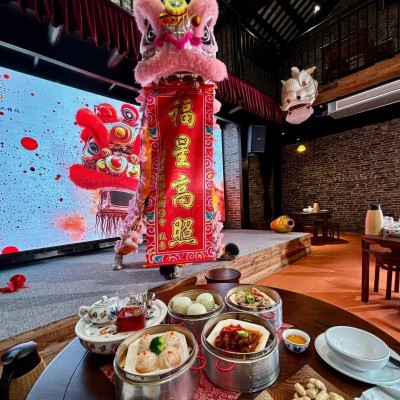
Cultural depth. Beyond business, Guangdong offers a cultural experience that is increasingly resonating with international travelers: Cantonese cuisine (from dim sum to Chaoshan beef hotpot), Lingnan architecture, Yingge warrior dance, and the centuries-old Gongfu tea tradition. The designation of Guangzhou as the main venue for China Tourism Day 2026 has amplified this cultural visibility on the national stage.
Who Are the 597,000 Visa-Free Travelers
Understanding the composition of visa-free arrivals is critical for anyone designing travel products or marketing strategies for southern China.
ASEAN group travelers. The dedicated 6-day visa-free policy for ASEAN tour groups brings in travelers from Vietnam, Thailand, Malaysia, Indonesia, Singapore, and the Philippines. These visitors tend to travel in groups of 2-10, stay 4-6 days, and focus on Guangzhou, Shenzhen, and the Chaoshan region. Their primary interests are shopping, food, and cultural experiences.
Unilateral visa-free travelers. China's unilateral visa-free policy covers 48 countries, including most of Europe, Japan, South Korea, Australia, New Zealand, and several others. These travelers can enter visa-free for up to 30 days and represent the fastest-growing segment. They are more likely to be independent travelers, stay longer (7-14 days), and venture beyond Guangdong into neighboring provinces.
240-hour transit exempt travelers. Travelers transiting through Guangdong on their way to a third country can stay for up to 240 hours (10 days) without a visa. This segment includes business travelers extending a layover into a short vacation and digital nomads testing China as a remote work destination.
The common thread. Across all segments, visa-free travelers share one characteristic: shorter decision cycles. Without the need to apply for a visa — a process that can take weeks and cost hundreds of dollars — the time between "I want to go to China" and "I am on a plane to China" has compressed dramatically. This is particularly true for first-time visitors who might have been deterred by the perceived complexity of obtaining a Chinese visa.
How Visa-Free Travel Is Reshaping Trip Planning
The visa-free revolution is not just changing how people enter China — it is changing how they plan their trips.
From "Should I go?" to "How long should I stay?" When a visa was required, the decision calculus was binary: commit to the full visa application process or do not go at all. Visa-free access shifts the question to duration: "I can go without a visa, so should I stay for 6 days, 10 days, or 14 days?" This is a fundamentally different decision — one that favors longer, deeper travel over brief, anxious visits.
From "safe" itineraries to exploratory ones. Visa applicants historically gravitated toward well-trodden paths — Beijing, Shanghai, Xi'an — to maximize the return on their visa investment. Visa-free travelers, facing lower sunk costs, are more willing to explore unfamiliar destinations. This explains the surge in interest in "hidden gem" cities like Yiwu, Zhengzhou, and the Chaoshan region.
From planned to spontaneous. Visa-free entry enables last-minute travel decisions. A traveler in Bangkok can decide on Tuesday to spend the weekend in Guangzhou and be on a flight by Friday. This spontaneity creates new demand for short-notice bookings, flexible itineraries, and on-the-ground support services.
From single-destination to multi-province trips. Visa-free travelers, especially those with 30-day access, are increasingly combining Guangdong with neighboring provinces. The most popular combinations are Guangdong + Hunan (Zhangjiajie), Guangdong + Jiangsu/Zhejiang (water towns and shopping), and Guangdong + Yunnan (cultural immersion). High-speed rail makes these combinations practical, with most inter-provincial journeys taking 2-4 hours.
Making the Most of Visa-Free Access to Guangdong and Beyond
Know Your Visa-Free Status
Before booking, confirm your eligibility. Three visa-free frameworks apply:
- Unilateral visa-free entry: 48 countries, up to 30 days. Covers most of Europe, Japan, South Korea, Australia, New Zealand, and others.
- ASEAN group visa-free entry: 10 ASEAN countries, up to 6 days, group of 2+ travelers. Enter through designated ports including Guangzhou, Shenzhen, and Jieyang Chaoshan.
- 240-hour transit exemption: 54 countries, up to 10 days. Must hold a confirmed onward ticket to a third country.
Choose Your Entry Port Strategically
Each entry port offers different advantages:
- Guangzhou Baiyun International: Best for first-time visitors. Direct metro connection to the city center, extensive flight network, and the most developed tourist infrastructure.
- Shenzhen Bao'an International: Best for business travelers and those combining Guangdong with Hong Kong. Direct high-speed rail to Hong Kong in 15 minutes.
- Jieyang Chaoshan Airport: Best for food travelers heading directly to the Chaoshan region. ASEAN visa-free groups can enter here directly.
Combine Provinces by High-Speed Rail
The high-speed rail network makes multi-province trips seamless:
- Guangzhou to Changsha: 2.5 hours (connect to Zhangjiajie)
- Guangzhou to Kunming: 6 hours (connect to Dali and Lijiang)
- Guangzhou to Hangzhou: 6 hours (connect to Jiangsu-Zhejiang water towns)
- Shenzhen to Hong Kong: 15 minutes
Plan Around Key Events
- China Tourism Day (May 19): Guangzhou hosts the 2026 main venue with opening ceremony at Canton Tower
- Canton Fair (April and October): The world's largest trade fair brings business travelers who extend into leisure
- Chaoshan Yingge Dance Festivals: Traditional warrior dance performances throughout the year, peaking during spring and autumn
Plan Your Visa-Free Southern China Adventure
Whether you have 6 days or 30, southern China offers a depth of experience that no other region can match — from the neon-lit streets of Shenzhen to the ancient alleyways of Chaoshan, from the karst peaks of Zhangjiajie to the tea mountains of Yunnan. And with visa-free access, getting here has never been easier.
Email Sam for a Customized Visa-Free Itinerary