From Screen to Scene: How Chinese Cinema and Living Culture Are Drawing International Travelers in 2026
Cinema Travel: When Movies Become Tourist Maps
In the summer of 2026, the line between cinema and travel has all but disappeared. A blockbuster film no longer just fills theaters — it fills flights, hotel rooms, and ancient village streets.
Take "Dear You: A Love Letter to Grandma" (给阿嬷的情书), a small-budget Teochew-language film that has become a global phenomenon. With over 2.1 billion RMB in worldwide box office revenue, the film tells the story of Chinese diaspora families connected through "Qiaopi" (侨批) — remittance letters that UNESCO inscribed on the Memory of the World Register in 2013. The film's authentic portrayal of Chaoshan culture has sparked a wave of "roots-seeking tourism" that is transforming the region.
According to Qunar travel data, since the film's release, flights from Malaysia to Shantou have increased by 67%, with significant growth also from Singapore and Thailand. The film's key filming locations — Beigang Village in Chenghai, the Qifeng Chen Ancestral Hall, and the ancient bridge in Xiqicun Village — have become pilgrimage sites for overseas Chinese families. In Shantou's Little Park historical district, local businesses report a surge in visitors, with guesthouse occupancy rates in the surrounding area rising by 80% and nighttime dining consumption growing by 1.2 times. The average visitor stay has extended from 2.5 hours to over 6 hours.
Meanwhile, Zhangjiajie in Hunan Province continues to ride the wave of its most famous cinematic connection: James Cameron's "Avatar." The Wulingyuan Scenic Area, whose quartz-sandstone pillars inspired the floating Hallelujah Mountains, has become the second-most popular Chinese destination for European summer travelers, capturing 16.3% of西欧 bookings — surpassed only by Beijing. In Spain, Italy, and Poland, one in every four to five international travelers to China includes Zhangjiajie on their itinerary.
The numbers tell a powerful story: from January to July 2026, Zhangjiajie welcomed 860,700 international visitors from 195 countries and regions, up 19.01% year-on-year. Tourism foreign exchange earnings reached US$98.52 million, a surge of 40.52%. European visitors alone now account for 34.43% of all international arrivals, up an astonishing 211.36% from the previous year.
The "Three New Essentials" of Cultural Immersion
If cinema provides the inspiration to visit China, living culture provides the reason to stay. The traditional "three essentials" of a China trip — tea, silk, and porcelain — have been joined by a vibrant new set of experiences that are reshaping how international travelers engage with Chinese culture.
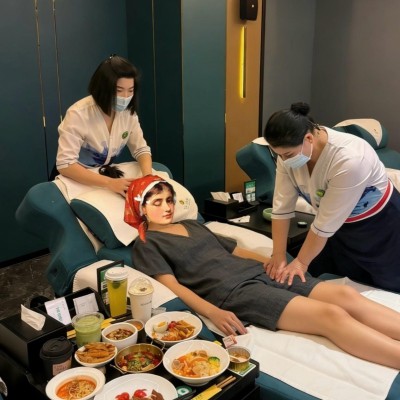
Hanfu (traditional Chinese attire) photoshoots, Chinese-style nail art, and guofeng (national style) photography have become the "three new essentials" of China travel in 2026. According to travel platform data, search interest in guofeng photoshoots surged nearly 70% month-on-month in July. At popular scenic spots, photography studios report that foreign customers now account for up to 95% of their clientele. International travelers post their hanfu and guofeng nail art photos on social media platforms, where videos regularly rack up millions of views, making them spontaneous global ambassadors for Chinese culture.
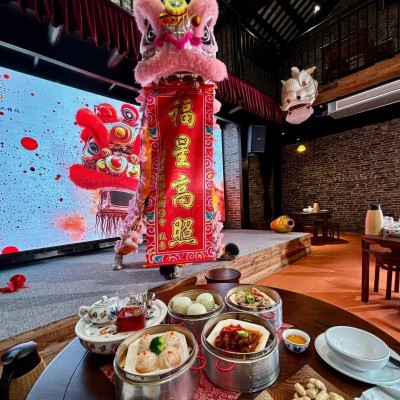
In Zhangjiajie, the cultural immersion extends well beyond photography. The Charming Xiangxi (魅力湘西) performance venue now stages three shows nightly during peak season, with Chinese, English, and Korean subtitles displayed simultaneously. Since the beginning of 2026, the venue has hosted nearly 400 performances, welcoming over one million visitors. Spanish tourist Pablo, who participated in a live interactive segment, described the experience as "unforgettable" — a perfect complement to a day spent exploring the region's famous peaks.
The shift from passive observation to active participation is a defining feature of this new cultural tourism. In Shantou, visitors to the Little Park district can now write their own Qiaopi letters, a hands-on experience that connects them directly with the emotional history of the Chinese diaspora. In Qufu, Shandong Province, the Confucius Temple has launched "The Civilization of Ten Thousand Years: The Scholar's Path" (文明一万年·状元路), a VR immersive experience that allows visitors to transform into ancient scholars and experience the imperial examination system firsthand.
VR and Immersive Tech: Ancient Culture Meets Modern Experience
Technology is bridging the gap between ancient traditions and modern travelers in ways that would have seemed impossible just a few years ago.
In Qufu, the birthplace of Confucius, the "New Three Confucian Sites" — the Confucius Research Institute, the Confucius Museum, and Nishan Sacred Land — complement the "Old Three" (the Confucius Temple, the Confucius Mansion, and the Confucius Forest). After dark, drone formations above Nishan Mountain project scenes of Confucius traveling through the states and passages from the Analects across the night sky, while water-screen light shows and fireworks create a sensory spectacle that blends tradition with cutting-edge technology.
In Nanjing, the 1,800-meter-long Changjiang Road Cultural Boulevard has become a living museum. Ten museums and cultural venues line this single street. At the Southern Dynasties Museum, costumed performers portraying historical figures like the poet Li Bai and the novelist Cao Xueqin (author of "Dream of the Red Chamber") roam the street, reciting poetry and engaging passersby in impromptu performances. The Deji Art Museum's "Golden Ling Scroll Digital Art Exhibition" features a 110-meter ultra-high-definition LED screen. Visitors wear smart wristbands to "travel through" the painting, interacting with 533 animated historical figures.
A Malaysian travel blogger who visited Qufu described the experience: "The Confucius Feast is not just a meal — it's a cultural dialogue across a thousand years." This sentiment captures the essence of the new cultural tourism: it is not about seeing, but about feeling and participating.
City Labs: How Nanjing and Qufu Are Redefining Cultural Tourism
Two cities in particular are demonstrating how cultural heritage can be transformed into compelling travel experiences.
Nanjing, the ancient capital of six dynasties, has seen international visitor numbers grow by 28.2% in the first half of 2026, with tourism spending rising by 46.2% — the highest growth in Jiangsu Province. French visitors to Nanjing increased by 47.48%, with their spending surging by an extraordinary 204.26%. The city's top attractions — Confucius Temple-Qinhuai River scenic area, Ming Xiaoling Mausoleum, and Niushoushan Cultural Tourism Zone — are now drawing visitors not just for sightseeing, but for deep cultural immersion.
What makes Nanjing stand out? The city has transformed its cultural heritage into accessible, interactive experiences. At the Nanjing Imperial Examination Museum of China, over 50 UN staff members recently participated in a hands-on cultural workshop, trying their hand at woodblock printing and calligraphy, followed by a night cruise on the Qinhuai River. "The historical culture has not been diluted by the city's modernization," one UN staff member observed. "Instead, it has been vividly presented through museums and intangible cultural heritage experiences."
The city's "Easy Travel Card" (乐游卡) integrates payment, transportation, and scenic spot reservations, while the Xuanwu District has pioneered "borderless cross-border payment" — allowing foreign visitors to scan and pay using their own domestic e-wallets, now supporting 280 e-wallets from 40 countries and regions. Tax refund shops have expanded from 31 to 168, with "instant tax refund" applications up 173.6%.
In Qufu, the integration of traditional culture with modern technology has created a model for other heritage cities. The VR experience at the Confucius Temple, the drone light shows at Nishan, and the immersive Confucian rites performances are attracting a new generation of international visitors who want to experience Chinese philosophy not as a textbook subject, but as a living practice.
From "Check-in" to "Stay-in": The Deeper Shift in Cultural Travel
The most significant trend underlying all these developments is a fundamental shift in how international travelers approach Chinese culture. They are no longer content to "check in" at famous sites and move on. Instead, they want to "stay in" — to live like a local, to participate in daily life, and to form genuine connections with the places they visit.
Data from Trip.com shows that the average length of stay for international travelers in China has reached 5.1 days, an 11% increase year-on-year. Tujia homestay data shows that foreign guests now stay an average of 2.8 nights, up about 10%. The concept of "recharge-style travel" — characterized by slower itineraries and deeper experiences — has gained tremendous traction, with related topics on Douyin generating over 20 billion views.
This shift is visible in how travelers spend their time. In Nanjing, the classic "French traveler" experience is no longer a quick visit to the Confucius Temple. Instead, tour operators report that French visitors now spend three days and two nights: walking the Ming City Wall, exploring Laomendong historical district, tasting salted duck, experiencing intangible cultural heritage crafts like velvet flowers, and taking a night cruise on the Qinhuai River.
The convergence of cinema, technology, and living culture is creating a new paradigm for Chinese tourism. Films inspire the journey; immersive experiences deepen the connection; and the warmth of everyday life creates the memories that bring travelers back. As the data from Zhangjiajie, Nanjing, and Qufu makes clear, the travelers who come to experience China's culture are not just passing through — they are staying, spending, and returning.
Plan Your Cultural Adventure
Ready to experience China's living culture for yourself? Our expert travel specialists can help you design the perfect itinerary, whether you want to trace the film locations of "Dear You" in Shantou, explore the Avatar mountains of Zhangjiajie, or immerse yourself in Confucian culture in Qufu.
📧 Contact Sam for Customized Tours
📧 Contact Luppy for Group Bookings
More Than Travel. It's the Plus That Matters.
About the Author — Sam · Senior Travel Planner
Sam designs custom itineraries for solo travelers, families and food lovers, delivering a complete plan within 48 hours.
Recommended China Travel Tours
Frequently Asked Questions
What makes Nanjing stand out?
The city has transformed its cultural heritage into accessible, interactive experiences At the Nanjing Imperial Examination Museum of China, over 50 UN staff members recently participated in a hands-on cultural workshop, trying their hand at woodblock printi
Ready to experience China's living culture for yourself?
Our expert travel specialists can help you design the perfect itinerary, whether you want to trace the film locations of "Dear You" in Shantou, explore the Avatar mountains of Zhangjiajie, or immerse yourself in Confucian culture in Qufu **[📧 Contact Sam for
What should I know about cinema travel: when movies become tourist maps?
In the summer of 2026, the line between cinema and travel has all but disappeared. A blockbuster film no longer just fills theaters — it fills flights, hotel rooms, and ancient village streets. Take "Dear You: A Love Letter to Grandma" (给阿嬷
What should I know about the "three new essentials" of cultural immersion?
If cinema provides the inspiration to visit China, living culture provides the reason to stay. The traditional "three essentials" of a China trip — tea, silk, and porcelain — have been joined by a vibrant new set of experiences that are res
Ready to Plan Your China Trip?
Email Sam — your personal China travel planner, for customized itineraries (solo, family, food, roots) delivered within 48 hours.
Email Luppy — for group travel and business missions (10+ travelers), with hotels, transport and logistics fully handled.
WhatsApp Sam for instant trip planning.
WhatsApp Luppy for group bookings.
Visit ChinaTravelPlus.com for the full collection.
More Than Travel. It's the Plus That Matters.