Foreign Arrivals to China Surge Over 30% in 2026 — And These 4 Regions Are Leading the Next Wave
SEO Description: Foreign arrivals to China jumped 31.5% through Beijing in 2026, with visa-free entries hitting 71.7%. Discover how Guangdong, Jiangsu-Zhejiang, Hunan, and Yunnan are becoming the new frontier for inbound tourism.
Keywords: China inbound tourism 2026, visa-free travel China, Beijing foreign arrivals surge, China Travel trend, Guangdong Jiangsu Zhejiang Hunan Yunnan tourism, deep travel China
Something extraordinary is happening at China's borders — and the numbers tell a story that no travel professional can afford to ignore.
On June 15, 2026, Beijing's border authorities announced that cross-border trips through the capital's ports had surpassed 10 million for the year — a milestone reached 15 days earlier than in 2025, with a year-on-year increase of 10.5% (Xinhua). But the real headline isn't the total number. It's who's coming: foreign nationals accounted for 3.436 million trips through Beijing alone, up a staggering 31.5% year-on-year, now representing 34.4% of all cross-border traffic through the capital (CCTV News via Global Times).
And Beijing is just the tip of the iceberg. Across China, a confluence of visa-free expansions, digital infrastructure upgrades, and a global appetite for authentic cultural experiences is rewriting the rules of inbound tourism — and four regions in particular are positioned to capture the next wave.
The Big Picture: China's Inbound Tourism Is Accelerating
National data confirms what the port-level statistics suggest: China's inbound tourism is not just recovering — it's surging past previous records.
According to the National Immigration Administration, from January 1 to May 31, 2026, China received 19.097 million inbound foreign nationals, up 21.3% year-on-year. Of these, 14.919 million entered under various visa-free policies, a 29.5% increase (CCTV News).
The trend is consistent across every major gateway:
| Port | Key Statistic | Source |
|---|---|---|
| Beijing | 3.436M foreign trips, +31.5% YoY | Xinhua |
| Shanghai Pudong | 5.15M foreign trips, +24% YoY (of 15M total) | The Paper via Global Times |
| Shenzhen Airport | Foreign arrivals +33.9% YoY | Global Times |
Shanghai Pudong became the first airport port in China to exceed 15 million inbound and outbound passengers this year, reaching the milestone five days earlier than in 2025. Meanwhile, South American travelers arriving via Shanghai surged 50.5% year-on-year, reflecting growing interest from previously underrepresented markets (CCTV News).
The Visa-Free Revolution: 71.7% of Foreign Arrivals Now Enter Without a Visa
Perhaps the most striking number from Beijing's data is this: 1.259 million foreign arrivals entered through Beijing under visa-free or temporary entry permit policies, accounting for 71.7% of all foreign entries (CCTV News via Toutiao).
China now implements unilateral visa-free entry for 50 countries, mutual visa exemption with numerous partners, and a 240-hour transit visa-free policy covering 55 countries. At Beijing's ports, border authorities have introduced "one-stop" processing for transit visa-free applicants, cutting clearance times by 30% (Economic Daily).
The message to global travelers is unmistakable: getting into China has never been easier.
This policy dividend is reshaping travel patterns in real time. According to the Ctrip Group's China Inbound Tourism Development Annual Report 2026, visitors from visa-free destinations recorded approximately 50% growth, comprising the majority of new arrivals and positioning inbound tourism as a potential trillion-yuan market (China Daily).
Beyond the Big Cities: The Rise of Deep Travel
Here's where the story gets really interesting for travelers — and for regions beyond Beijing and Shanghai. They're no longer content with the classic "Beijing-Xi'an-Shanghai" circuit. They want depth, authenticity, and cultural immersion — and they're venturing further to find it.
CCTV's national broadcast on June 15 highlighted this shift vividly: in Hunan's Zhangjiajie, unique quartz sandstone peak forests and 98% forest coverage draw visitors who "wander through as if inside a traditional ink painting" (CCTV News). In Hubei's Shennongjia, recognized as a "World Tourism Famous Mountain," intact ecosystems attract hikers from abroad. In Chongqing's Qutang Gorge, tourists gaze at the Three Gorges' grandeur.
The National Development and Reform Commission's analysis of Spring Festival 2026 inbound travel confirms the trend: foreign visitors' footprints are spreading from tier-one cities to 107 cities covered by domestic flight bookings, including previously under-the-radar destinations like Jinggangshan, Wanzhou, and Zhaotong. During the Spring Festival, over 70% of inbound travelers chose independent travel over group tours, and those staying 4–7 days increased by 18% year-on-year (NDRC).
This is the "deep travel" revolution — and it's exactly the kind of travel that CTP's four regions specialize in.
Four Regions, One Trend: How CTP's Territories Are Winning
Hunan: The Avatar Land Goes Global
Hunan's Zhangjiajie was specifically named in the national CCTV broadcast as a marquee destination for foreign travelers. The province's unique selling proposition — otherworldly landscapes that inspired Hollywood — combined with deep cultural experiences (Tujia ethnic culture, Fenghuang Ancient Town, spicy Hunan cuisine) makes it a natural fit for the deep-travel trend.
Russia is one of the fastest-growing source markets: Zhangjiajie saw Russian tourist numbers surge 120.1% in recent data, fueled by the China-Russia mutual visa-free policy. The Ctrip report identifies Zhangjiajie as one of the cities with over 100% year-on-year growth in foreign visitors (Ctrip Report via Newsweek).
Jiangsu & Zhejiang: Shanghai's Spillover Effect
With Shanghai Pudong processing 5.15 million foreign trips (up 24%), the Yangtze River Delta is the country's busiest international gateway — and Jiangsu and Zhejiang are the immediate beneficiaries.
South Korean visitors, who now favor short urban getaways, are drawn to Shanghai's proximity to Jiangsu's classical gardens and Zhejiang's West Lake and tea villages. European travelers, who the Ctrip report describes as "mature, rational, and environmentally conscious," are increasingly using China's high-speed rail network to string together multi-city itineraries from Shanghai through Suzhou, Hangzhou, and beyond — exactly the kind of seamless, low-carbon travel they prefer.
The 240-hour transit visa-free policy is particularly valuable here: a traveler landing in Shanghai can now take a bullet train to Hangzhou (1 hour), Suzhou (30 minutes), or Nanjing (1.5 hours) without needing a full visa.
Guangdong: The Southern Gateway Surges
Shenzhen Airport's 33.9% year-on-year increase in foreign arrivals signals that southern China is experiencing its own inbound boom. Visa-free arrivals at Shenzhen jumped 47.1%, covering travelers from 190 countries and regions (Global Times).
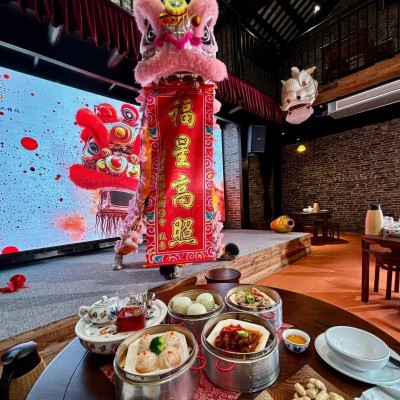
Guangdong's advantage is multifaceted: proximity to Hong Kong and Macau, a world-class culinary scene (Cantonese dim sum alone is a draw), and increasingly, a tech-tourism angle — Shenzhen's consumer electronics have sparked an "inbound shopping boom" with foreign purchasing visits and cross-border hardware sales climbing steadily (CCTV News).
For Southeast Asian travelers — the fastest-growing source market for China inbound tourism — Guangdong's cultural connections (Cantonese language, shared heritage, direct flights) make it a natural first stop.
Yunnan: The Exotic Frontier
While specific 2026 port data for Yunnan isn't yet available, the province's positioning in the deep-travel megatrend is undeniable. Yunnan's combination of ethnic minority cultures, subtropical landscapes, and proximity to Southeast Asia (direct flights from Thailand, Vietnam, and Malaysia) aligns perfectly with the Ctrip report's finding that Southeast Asian travelers are heavily influenced by social media and seek immersive cultural experiences.
The NDRC analysis noted that immersive experiences like "learning tie-dye in Yunnan's Shaxi Ancient Town" are exactly the kind of deep cultural engagement that foreign travelers now crave. Yunnan's Dali and Lijiang consistently rank among the top secondary-city destinations for independent foreign travelers.
What This Means for Travelers Planning a 2026 China Trip
If you're considering China as your next destination, the data sends a clear signal: 2026 is the year to go. Here's why:
1. Visa-free entry for 50+ countries. Check if your nationality qualifies — there's a good chance you don't need a visa at all for stays up to 30 days.
2. 240-hour transit visa-free for 55 countries. Even if you're just passing through, you can spend up to 10 days exploring multiple cities without a visa.
3. Faster border clearance. Beijing has cut processing times by 30% with new technology; similar upgrades are rolling out nationwide.
4. Better payment infrastructure. Alipay and WeChat Pay now support foreign card binding, and the "instant tax refund" system covers over 5,000 stores nationwide.
5. Beyond-the-obvious destinations. The deep-travel infrastructure is maturing — high-speed rail, multilingual services, and social-media-driven discovery are making secondary cities accessible to independent travelers.
6. Authentic experiences over tourist traps. The shift toward cultural immersion means destinations like Zhangjiajie, Hangzhou's tea villages, Guangzhou's old town, and Yunnan's ethnic markets are more visitor-ready than ever.
Recommended China Travel Tours
Pair your reading with a hand-picked itinerary from our real tour collection:
- Yunnan Wellness Journey: Kunming Hot Spring & Lijiang Ancient Town 5-Day Healing Tour — 5-day Yunnan wellness: Kunming hot springs, Dali Bai herbal bath, Lijiang & Jade Dragon.
- Zhejiang Wellness Journey: Hangzhou Luxury Bathhouse & West Lake Zen 5-Day Healing Tour — Jiangnan Tang Quan tea-scented SPA, Yue-style Tui Na, West Lake Zen, Longjing tea. 5-day Zhejiang wellness.
The Bottom Line
Email Sam for customized tour planning.
Email Luppy for group bookings (10+ travelers).
Visit ChinaTravelPlus.com for the full collection.
Data sources: National Immigration Administration, Beijing General Station of Exit and Entry Frontier Inspection, CCTV News, Xinhua, China Daily, Global Times, Ctrip Group China Inbound Tourism Development Annual Report 2026, National Development and Reform Commission. All figures current as of June 15, 2026.
More Than Travel. It's the Plus That Matters.