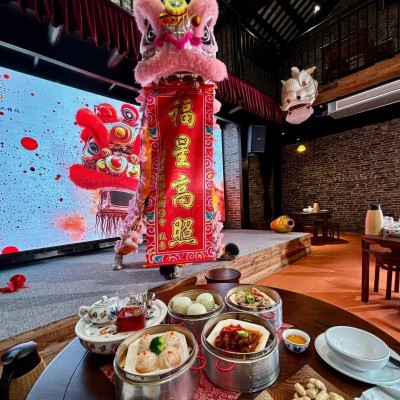
Dim Sum Culture: The Art of Yum Cha in Guangzhou
Introduction: More Than a Meal
It begins before dawn. In the labyrinthine alleyways of Liwan District, elderly Guangzhou residents shuffle toward the warm glow of neighborhood teahouses, their bamboo bird cages swinging gently with each step. By 6:30 AM, the steam is already rising — bamboo baskets stacked high, trolleys clattering across tiled floors, and the unmistakable symphony of a city waking up to tea.
This is yum cha (饮茶) — literally "drinking tea" — and it is the single most important culinary ritual in Cantonese culture.
For the uninitiated visitor, walking into a traditional Guangzhou teahouse can feel overwhelming. The cacophony of voices, the bewildering array of bamboo steamers sliding past your table, the mysterious gestures between diners and waitstaff — it is a cultural performance with its own unwritten rules, a choreography perfected over more than a century.
Here is the good news: once you understand the rhythm of yum cha — the history behind the steam, the etiquette of the table, the logic behind each dim sum classic — you will not only enjoy the finest breakfast of your life. You will gain access to a living tradition that defines Guangzhou itself.
This guide will take you from your first nervous sip of tea to confidently ordering like a local. We will trace the 150-year evolution of Cantonese teahouses, decode the major categories of dim sum, explain the art of tea pairing, and point you to the best venues in Guangzhou for an authentic experience.
Part I: The History of Yum Cha — From Tea Pavilions to Culinary Empire
The Tea House Origins (1860s–1920s)
The story of yum cha begins not with food, but with tea — and opium.
In the mid-19th century, Guangzhou (then Canton) was the only Chinese port open to foreign trade under the Qing dynasty's Canton System. The city was flush with merchants, compradors, and laborers who congregated in cha guan (茶馆) — simple tea houses where patrons nursed cups of oolong while discussing business. These early establishments were modest affairs: wooden benches, porcelain cups, and little more than a few snacks to accompany the brew.
The first major shift came in the 1860s, when the British trade in Indian opium devastated local communities. Missionaries and social reformers opened tea pavilions with gardens — "er lou" (two-story houses) — as a wholesome alternative to the opium dens that had proliferated in the city. These were the prototypes of the modern teahouse: cleaner, more spacious, and crucially, they began serving food.
The Golden Age of Dim Sum (1920s–1940s)
By the 1920s, Guangzhou's teahouses had evolved into something entirely new. The "cha shi" (茶室) — tea chamber — emerged as a dedicated dining format where the tea was merely the prelude to an elaborate meal of small dishes. This was the birth of dim sum as we know it.
The term dim sum (点心) literally means "touch the heart" — a reference to the small, exquisitely crafted morsels designed to delight the palate and warm the soul. The first dim sum masters were Cantonese chefs who adapted techniques from the imperial kitchens of Beijing and the pastry traditions of the West (brought by Portuguese and British traders), creating a hybrid culinary language entirely their own.
Three legendary establishments defined this era:
- Guangzhou Restaurant (广州酒家) — Founded in 1935, it set the standard for refined dim sum in a multi-story setting. It remains open today, a living museum of Cantonese culinary heritage.
- Panxi Restaurant (泮溪酒家) — Opened in 1947 on the banks of Liwan Lake, it combined classical Chinese garden architecture with the teahouse format. Its landscaped courtyards became synonymous with leisurely weekend yum cha.
- Tao Tao Ju (陶陶居) — Dating back to 1880, this is one of the oldest continuously operating teahouses in Guangzhou. Its name means "House of Joy and Contentment," and its third-floor hall was once the gathering place of Guangzhou's literary elite, who would compose poetry between bites of char siu bao.
The Trolley Revolution (1950s–1990s)
The pushcart — that iconic rolling tower of bamboo steamers — is a mid-20th-century innovation. Before the 1950s, dim sum was ordered from a menu, much like any other restaurant meal. The trolley system emerged as a practical solution to the chaotic pace of the morning rush: instead of waiting for orders to be written, cooked, and served, kitchens could mass-produce popular items and circulate them through the dining hall continuously.
This system — "tui che" (推车) — transformed the social dynamics of yum cha. Strangers would crane their necks at the approach of a cart, flagging down the attendant with urgent gestures. Diners would spy a dish at a neighboring table and ask, "Where is that cart?" The trolley made yum cha interactive, spontaneous, and communal. It also created a uniquely Cantonese form of food theatre: the theatre of the cart.
Modern Yum Cha (2000–Present)
Today, Guangzhou's dim sum scene has splintered into three parallel worlds:
- The Traditional Teahouse — Places like Tao Tao Ju and Guangzhou Restaurant still operate with trolleys, steam rising from 6:00 AM, serving multi-generational families who have been coming for decades.
- The Modern Dim Sum House — Restaurants like Dian Dou De (点都德) and Bing Sheng (炳胜) have reinvented dim sum for a new generation, offering sleek interiors, QR-code ordering, and Instagram-worthy presentations while maintaining traditional recipes.
- The Michelin-Starred Innovator — High-end establishments like Yu Yue Heen (愉粤轩) and Lai Heen (丽轩) serve dim sum as haute cuisine, with master chefs creating avant-garde interpretations of classic dishes.
What unites all three is the core ritual: the tea, the company, the unhurried pace of a morning spent eating and talking. In a city that moves at breakneck speed, yum cha remains a stubbornly slow tradition — and that is precisely its magic.
Part II: The Anatomy of a Proper Yum Cha
The Tea: Choosing Your Brew
Yum cha begins with tea. The pot arrives first, always, and the first pour is a ritual of respect and preparation.
Here are the most common teas you will encounter in a Guangzhou teahouse:
| Tea | Chinese Name | Flavor Profile | Best Paired With |
|---|---|---|---|
| **Tie Guan Yin** (Iron Goddess) | 铁观音 | Floral, orchid-like, clean finish | Har gow (shrimp dumplings), siu mai |
| **Pu-erh** | 普洱茶 | Earthy, smooth, deep | Cheung fun (rice rolls), phoenix claws |
| **Shui Hsien** (Water Fairy) | 水仙 | Woody, mineral, slightly smoky | Siu mai, beef balls |
| **Chrysanthemum** | 菊花茶 | Light, floral, mildly sweet | Fried dim sum, spring rolls |
| **Jasmine** | 茉莉花茶 | Fragrant, delicate, soothing | Sweet dim sum, egg tarts |
Pro tip: If you are new to yum cha, start with Tie Guan Yin. Its floral notes cut through the richness of dim sum without overpowering any dish. For a more adventurous choice, ask for Pu-erh — its earthy depth is the traditional Cantonese palate cleanser, believed to aid digestion and cut through grease.
The Tea Etiquette: The Finger Tap
When a fellow diner fills your teacup, you will notice they tap the table twice with their index and middle fingers. This is the "finger kowtow" (叩指礼) — a gesture of thanks that dates back to the Qing dynasty.
The legend: During the Qianlong Emperor's reign, the emperor once traveled incognito and poured tea for his attendants. Unable to kneel and kowtow without revealing the emperor's identity, they devised a substitute: tapping the table with bent fingers, the gesture representing a bow. Today, it is the universal Cantonese thank-you for a tea pour.
What to do: When someone pours tea for you, tap the table twice with your index and middle fingers (held together). If you are pouring for someone older or more senior, they may tap once with a single finger — a symbol of respect in return.
The Dishwashing Ritual: Why Locals Pour Hot Water into Bowls
Before the first dish arrives, you will notice something peculiar: your Chinese dining companions will pour hot tea or boiling water into their small bowls, swirl it around, and dump it into a larger bowl or the table's drip tray. They then rinse their chopsticks and spoon in the same water.
This is "lun bei" (燙杯) — rinsing the tableware — and it serves both a practical and a psychological purpose:
- Practical: It provides a final rinse. While teahouses sterilize dishes, the hot water wash offers reassurance.
- Psychological: It signals that you are a seasoned yum cha participant. The ritual marks the transition from "waiting" to "eating."
Do not skip this step. Participating in the rinsing ritual is one of the easiest ways to blend in and show respect for local customs.
Part III: The Dim Sum Canon — A Field Guide by Cooking Method
Dim sum is traditionally organized not by ingredient but by cooking method. Understanding these categories is the key to building a balanced meal.
Category 1: Steamed (蒸 — Zheng)
Steaming is the soul of Cantonese dim sum. The bamboo steamer — "zheng long" (蒸笼) — imparts a subtle woody fragrance and cooks with gentle, even heat. This is where the most famous dim sum lives.
1. Har Gow (虾饺 — Shrimp Dumplings)
The crown jewel of dim sum. A perfect har gow is a translucent, crescent-shaped dumpling with 7 to 13 precisely crafted pleats, filled with whole shrimp, bamboo shoots, and a whisper of pork fat.
How to judge quality: The skin should be thin enough to see the pink shrimp inside, yet sturdy enough to hold its shape. Bite — the dumpling should burst with juice, the shrimp crunchy and sweet, not mushy. If the skin tears or sticks to the steamer, the master has failed.
FAB breakdown:
- Feature: Hand-pleated translucent wrapper, whole shrimp filling
- Advantage: The pleats seal in juices while the thin skin allows the shrimp flavor to shine through
- Benefit: You get an explosion of pure, sweet seafood in every bite — the essence of Cantonese cooking's "fresh ingredient" philosophy
Tea pairing: Tie Guan Yin. The floral notes of Iron Goddess complement the sweetness of shrimp without competing.
2. Siu Mai (烧卖 — Pork and Shrimp Dumplings)
Open-topped, golden-skinned, and crowned with a dot of orange roe or a single pea — siu mai is the sturdy workhorse of the dim sum cart. The filling is a coarse blend of pork, shrimp, and shiitake mushroom, seasoned with soy, sesame oil, and white pepper.
Texture: Dense and juicy, with a satisfying bounce (弹牙 — "tan ya," literally "teeth-springy") that Cantonese cooks consider the hallmark of well-made meat dumplings.
Tea pairing: Shui Hsien or Pu-erh — the earthy tea cuts through the richness of the pork.
3. Char Siu Bao (叉烧包 — BBQ Pork Buns)
These fluffy white clouds of steamed dough hide a filling of char siu — Cantonese barbecue pork glazed with a sweet-savory sauce of hoisin, honey, and fermented bean paste.
Two styles:
- Steamed char siu bao — the classic "laughing bun" (笑包), so named because the dough splits open naturally during steaming, revealing the dark caramel filling like a smile
- Baked char siu bao — a glazed, golden version with a slightly sweet bread-like exterior, closer to a Western pastry
AIDA structure:
- Attention: The first sight of a char siu bao cart — steam rising, buns peeking from bamboo baskets — is pure sensory theater
- Interest: The contrast between the bland, pillowy dough and the intense, caramelized pork creates a flavor interplay that is uniquely Cantonese
- Desire: You will find yourself reaching for a second, then a third — the bun's sweetness is addictive
- Action: Ask for "char siu bao" the moment you spot the cart. They disappear fast.
4. Fung Zhao (凤爪 — Phoenix Claws)
Chicken feet — yes, chicken feet — are one of the most beloved dim sum items in Guangzhou. The "phoenix claws" are deep-fried first, then braised in a sauce of fermented black beans, garlic, chili, and star anise until the skin is wrinkled and the bones are soft enough to chew.
The art of eating phoenix claws: Place the entire claw in your mouth. Use your teeth and tongue to strip the skin and tendons from the bones. Spit the bones (discreetly) onto your side plate. This is not a dish for the shy — but it rewards the brave with a gelatinous, umami-rich experience unlike any other.
PAS framework:
- Problem: You are intimidated by chicken feet. Westerners often find the idea confronting.
- Agitation: But here is what you will miss: the black bean sauce alone is worth the trip. The collagen-rich skin, the way the tendons dissolve on your tongue — this is Cantonese cooking at its most resourceful and delicious.
- Solution: Start with the smallest claw. Bite off the tip. Work your way up. By the third one, you will be ordering a second basket.
5. Cheung Fun (肠粉 — Rice Noodle Rolls)
Silky, slippery, and impossibly delicate — cheung fun is steamed rice batter spread into a thin sheet, rolled up with filling, and drizzled with sweet soy sauce.
Common fillings:
- Fresh shrimp (鲜虾肠粉) — the most popular
- Beef (牛肉肠粉) — minced beef with cilantro
- Char siu (叉烧肠粉) — barbecue pork
- Plain (斋肠粉) — no filling, all about the texture of the rice roll itself
The secret to great cheung fun: The batter must be freshly ground rice, not rice flour. The steaming time must be precise — 90 seconds, no more. The result should be so smooth that the roll slides across your tongue like velvet.
Category 2: Pan-Fried & Pan-Seared (煎 — Jin)
6. Turnip Cake (萝卜糕 — Lo Bak Go)
Grated daikon radish mixed with rice flour, dried shrimp, Chinese sausage, and shiitake mushrooms, steamed into a firm cake, then sliced and pan-fried until golden and crispy on both sides.
The texture paradox: The inside should be soft and almost custard-like, while the outside crackles with a thin crust of oil. Dip it in X.O. sauce — a luxury Cantonese condiment made from dried shrimp, chilies, and aged ham — for a flavor explosion.
7. Scallion Pancakes (葱油饼) and Pot Stickers (锅贴)
While technically shared with Northern Chinese cuisine, Cantonese versions of these pan-fried classics are lighter, smaller, and more refined — designed for the dim sum table rather than as a street food staple.
Category 3: Deep-Fried (炸 — Zha)
8. Spring Rolls (春卷 — Chun Juan)
Crispy, golden cylinders wrapped in thin pastry and filled with shredded pork, bamboo shoots, shiitake mushrooms, and bean sprouts. The Cantonese version is distinctively thinner and crunchier than its Western counterpart.
Tea pairing: Chrysanthemum tea — the light floral notes provide a refreshing counterpoint to the oil.
9. Wu Gok (芋角 — Taro Puffs)
A labor-intensive dim sum masterpiece. Mashed taro is formed into a nest around a filling of minced pork, shrimp, and mushrooms, then deep-fried. The exterior is a tornado of crispy, bubbly taro threads; the interior is a molten core of savory filling.
Why it matters: Wu gok is disappearing from modern dim sum houses because it is time-consuming to make. Finding it on a menu is a sign of a serious kitchen.
Category 4: Baked & Sweet (焗/甜 — Juk / Tim)
10. Egg Tart (蛋挞 — Dan Tat)
The Cantonese egg tart is a direct descendant of the Portuguese pastel de nata, brought to Guangzhou via Macau in the 19th century. The Cantonese version has a thinner, flakier, more cookie-like crust, and a custard that is less sweet and more delicate.
Two styles:
- Shortcrust (曲奇皮) — a crumbly, buttery shell
- Puff pastry (酥皮) — layered, flaky, and ultra-light
The ultimate test: A perfect egg tart should shatter when you bite into it, the custard wobbling but not runny, the sweetness balanced so that you could eat three without feeling overwhelmed.
11. Mango Pomelo Sago (杨枝甘露 — Yeung Zhi Gam Lok)
A modern dessert invention (1970s) that has become a dim sum finale staple. Chilled coconut milk, fresh mango, pomelo segments, and sago pearls create a tropical, creamy, and texturally complex dessert.
Part IV: The Art of the Yum Cha Order — How to Build a Perfect Meal
The Rule of Threes
A proper yum cha meal follows a rough structure:
- 1 steamed dish per person (e.g., 4 people = 4 steamed items)
- 1 fried or pan-fried dish to add textural contrast
- 1 vegetable dish (gai lan, water spinach, or choy sum)
- 1 dessert to close
The Local's Ordering Strategy
First round (6:30–7:30 AM): Start with the steamed classics — har gow, siu mai, char siu bao. These are the foundation. The kitchen is freshest, the steamers are at their peak.
Second round (7:30–8:30 AM): Add fried items — spring rolls, turnip cake, wu gok. The kitchen has settled into its rhythm, and the fry station is running hot.
Third round (8:30–9:30 AM): Dessert and tea — egg tarts, mango pudding, a fresh pot of jasmine tea. This is the winding-down phase, the time for conversation and reflection.
What Not to Do
- Do not order too much at once. Dim sum is meant to be eaten in waves. The carts keep coming. Pace yourself.
- Do not skip the greens. A plate of blanched gai lan (Chinese broccoli) with oyster sauce cleanses the palate between rich dishes.
- Do not pour your own tea first. In Cantonese etiquette, you fill others' cups before your own. Watch for empty cups at your table.
Part V: Yum Cha Etiquette — The Unwritten Rules
The Trolley System: How to Flag Down a Cart
In traditional teahouses, ordering is a performance. Here is how to navigate the pushcart system:
- Make eye contact with the cart attendant. Do not shout.
- Raise your hand — palm open, fingers slightly curled — and point at the steamer you want.
- The attendant will lift the lid, revealing the contents. Nod to confirm.
- They will place the dish on your table and stamp your order card (点心卡) — a small paper card that tracks your consumption.
- Do not touch the steamer lid. The attendant will handle it. This is both hygienic and respectful.
The Chopstick Language
- Do not stick chopsticks upright in your rice bowl. This resembles incense sticks at a funeral — a major taboo.
- Do not tap your bowl with chopsticks. This is how beggars signal for food.
- Do not pass food from your chopsticks to another's chopsticks. This mimics a funeral ritual where bones are passed between family members.
The Bill: Who Pays?
In traditional Cantonese culture, the person who invites pays. If you are the guest, offer to pay once — but do not insist if your host declines. If you are the host, settle the bill discreetly by signaling to the waiter before the meal ends. Never fight over the bill in public; this is considered crude.
Part VI: The Best Teahouses in Guangzhou — Where to Experience Authentic Yum Cha
1. Tao Tao Ju (陶陶居) — The Historic Icon
- Location: 20 Shiwei Road, Liwan District
- History: Founded 1880
- Vibe: Grand, ornate, late-Qing dynasty architecture with carved wooden screens and marble floors
- Must-order: Char siu bao, egg tarts, shrimp dumplings
- Price: ¥80–120 per person
- Best for: First-time visitors who want the full "old Guangzhou" experience
Why go: Tao Tao Ju is not just a restaurant; it is a time capsule. The third-floor hall, with its high ceilings and antique chandeliers, has hosted everyone from Qing dynasty scholars to modern celebrities. The dim sum here is traditional, unapologetically classic, and executed with generational expertise.
2. Guangzhou Restaurant (广州酒家) — The Gold Standard
- Location: Multiple locations; flagship at 2 Wenchang South Road, Liwan
- History: Founded 1935
- Vibe: Polished, professional, slightly formal
- Must-order: Har gow, siu mai, cheung fun
- Price: ¥100–150 per person
- Best for: Those who want benchmark-quality dim sum in a refined setting
Why go: Guangzhou Restaurant is often called the "Number One Restaurant in Guangzhou." Its dim sum is the standard against which all others are measured. The har gow here is a masterclass — each pleat identical, each wrapper translucent, each shrimp perfectly cooked.
3. Panxi Restaurant (泮溪酒家) — The Garden Teahouse
- Location: 151 Longjin West Road, Liwan District
- History: Founded 1947
- Vibe: A classical Chinese garden with pavilions, bridges, and koi ponds
- Must-order: Turnip cake, phoenix claws, wu gok
- Price: ¥90–130 per person
- Best for: A leisurely weekend yum cha with family or a special occasion
Why go: Panxi is the most beautiful teahouse in Guangzhou. Set on the banks of Liwan Lake, it occupies a sprawling complex of traditional buildings connected by arched bridges and shaded walkways. Request a table by the window overlooking the garden — the view transforms the meal into something meditative.
4. Dian Dou De (点都德) — The Modern Classic
- Location: Multiple branches across Guangzhou
- History: Founded 1933 (revived 2015)
- Vibe: Modern, clean, energetic, always packed
- Must-order: Red rice cheung fun (红米肠), baked char siu bao, passion fruit egg tarts
- Price: ¥70–100 per person
- Best for: Budget-conscious diners who want quality without the historic price tag
Why go: Dian Dou De has become the most popular dim sum chain in Guangzhou, and for good reason. It has modernized the dim sum experience without sacrificing quality. The signature red rice cheung fun — shrimp wrapped in crispy tempura batter, then encased in red rice batter and steamed — is a textural tour de force.
5. Bing Sheng (炳胜) — The Michelin-Recommended
- Location: 33 Keyun Road, Tianhe District
- Vibe: Upscale, contemporary, business-friendly
- Must-order: Black truffle siu mai, lobster har gow, almond cream dessert
- Price: ¥150–250 per person
- Best for: A splurge-worthy meal or a business lunch
Why go: Bing Sheng represents the cutting edge of Cantonese dim sum. The chefs here are not afraid to experiment — black truffle, lobster, foie gras — while maintaining the technical precision that defines great dim sum. The ambiance is sleek and modern, a world away from the clatter of Liwan's historic teahouses.
6. Yu Yue Heen (愉粤轩) — The Michelin-Starred Experience
- Location: 4F, Four Seasons Hotel, 5 Zhujiang West Road, Tianhe
- Vibe: Luxurious, quiet, impeccably serviced
- Must-order: Abalone siu mai, gold-leaf har gow, bird's nest egg tarts
- Price: ¥300–500 per person
- Best for: The ultimate dim sum pilgrimage
Why go: If you want to taste dim sum as high art, this is the address. The one-Michelin-star kitchen transforms traditional dim sum into luxury objects, using the finest ingredients in China. The price is steep, but the experience is unforgettable.
Part VII: The Seasons of Dim Sum — What to Eat When
While most dim sum is available year-round, Guangzhou's teahouses observe seasonal traditions:
Spring (March–May): Fresh bamboo shoots appear in har gow and spring rolls. The season's first chives are used in chive dumplings (韭菜饺).
Summer (June–August): Lighter, cooler options dominate. Mango-based desserts, chilled tofu, and congee (rice porridge) with preserved egg become popular.
Autumn (September–November): The "golden season" for dim sum. The best crabs yield their meat for crab roe siu mai. Dried tangerine peel (陈皮) is featured in beef balls and turnip cake.
Winter (December–February): Hearty, warming dishes — clay pot rice (煲仔饭), snake soup (蛇羹 — for the adventurous), and rich, slow-braised items like beef brisket in bean sauce.
Part VIII: Beyond the Teahouse — Dim Sum's Cultural Significance
The Family Table
In Guangzhou, yum cha is not primarily about food. It is about family. The weekend yum cha gathering is a non-negotiable ritual for many Cantonese families — three generations seated around a circular table, sharing dishes, arguing over who ate the last har gow, and catching up on the week's events.
The circular table is intentional. Unlike Western dining where each person has their own plate, dim sum is fundamentally communal. Everyone reaches into the same steamer. Chopsticks dip into shared sauces. The act of eating together — of literally sharing the same food — reinforces social bonds in a way that individual plating cannot.
The Social Hierarchy of the Tea Pour
Watch how tea is poured at a family table. The youngest pours for the oldest first. The senior members of the family receive the first cup, the first piece of char siu bao, the first serving of cheung fun. This hierarchy is not stated — it is performed, every single time, through the small gestures of the yum cha ritual.
Dim Sum as a Window to Guangzhou
For the traveler, yum cha offers something rare: an authentic, unmediated encounter with local life. In a city that has modernized at breakneck speed — skyscrapers rising, old neighborhoods disappearing — the teahouse remains a sanctuary of continuity. The same dishes that your great-grandfather ate are being served from the same bamboo steamers, prepared with the same techniques, accompanied by the same tea.
This is the deeper value of the yum cha experience. It is not just a meal. It is a portal into the soul of Guangzhou — a city that honors its past even as it races toward the future.
FAQ: Common Questions About Yum Cha
Q: What time should I arrive for yum cha?
A: Early. The best dim sum is served between 7:00 AM and 10:00 AM. By 11:00 AM, most popular items are sold out, and the quality of what remains has declined. For a weekend visit, arrive before 8:00 AM to avoid the worst of the queue.
Q: How many dishes should I order per person?
A: A good rule of thumb: 3–4 dishes per person, plus a dessert. Start with fewer — you can always order more when the next cart comes.
Q: Is it rude to leave food uneaten?
A: Yes. In Cantonese culture, leaving food on shared plates suggests you did not enjoy it. Order conservatively and finish what you take.
Q: Can I get vegetarian dim sum?
A: Yes, but options are limited in traditional teahouses. Look for: vegetable dumplings (素菜饺), steamed buns with lotus seed paste (莲蓉包), turnip cake (萝卜糕 — made with dried shrimp in most places, so ask), and plain cheung fun. Some modern teahouses now offer dedicated vegetarian menus.
Q: Do I need to speak Cantonese to order?
A: No. Most teahouses in central Guangzhou have picture menus or English-language menus. In traditional trolley-based teahouses, just point at what you want. The attendants are accustomed to non-Chinese-speaking guests.
Q: How much does a typical yum cha meal cost?
A: Expect to pay ¥70–150 (approximately $10–20 USD) per person at a mid-range teahouse. High-end restaurants like Yu Yue Heen will cost ¥300–500+ ($40–70 USD).
Plan Your Guangzhou Dim Sum Journey
Yum cha is more than a meal — it is the key that unlocks the heart of Cantonese culture. From the first sip of Tie Guan Yin to the last bite of egg tart, every moment of the experience carries centuries of tradition, philosophy, and craftsmanship.
Ready to experience Guangzhou's dim sum culture firsthand?
We recommend combining your yum cha journey with a guided food tour that takes you beyond the tourist trail. Our Guangzhou food experience packages include:
- Morning teahouse visits with a local guide who explains the history and etiquette of each dish
- Dim sum cooking workshops where you learn to pleat har gow and fold char siu bao under the guidance of a master chef
- Multi-day food itineraries that combine yum cha with street food crawls, seafood markets, and Cantonese banquet dinners
- Customized cultural tours that pair dim sum with visits to Guangzhou's historic temples, the Canton Tower, and the Shamian Island concession district
For custom tour inquiries: 📧 Sam@ChinaTravelPlus.com
For group bookings (4+): 📧 Luppy@ChinaTravelPlus.com
Related resources:
- Shunde: UNESCO City of Gastronomy — The Soul of Cantonese Food
- 144-Hour Transit Visa China 2026: Complete Guide for International Travelers
More Than Travel. It's the Plus That Matters. — ChinaTravelPlus
Published July 10, 2026 | Updated July 10, 2026
Sources: Tao Tao Ju historical archives, Guangzhou Restaurant culinary records, "Dim Sum: The Art of Cantonese Tea Culture" (Hong Kong University Press), interviews with dim sum masters at Panxi Restaurant and Dian Dou De, and personal research across 40+ Guangzhou teahouses.
Recommended Tours
▶ Guangdong Cantonese Food & Intangible Heritage Tour – 6 Day
▶ Cantonese Private Chef & Slow Life Experience – 5 Day Culinary
Plan Your China Adventure With Us
Private, flexible tours designed around your interests. Let our local experts craft your perfect China experience.
Custom Tours — Sam@ChinaTravelPlus.com
Group Bookings — Luppy@ChinaTravelPlus.com
Disclaimer: Prices, opening hours, and policies are subject to change. Always verify with the venue or your ChinaTravelPlus guide before visiting. This content is for informational purposes and does not constitute a formal tour quotation.