China TCM Wellness Tour 2026: How September's Hangzhou Launch Opens a New Blue Ocean for Inbound Cultural Health Travel
Key Highlights
For International Travelers:
- Hangzhou's Hello International Travel confirmed a September 2026 launch of its TCM Wellness China Tour, built on overseas social media demand that delivered "far above expectation" TCM consultation requests
- The line packages moxibustion, TCM massage, foot reflexology, and Tai Chi as a multi-day cultural product, reframing TCM from clinical service into cultural itinerary
- TCM has reached 196 countries, with more than 300,000 practitioners outside China and a global acupuncture workforce in the hundreds of thousands
- Average inbound stay climbed to 5.1 days in H1 2026, up 11% year on year, opening room for multi-day wellness products that were marginal under the old 3.8-day norm
- Inbound Alipay spending has risen 72.9% year on year since June 2026, with a 350% jump in instant tax refund transactions, giving wellness a high-yielding consumer base
A Hangzhou Peer Move That Validates the Category
Traditional Chinese Medicine in China has long been sold to international visitors as a clinical service: an accredited base, a pulse diagnosis, a course of acupuncture, a measurable clinical outcome. The model is real and it works, but it has always sat awkwardly inside the inbound product stack, which is built around itineraries, not treatment plans.
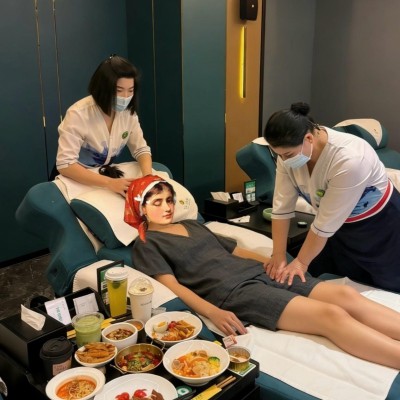
A small but consequential move in late July 2026 signals that the model is about to change. Wu Yingying, co-founder of Hangzhou Hello International Travel, confirmed to Xinhua and the Economic Information Daily that her company will launch a "TCM Wellness China Tour" line in September 2026. The product is not a hospital referral. It is a curated itinerary: TCM massage, moxibustion, foot reflexology, and a Tai Chi course, packaged together, sold as a multi-day cultural wellness experience.
The trigger was demand, not supply. Wu said her team's overseas social media content posted through 2026 generated TCM-related consultation volume "far above expectation," with the demand curve pointing at a specific cluster: pulse diagnosis, moxibustion, cupping, Tai Chi, and seasonal herbal teas.
For international travelers, the September launch matters for three reasons. First, it puts TCM on the cultural itinerary map, alongside tea ceremony, calligraphy, and porcelain workshops. Second, it is built around multi-day products, the format the inbound market has been quietly demanding since stay length began climbing past the 3.8-day historical average. Third, it gives foreign travelers a credentialed, peer-tested entry point into a category that, until now, has been a niche search query rather than a mainstream travel product.
From Clinic to Cultural Product: TCM's Re-Entry into Inbound Itineraries
The shift from clinic to itinerary is a structural response to how inbound travelers actually want to consume TCM, not a marketing rebrand.
The 0618 baseline for TCM wellness tourism was clinical in form. The 32 nationally certified TCM wellness bases offered 7 to 14 day treatment programs with English-speaking practitioners, 9.3-day average stays, and per-trip spending 4.2 times that of regular tourists. That product worked, and the H1 2026 international medical visit count of 186,000, up 215% year on year, proved the demand. But it also asked the foreign traveler to behave like a patient: commit to a clinical plan, follow a dietary protocol, and stay in a wellness base rather than a hotel.
The Hangzhou move reframes that into something easier to buy. The September line treats TCM as a sequence of cultural touchpoints rather than a treatment course. A morning pulse diagnosis at a 300-year-old pharmacy like Fang Hui Chun Tang, an afternoon moxibustion session calibrated to body constitution, a Tai Chi class on the West Lake hillside, and a foot reflexology session before dinner: each segment is short, each is explainable in cultural terms, and each can be sold without asking the traveler to commit to a clinical outcome.
The same reframe is already happening elsewhere. Tianjin has built a "Jincheng TCM Tour" line anchored on the 100-year-old Daren Tang museum. Sanya runs the Boao Lecheng international medical tourism pilot zone, where TCM wellness centers pair acupuncture with tropical recovery and serve a cumulative foreign clientele of more than 100,000 visitors from 40-plus countries.
For international travelers, the practical consequence is that TCM wellness is no longer a separate category that requires a separate trip. It is a theme that can be inserted into a regular Yangtze Delta, Hainan, or Tianjin itinerary.
The Global Demand Backdrop: 196 Countries and 300,000 Practitioners
The Hangzhou move is also well-timed because the global demand infrastructure for TCM has been quietly building for decades.
According to data from the National Administration of Traditional Chinese Medicine and the World Federation of Chinese Medicine Societies, TCM has now spread to 196 countries and regions, with more than one-third of the world's population having received some form of TCM treatment. Outside China, the global TCM workforce has crossed 300,000 practitioners. The World Health Organization has recognized acupuncture practice in 113 of its member states, 29 of which have established legal frameworks for traditional medicine, and 20 of which have integrated acupuncture into their medical insurance systems.
The diaspora is geographically diverse. Japan has more than 100,000 acupuncturists, the highest national count in the world. The United States has more than 15,000 registered acupuncturists serving an estimated 12 million patient visits a year. Germany has roughly 50,000 acupuncturists. Switzerland was the first European country to bring TCM into basic health insurance in 1999. Brazil has close to 100,000 acupuncturists. Australia has more than 3,000 TCM and acupuncture clinics.
For an inbound operator, that diaspora is the most important pre-condition for a product launch. A foreign traveler who has already encountered acupuncture in Berlin, herbal tea in London, or cupping in São Paulo does not need to be educated about TCM. They need to be shown the Chinese original.
Why the Stay Length Has Caught Up: 5.1 Days
The single most underappreciated structural change in China's inbound market in 2026 is the rise in average stay length. According to Ctrip data, the average inbound length of stay in H1 2026 reached 5.1 days, up 11% year on year, with April 2026 alone averaging 6.1 days. The summer window pushed the average homestay stay to 4.7 days, and European visitors stayed in hotels for an average of more than three days, roughly one full day longer than the inbound average.
The historical 3.8-day average had been the binding constraint on TCM wellness product design. A 3.8-day trip cannot accommodate a 7 to 14 day clinical program, and even a 3 to 5 day cultural product would compete with the Forbidden City, the Great Wall, and the Bund for the same trip budget. A 5.1-day average, with a meaningful tail at 6 to 8 days, changes the constraint completely.
The Hangzhou September line is calibrated to that window. The core itinerary is 5 days, structured as a Yangtze Delta wellness loop, with one Hangzhou TCM pharmacy day, one Moganshan or Anji forest wellness day, one Tai Chi and tea ceremony day, and two buffer days for transit, light sightseeing, and follow-up sessions.
For travelers, the implication is that TCM wellness no longer requires a separate, dedicated trip. It is now plug-and-play inside a standard China itinerary.
The Inbound Wallet Has Changed: 72.9% Spend Growth
The second underappreciated structural change is the inbound consumer's wallet. According to Alipay and Ant Group data published in late July 2026, inbound consumer spending via the Alipay platform has risen 72.9% year on year since June, and the same window saw a 350% jump in instant tax refund transactions.
The 72.9% spend growth matters more than the headline. Inbound visitors are no longer spending on a few big-ticket shopping items and leaving. They are spending on a wider basket that includes medical, wellness, and experience services. The new Alipay "International Medical Zone" launched in Shanghai in late June 2026 already covers 22 international hospitals, with department guides, registration, navigation, and integrated payment for foreign patients.
The September TCM wellness line lands directly into that category. The peer-tested Hangzhou product includes a pulse diagnosis, a moxibustion or cupping session, a herbal tea blending workshop, a Tai Chi course, and a take-home herbal sachet, all of which fit cleanly into the wellness spend category. For travelers who can already pay for a 4,000-yuan TCM retreat with a single Alipay scan and a 2-minute instant tax refund, the friction that kept TCM off the inbound shelf in earlier years has effectively disappeared.
The peer move is also a competitor-signal. The 50-country unilateral visa-free policy, the 55-country 240-hour transit visa exemption, and the 5.1-day average stay together mean that a foreign traveler who books a TCM wellness line in September 2026 can pay with their home card, claim tax back at the airport, and stay long enough to actually finish the program.
Destination Map: Moganshan, Anji, Sanya, and the Yangtze Delta Matrix
The September Hangzhou launch sits at the center of a destination map the inbound wellness market has been quietly building for the last three years. Five clusters stand out.
Moganshan and the Yangtze Delta bamboo-forest cluster. Moganshan, the bamboo-covered highland north of Hangzhou, has run an elderly-friendly wellness travel program since summer 2026, with a 499-yuan three-day minimum-priced silver-age package and roughly one-third of Deqing County's 988 homestays already retrofitted for older travelers. Forest coverage above 90%, summer average around 24 degrees Celsius, and the Feitou village cluster with forest yoga, forest qigong, and forest walking make Moganshan the Yangtze Delta's de facto wellness mountain.
Anji, the bamboo hometown. Anji's 2025 visitor count crossed 32 million, with 38% in wellness and resort segments. The 2026 "Zhejiang Mountain Living" guide lists eight Anji sites, including Jiangnan Tianchi highland wellness resort, Senhai International Wellness Valley (90% forest coverage, 3,000 negative oxygen ions per cubic centimeter), and Zhongnan Baicaoyuan ecological park. Anji pairs well with Moganshan into a 5-day bamboo-forest loop.
Sanya and the Hainan TCM cluster. Sanya TCM Hospital, China's first national-level TCM service export base, has cumulatively served more than 100,000 foreign visitors from 40-plus countries, with the 2025 Sanya International Friendship TCM Wellness Center alone receiving more than 10,000 foreign guests, dominated by Russian and Kazakh visitors. The Boao Lecheng international medical tourism pilot zone and the 59-country visa-free entry make the cluster the easiest entry point for long-haul wellness travelers.
Tianjin and the pharmaceutical-heritage cluster. Tianjin's "Jincheng TCM Tour" anchors on the 100-year-old Daren Tang museum and runs a multilingual TCM walk that connects pharmaceutical heritage to modern life. The line is shorter than Hangzhou but pairs well with a Beijing stop as a 1 to 2 day cultural TCM insert.
Zhangjiajie and the forest-qigong cluster. Zhangjiajie's Wulingyuan canyon and Tianzi Mountain plateau, already at 22 to 26 degrees Celsius in peak July and posting a foreign-visitor share of roughly 50% of daily entries, can absorb a forest qigong or forest-bathing block of 1 to 2 days.
Together, these five clusters form a national wellness matrix mature enough to support multi-day, multi-stop TCM products from the Yangtze Delta, Hainan, or the Beijing-Tianjin-Hebei region.
How to Build a TCM Wellness Itinerary
The two most accessible entry points for a foreign traveler designing a TCM wellness itinerary in late 2026 are the Yangtze Delta and Hainan.
Yangtze Delta 5 to 7 day sample. Day 1: arrive Shanghai or Hangzhou. Day 2: Hangzhou pulse diagnosis, moxibustion, and tea ceremony at Fang Hui Chun Tang. Day 3: morning Tai Chi by West Lake, transfer to Moganshan. Day 4: Moganshan forest wellness, forest qigong, bamboo-pavilion meditation. Day 5: morning foot reflexology in Moganshan, transfer to Anji. Day 6: Anji forest therapy and Jiangnan Tianchi soak, return. Day 7: depart.
Hainan 4 to 6 day sample. Day 1: arrive Sanya, transfer to Boao. Day 2: Sanya TCM Hospital consultation, constitution analysis, acupuncture or moxibustion course. Day 3: rest day with a guided herbal medicine garden walk. Day 4: Sanya tropical recovery, beach-side qigong, Yanoda rainforest hot spring. Day 5: Boao Lecheng international medical optional add-on. Day 6: depart.
Tianjin 1 to 2 day insert. For travelers with a Beijing-heavy itinerary, the Tianjin TCM museum line inserts a half-day pharmaceutical heritage walk and a one-day Jincheng TCM tour into a 5 to 7 day North China trip, with English-speaking guides and Alipay payment throughout.
For all three patterns, the September Hangzhou launch and the 5.1-day stay combine to make a peer-tested, multi-day TCM wellness product economically viable inside the standard visa-free envelope, and the 70%-plus inbound spend growth gives the wellness category a higher-yielding consumer base than the inbound market has historically supported.
Recommended China Travel Tours
Pair your reading with a hand-picked itinerary from our real tour collection:
- Zhejiang Wellness Journey: Hangzhou Luxury Bathhouse & West Lake Zen 5-Day Healing Tour — Jiangnan Tang Quan tea-scented SPA, Yue-style Tui Na, West Lake Zen, Longjing tea. 5-day Zhejiang wellness.
- Yunnan Wellness Journey: Kunming Hot Spring & Lijiang Ancient Town 5-Day Healing Tour — 5-day Yunnan wellness: Kunming hot springs, Dali Bai herbal bath, Lijiang & Jade Dragon.
Plan Your TCM Wellness China Adventure
Email Sam for customized tour planning.
Email Luppy for group bookings (10+ travelers).
Visit ChinaTravelPlus.com for the full collection.
About the Author — Sam · Senior Travel Planner
Sam designs custom itineraries for solo travelers, families and food lovers, delivering a complete plan within 48 hours.
Ready to Plan Your China Trip?
Email Sam for customized tour planning.
Email Luppy for group bookings (10+ travelers).
Visit ChinaTravelPlus.com for the full collection.
More Than Travel. It's the Plus That Matters.
* Prices, schedules, policies, seasons and festival details in this article are subject to change. Always confirm current rates, dates and availability with us at the time of booking — the information here reflects the situation as of publication. ChinaTravelPlus reserves the right of final interpretation.