China Overtakes Southeast Asia as #1 Korean Summer Destination — 27.4% of All Bookings
Korea Week Sets the Stage: K-Culture Comes to China
In June 2026, the cultural current between Korea and China reversed direction. Korea Week, a large-scale cultural and tourism promotion event, brought Korean pop culture directly to Chinese audiences in Beijing, Shanghai, and Guangzhou. K-pop concerts drew thousands, K-food samples ran out in hours, and K-beauty stations had lines around the block. But the most significant aspect of Korea Week was not what it sold — it was what it revealed. The event exposed a new generation of Chinese consumers to Korean culture, but more importantly, it highlighted the reverse flow: Korean travelers coming to China in numbers not seen since before the THAAD dispute. The statistics are striking. In Hainan, Korean arrivals surged 163% year-on-year in early 2026. Korean travelers are now the second-largest source of foreign visitors to Hainan after Russia. In Changsha, Korean tourist numbers doubled in the first half of 2026. In Shandong, the historic heart of the Korean Chinese community, roots tourism is growing so fast that local governments are scrambling to build Korean-language infrastructure.
The Korean MZ Generation's China Travel Revolution
The key to understanding the Korean travel boom to China lies in one demographic: the MZ generation — Koreans in their 20s and 30s. Unlike their parents' generation, who associated China travel with organized shopping tours and package deals, MZ-generation Koreans are digital natives who plan their own trips, book through apps, and prioritize experiences over purchases. They are more likely to have seen a Chinese destination on YouTube or Instagram than in a travel agency brochure. They are comfortable using Chinese apps like Xiaohongshu (Little Red Book) and Douyin for travel research, and they expect the same digital convenience they enjoy at home. Korean MZ travelers are also more adventurous. They are willing to venture beyond Beijing and Shanghai to second-tier cities like Changsha, Zhangjiajie, and Qingdao. They are interested in Chinese food culture, history, and nature — not just shopping. This marks a fundamental shift from the old model of Korean tourism to China.
Beyond Shopping: What Korean Travelers Want in 2026
Korean traveler preferences have evolved significantly: Top travel motivations for Korean tourists to China (2026):
- Food experiences (78% ranked #1 or #2)
- Cultural heritage and history
- Nature and outdoor activities
- Shopping (now #4, down from #1 in 2019)
- K-culture connections (visiting places featured in K-dramas or Korean variety shows filmed in China)
The Roots Factor: Chinese Diaspora and Ancestral Village Tourism
A uniquely Korean dimension of this travel boom is the surge in Chinese roots tours — Korean travelers of Chinese descent returning to their ancestral villages. Shandong Province, particularly the port city of Weihai and the historic town of Yantai, has become the epicenter of this trend. These cities are home to large populations of Korean Chinese (Chaoxianzu) and have deep historical connections to Korea dating back centuries. Local governments in Shandong are actively building Korean-language signage, training Korean-speaking tour guides, and developing heritage trails that trace the migration routes of Korean ancestors. Liaoning and Jilin provinces also see significant roots tourism, especially from Korean travelers whose families originally came from the Yanbian Korean Autonomous Prefecture. The trend represents a powerful emotional connection that transcends typical tourism — it is about identity, memory, and belonging.
Korean Food Pilgrimage: Eating Their Way Through China
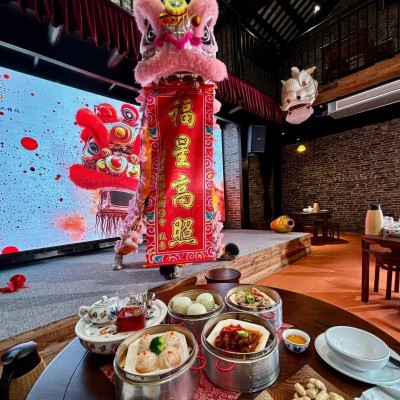
Korean MZ travelers are food-obsessed, and Chinese cuisine is a major draw. But not all Chinese food — specific dishes and restaurants that have gained fame through Korean TV shows, YouTube food vlogs, and social media are the real magnets. Popular Chinese foods among Korean travelers:
Mapo tofu (麻婆豆腐): A Chengdu classic that has become a must-eat for Korean visitors
Xiaolongbao (小笼包): Shanghai's soup dumplings, particularly at Din Tai Fung and local favorites
Hot pot (火锅): Chongqing-style spicy hot pot has a devoted Korean following
Beijing duck (北京烤鸭): Still the #1 iconic dish
Kung Pao chicken (宫保鸡丁): Another Sichuan favorite
Chinese street food: Jianbing (煎饼), chuan'er (串儿/skewers), and tanghulu (糖葫芦) are social media gold
Korean travelers often plan entire itineraries around food. A typical food-focused trip might include: three days in Chengdu for Sichuan cuisine, two days in Chongqing for hot pot, two days in Shanghai for xiaolongbao and fine dining, and a detour to Changsha for stinky tofu and Hunan cuisine. Cross-border train from Seoul to Zhangjiajie: In 2026, a special cross-border train service connects Seoul to Zhangjiajie via Qingdao, making one of China's most spectacular natural destinations accessible to Korean travelers without a flight. The service has been particularly popular with young Korean travelers who prefer train travel for its affordability and the scenic journey through eastern China.Temple Stay: Finding Peace in Chinese Buddhism
Another emerging trend among Korean travelers is the temple stay experience in China. Korean Buddhism shares deep historical roots with Chinese Buddhism, and many Korean travelers are interested in experiencing monastic life at Chinese temples. Popular temple stay destinations:
Putuoshan, Zhejiang: A sacred island dedicated to Guanyin, the bodhisattva of compassion
Wutai Mountain, Shanxi: One of China's Four Sacred Buddhist Mountains
Shaolin Temple, Henan: The birthplace of Chan (Zen) Buddhism and kung fu
Lingyin Temple, Hangzhou: A historic temple nestled in forested hills
Temple stays offer Korean travelers a chance to disconnect from their hyper-connected urban lives, practice meditation, learn about Buddhist philosophy, and experience the deep spiritual connections between Korean and Chinese culture.Practical Tips for Korean Travelers to China
Visa: China's visa-free policy for South Korean citizens allows stays of up to 30 days. No visa required for tourism, business, or family visits. Payments: Alipay and WeChat Pay both support Korean credit cards and Kakao Pay integration. Link your card before departure. Transportation: China's high-speed rail network is the best way to travel between cities. Korean travelers find CTrip (Trip.com) easy to use in Korean language mode. Didi (China's Uber) works with Korean phone numbers. Language: While English is limited outside major cities, the situation is better for Korean travelers. Major tourist destinations increasingly offer Korean-language signage and guides. Apps like Papago and Google Translate handle Chinese-Korean translation well. Food tips: Korean travelers should note that Chinese restaurants rarely serve banchan (side dishes). Order dishes individually. Chinese restaurants are generally less spicy than assumed — most dishes can be ordered mild. Cultural etiquette: Learn basic Chinese phrases. Remove shoes when entering temples. Tipping is not customary in China. Bargaining is expected at markets but not in stores.
How Travel Brands Can Captivate the Korean Market
For Chinese travel brands looking to attract Korean travelers, the data suggests three key strategies: 1. Korean-language digital presence: Korean MZ travelers research trips on Korean platforms. A Korean-language website, Korean-language Xiaohongshu content, and active KakaoTalk customer service are essential. 2. Experience-focused packages: Replace shopping-heavy itineraries with food tours, cultural workshops, nature treks, and temple stays. Korean travelers will pay more for authenticity than for discounts. 3. Cross-border train and rail products: The Seoul-Zhangjiajie cross-border train is a unique selling point. Develop rail-based itineraries that connect Korean entry points (Incheon, Busan) with Chinese destinations via Qingdao, Weihai, or Yantai.
Plan Your China Journey
Korean travelers are discovering China in new ways — through food, through history, through nature, and through the deep cultural connections that bind our two countries. Whether you are tracing your ancestral roots in Shandong, eating your way through Chengdu, or finding peace in a Buddhist temple, ChinaTravelPlus can design a journey that connects you with the China you came to find. 🌐 Visit ChinaTravelPlus.com
www.chinatravelplus.com
Recommended Routes
Zhangjiajie Avatar Family Camp 4 Days Private Nature Tour
Jiangnan Secret Realm 5-Day Family Private Slow Travel (Hangzhou·Suzhou·Wuzhen)
Plan Your China Adventure With Us
Private, flexible tours designed around your interests.
More Than Travel. It's the Plus That Matters.