China 240-Hour Visa-Free Transit Guide 2026
What Is China's 240-Hour Visa-Free Transit Policy?
For travelers seeking a customized China experience, the 240-hour visa-free transit policy is your gateway to exploring China without visa paperwork.
China's 240-hour visa-free transit policy (also known as the 10-day visa-free transit) represents one of the most significant updates to the country's entry regulations in recent years. Effective 2026, this policy extends the previous 72-hour and 144-hour transit windows to a full 240 hours (10 days), giving international travelers unprecedented flexibility to explore China during long layovers.
The policy applies to eligible foreign nationals from 54 countries who are transiting through China to a third country or region. Instead of spending your layover confined to an airport hotel, you can now venture out and experience Chinese culture, cuisine, and attractions for up to 10 days without obtaining a visa in advance.
This expansion reflects China's broader strategy to revitalize its inbound tourism market and position itself as a more accessible destination for international travelers. The policy has been widely welcomed by the global travel community, with travel forums and social media platforms buzzing about the new opportunities for extended stopovers in cities like Beijing, Shanghai, Guangzhou, and Chengdu.
Who Is Eligible for 240-Hour Visa-Free Transit?
The expanded visa-free transit policy applies to passport holders from 54 countries. The eligible countries span multiple continents and include:
Europe: United Kingdom, France, Germany, Italy, Spain, Netherlands, Belgium, Luxembourg, Portugal, Greece, Sweden, Denmark, Finland, Norway, Iceland, Switzerland, Austria, Poland, Hungary, Czech Republic, Slovakia, Slovenia, Estonia, Latvia, Lithuania, Malta, Cyprus, Bulgaria, Romania, Croatia, Montenegro, North Macedonia, Albania, Serbia
Americas: United States, Canada, Brazil, Mexico, Argentina, Chile
Asia-Pacific: Japan, South Korea, Singapore, Brunei, United Arab Emirates, Qatar
Oceania: Australia, New Zealand
Important eligibility criteria:
You must hold a valid passport with at least 3 months validity remaining
Your travel itinerary must involve entering China from one country and departing to a different country or region (including Hong Kong, Macau, and Taiwan)
The final destination must be a third country/region—you cannot use this policy for round-trip travel from Country A to China and back to Country A
You must enter and exit through designated ports of entry (now expanded to 60 ports across 24 provinces)
Approved Entry Ports and Allowed Travel Areas
One of the most significant improvements in the 2026 policy update is the expansion of designated entry and exit ports. The number of authorized ports has increased from 39 to 60, spanning 24 provincial-level regions in China.
Newly added ports in 2026 include:
Shanxi: Taiyuan Wusu International Airport
Jiangsu: Sunan Shuofang International Airport, Yangzhou Taizhou International Airport
Zhejiang: Wenzhou Longwan International Airport, Yiwu International Airport
Anhui: Hefei Xinqiao International Airport, Huangshan Tunxi International Airport
Fujian: Fuzhou Changle International Airport, Xiamen Gaoqi International Airport
Shandong: Jinan Yaoqiang International Airport, Qingdao Jiaodong International Airport
Hubei: Wuhan Tianhe International Airport
Sichuan: Chengdu Tianfu International Airport (in addition to Chengdu Shuangliu)
Yunnan: Kunming Changshui International Airport, Lijiang Sanyi International Airport
Coverage areas have also expanded. Previously, transit passengers were often restricted to specific urban areas or districts. Under the new policy, eligible travelers can move freely within the entire province or region where they entered. For example, if you enter through Beijing Capital International Airport, you can now travel not just within Beijing municipality but also to nearby Hebei and Tianjin areas under the Jing-Jin-Ji integration zone.
This territorial expansion means transit passengers can now plan multi-destination itineraries within their allowed zones, creating opportunities for meaningful travel experiences rather than just fleeting airport layovers.
Step-by-Step: How to Use the 240-Hour Visa-Free Transit
Using the 240-hour visa-free transit policy is straightforward, but attention to detail is essential to avoid complications at immigration.
Before departure:
- Ensure your passport is from one of the 54 eligible countries
- Confirm your itinerary involves a genuine transit (Country A → China → Country B)
- Book your flights with confirmed tickets for both arrival and departure
- Prepare your accommodation information (hotel bookings or invitation letter)
Upon arrival in China:
- Look for the "Temporary Entry Permit" counter at immigration (usually separate from the regular visa queue)
- Present your passport, onward ticket, and completed arrival card
- The immigration officer will issue a temporary entry permit stamp in your passport indicating your allowed stay period (240 hours from entry)
- Collect your baggage and proceed through customs
During your stay:
You may move freely within your designated area but cannot travel to unrestricted zones without proper documentation
Keep your passport and temporary entry permit with you at all times
If you need to change your departure flight, you can do so without notifying authorities as long as you depart within the 240-hour window
Departure:
Proceed to the airport with your passport and temporary entry permit
Check in for your departing flight
At immigration, present your passport and the temporary entry permit stamp
The officer will verify your stay duration and allow you to depart
No advance application is required—the temporary entry permit is issued on arrival. However, airlines may ask to see proof of onward travel before boarding, so keep your departure ticket easily accessible.
Top Destinations for 240-Hour Transit Passengers
Ready to taste your way through China? The Guangdong Food Odyssey takes you beyond tourist restaurants into authentic Lingnan cuisine.
The expanded policy opens up remarkable possibilities for transit passengers to experience China's diversity. Here are the top destinations to consider based on major transit hubs:
Beijing (Perfect for 3-5 day stays):
The Great Wall (Mutianyu section offers fewer crowds and stunning views)
The Forbidden City and Tiananmen Square
Temple of Heaven and Summer Palace
Hutong neighborhoods for authentic local life
The 798 Art District for contemporary culture
Shanghai (Ideal for 2-4 day stays):
The Bund and Nanjing Road for iconic cityscapes
Yu Garden and Old Town for traditional architecture
Zhujiajiao Water Town for a canal-side escape
Pudong skyline from Lujiazui
French Concession for café culture and tree-lined streets
Guangzhou (Excellent for 2-3 day stays):
Canton Tower and Pearl River night cruise
Chen Clan Academy for intricate traditional craftsmanship
Shamian Island for colonial architecture
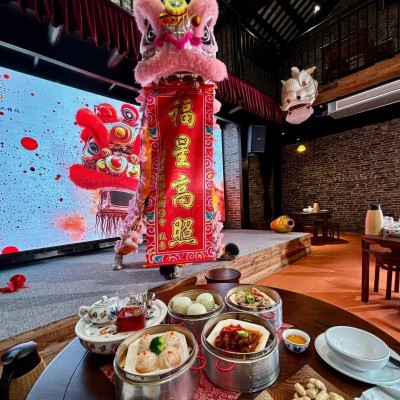
Dim sum experiences in local teahouses
Nearby Foshan for Lingnan culture and kung fu heritage
Chengdu (Great for 3-5 day stays):
Giant Panda Breeding Research Base
Jinli Ancient Street and Wuhou Shrine
Sichuan cuisine cooking classes
Leshan Giant Buddha (day trip)
Nearby Mount Emei for spiritual landscapes
Xi'an (Perfect for 3-4 day stays):
Terracotta Warriors and Horses
Ancient City Wall (cycle on top of the wall)
Muslim Quarter for street food
Big Wild Goose Pagoda
Huaqing Pool and Mount Li
For transit passengers with 240 hours (10 days), combining two or three of these destinations is realistic, especially with China's extensive high-speed rail network connecting major cities in 4-6 hours.
Practical Tips for a Smooth Transit Experience
To maximize your 240-hour transit experience, keep these practical considerations in mind:
Timing your layover: When booking flights, ensure your layover is long enough to make the most of your visit but within the 240-hour limit. A 5-7 day layover is ideal for experiencing one major city comfortably.
Transportation: China's high-speed rail system is world-class. The Beijing-Shanghai line connects the two megacities in just 4.5 hours. Within cities, subways are efficient and English-friendly in major destinations. DiDi (China's Uber) is widely available and foreign-passport-friendly.
Payment: Mobile payment dominates in China. WeChat Pay and Alipay are essential. Foreign credit cards can now be linked to both platforms, but setup can be challenging. Bring sufficient Chinese yuan (RMB) as backup, and consider getting a Chinese SIM card or eSIM for internet access (Google services are blocked in mainland China).
Language: English signage is common in major tourist areas, but conversational English is limited outside international hotels. Translation apps like Google Translate (download offline packages before arrival) or Pleco (for Chinese characters) are invaluable.
Internet access: China's internet operates behind the Great Firewall. WhatsApp, Instagram, Facebook, and Google services are inaccessible without a VPN. Free WiFi at hotels usually requires a Chinese phone number. Consider renting a portable WiFi device or using your home carrier's international roaming plan.
Cultural etiquette: Tipping is not customary in China. When dining, wait for the host to begin eating. Remove shoes when entering someone's home. Avoid discussing politically sensitive topics.
Health and safety: Tap water is not drinkable—stick to bottled water. Summer months (June-August) can be extremely hot and humid in eastern cities. Air quality varies by season and location; check AQI apps if you have respiratory sensitivities.
Recommended Tours
Turn This Into Your Family China Adventure
Private, flexible, designed around your family pace.
More Than Travel. It's the Plus That Matters.