China's Intangible Cultural Heritage: The Unexpected Magnet Drawing International Travelers Deeper Into the Real China
Key Takeaways
- Qiushi (the Chinese Communist Party's theoretical journal) and SCIO (the State Council Information Office) have both confirmed that intangible cultural heritage (ICH) is emerging as a primary draw for foreign visitors — a signal that ICH is being positioned as a national-level tourism asset
- The shift is from passive observation ("looking at heritage") to active participation ("making heritage") — travelers want to make zongzi, not just eat them; dance Yingge, not just watch it; weave Tujia brocade, not just buy it
- Tourism-Review reports that inbound tourism to China has changed fundamentally: "international visitors want active experiences rather than traditional sightseeing" — and food is the gateway experience that leads travelers deeper into cultural immersion
- China has over 1,500 nationally recognized ICH items spanning every region — each one can become a standalone tourism product with a unique hands-on experience
- The ICH tourism shift creates a product category that no other country can match: China's sheer volume and diversity of living cultural traditions is unmatched globally
Content Outline
The Shift: From Looking at Heritage to Making Heritage
Something fundamental is changing in how international travelers experience China. They are no longer content with looking at heritage — they want to make it.
This shift has been confirmed at the highest levels. Qiushi, the Chinese Communist Party's theoretical journal, published an article titled "Intangible cultural heritage emerges as draw for foreign visitors" — a title that directly positions ICH as an inbound tourism asset, not just a cultural preservation project. SCIO, the State Council Information Office, published a companion piece about how China's tourism boom blends culture, innovation, and livelihoods — emphasizing that heritage is not just something to preserve, but something to experience and to live.
Tourism-Review captured the shift most precisely: "Inbound tourism to China has changed as international visitors want active experiences rather than traditional sightseeing. Food as a Gateway." The key insight is that food is the entry point — a traveler tries local cuisine, enjoys it, and then wants to learn how it is made. From making food, they move to making crafts. From making crafts, they move to understanding the cultural context. From understanding the context, they move to deeper immersion. This is a progression: food → craft → culture → immersion.
Instagram's official China account posted a Reel confirming the trend: "This Spring Festival, China's intangible cultural heritage sites turned into vibrant travel hotspots. More international visitors are immersing [themselves in cultural experiences]."
The practical implication is clear: ICH experiences are not add-ons to sightseeing tours — they are the core attraction. A traveler who comes to Guangdong to dance Yingge is not coming to "see Guangdong." They are coming to "become part of Guangdong's living culture." This is a fundamentally different motivation, and it requires fundamentally different products.
Guangdong: Yingge Dance — Warrior Moves, Not Just a Performance
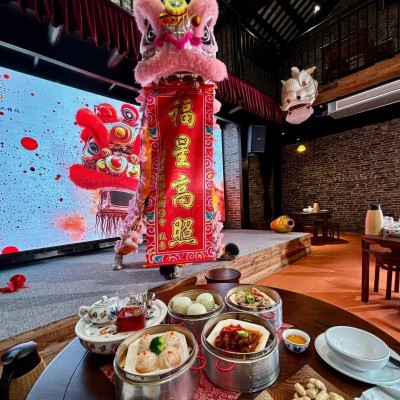
Yingge dance (英歌舞) is Guangdong's most visually dramatic ICH tradition. Originating in Chaoshan (潮汕), Yingge is a warrior dance that combines martial arts movements, theatrical storytelling, and community ritual. Performers paint their faces in bold, dramatic patterns, wield short sticks in synchronized combat sequences, and move through streets and squares in formations that tell stories from Chinese classical literature — particularly the Water Margin (水浒传), a novel about righteous outlaws fighting corruption.
For international travelers, Yingge is not a "dance performance to watch" — it is a "physical experience to participate in." Several ICH tourism programs in Chaoshan now offer Yingge workshops where travelers:
- Learn the basic stick movements and formations
- Paint their faces in traditional warrior patterns
- Join a community Yingge practice session
- Understand the literary and historical context of the Water Margin stories
This is the shift from observation to participation in action. You do not sit in an audience and watch Yingge — you stand in the formation and move with it. The physical experience creates a connection that visual observation cannot: your body remembers the rhythm, your hands remember the stick, your face remembers the paint. This is embodied cultural memory — and it is far more powerful than any photograph.
Yunnan: Ethnic Embroidery and Batik — Stitching Stories Into Fabric
Yunnan's ethnic minority communities — particularly the Yi, Bai, Dai, and Hani peoples — have rich ICH traditions in textile crafts. Embroidery, batik (wax-resist dyeing), and tie-dye are not just decorative techniques — they are storytelling systems. Each pattern, each color, each stitch carries specific cultural meaning: a Yi embroidery pattern might represent a mountain deity, a Bai batik design might encode a seasonal calendar, a Dai tie-dye motif might tell a creation myth.
ICH tourism programs in Yunnan offer travelers the chance to:
- Visit ethnic villages where textile traditions are still practiced daily
- Learn basic embroidery stitches from local artisans
- Participate in batik workshops — designing patterns, applying wax, dyeing fabric
- Understand the cultural meaning encoded in traditional patterns
- Create their own textile piece as a tangible memory of the experience
The key insight is that textile ICH is not "shopping for souvenirs" — it is "learning a cultural language." When you learn to read a Yi embroidery pattern, you are learning to read a visual vocabulary that has been used for centuries to communicate identity, status, and spiritual beliefs. This is cultural literacy — and it creates a depth of connection that souvenir shopping cannot.
Hunan: Tujia Brocade and Miao Silver — Weaving Identity Into Cloth
Hunan's western mountains — the Xiangxi (湘西) region — are home to the Tujia and Miao peoples, whose ICH traditions include two of China's most distinctive craft forms:
Tujia brocade (西兰卡普, Xilankapu) is a woven textile tradition that has been recognized as national-level ICH. The name means "flower blanket" in the Tujia language, and each pattern represents a specific cultural narrative — wedding stories, harvest celebrations, ancestral legends. The weaving technique uses a distinctive double-sided method that creates patterns visible on both sides of the fabric, a technical achievement that takes years to master.
Miao silverwork is another national-level ICH tradition. Miao women wear elaborate silver jewelry — necklaces, earrings, hair ornaments, and ceremonial crowns — that are hand-forged by Miao silversmiths using techniques passed down through generations. Each piece of silver jewelry tells a story about the wearer's identity, family lineage, and social status.
ICH tourism programs in Xiangxi offer travelers the chance to:
- Visit Tujia villages and learn basic brocade weaving techniques
- Watch Miao silversmiths at work and try basic silver-forging techniques
- Participate in Tujia wedding ceremony reenactments (where brocade and silver are central)
- Understand how these craft traditions encode cultural identity
Jiangnan: Silk Making and Tea Ceremony — Refinement as Participation
Jiangnan's ICH traditions are characterized by refinement — centuries of aesthetic development have produced craft traditions that emphasize subtlety, precision, and sensory depth.
Silk making in Jiangnan (particularly Suzhou and Hangzhou) is a UNESCO-recognized ICH tradition that spans the entire process from silkworm cultivation to fabric weaving to garment construction. ICH tourism programs offer travelers the chance to participate in each stage:
- Visit silkworm farms and learn about the lifecycle of the silkworm
- Watch silk weaving on traditional looms and try basic weaving techniques
- Visit embroidery workshops where Suzhou embroidery (苏绣) — one of China's four great embroidery traditions — is practiced
- Understand the cultural significance of silk in Chinese history and aesthetics
Tea ceremony in Jiangnan (particularly Yangzhou and Hangzhou) connects to the tea tourism trend covered in our May 23 analysis. The tea ceremony is not just about drinking tea — it is about the entire sensory experience: the visual beauty of the tea set, the sound of water pouring, the aroma of the tea leaves, the tactile sensation of the cup, and the social ritual of sharing tea with others.
Designing ICH-Embedded Itineraries for International Travelers
Guangdong ICH Trail (3-4 Days)
- Day 1: Guangzhou arrival + Cantonese cuisine cooking class (food as gateway)
- Day 2: Chaoshan Yingge dance workshop + face painting + community practice
- Day 3: Chaoshan embroidery workshop + local market visit
- Day 4: Return to Guangzhou + ICH museum visit
Yunnan ICH Trail (5-7 Days)
- Day 1-2: Kunming arrival + Yi embroidery workshop in Chuxiong
- Day 3-4: Dali Bai batik workshop + tie-dye experience
- Day 5-6: Xishuangbanna Dai paper-making + temple ceremony
- Day 7: Return to Kunming + tea ceremony experience
Hunan ICH Trail (4-5 Days)
- Day 1: Changsha arrival + Hunan cuisine cooking class
- Day 2-3: Xiangxi Tujia brocade weaving + Miao silverwork workshop
- Day 4: Zhangjiajie natural heritage + Tujia village visit
- Day 5: Return to Changsha + ICH market visit
Jiangnan ICH Trail (3-5 Days)
- Day 1: Shanghai arrival + transfer to Suzhou
- Day 2: Suzhou silk making workshop + embroidery experience
- Day 3: Hangzhou tea ceremony + Longjing tea picking
- Day 4: Yangzhou Grand Canal + Tang Dynasty poetry tea house
- Day 5: Return to Shanghai
Plan Your Hands-On Heritage Journey
China's intangible cultural heritage is not a museum exhibit — it is a living, breathing, participatory tradition that welcomes international travelers not as observers, but as participants. From dancing Yingge in Guangdong to weaving Tujia brocade in Hunan to making batik in Yunnan to crafting silk in Jiangnan — these are experiences that create embodied cultural memories far more powerful than any photograph or souvenir.
Our travel consultants can design ICH-embedded itineraries that span all four of ChinaTravelPlus's core regions — ensuring you don't just see China's heritage, you make it.
Email Sam for a Customized ICH Heritage Itinerary
Email Lilian for Group Booking Inquiries
Published: 2026-05-25 | Updated: 2026-05-25 | Author: ChinaTravelPlus Team | Website: www.chinatravelplus.com
More Than Travel. It's the Plus That Matters.
Part of our Intangible Cultural Heritage collection. See the full guide to China's living crafts — porcelain, silk, opera, tea, paper and village handwork, with where to watch each one being made.