A Love Letter to Grandma Film Sparks Chaoshan Cultural Travel Boom 2026
The Film That Moved a Nation — And Launched a Travel Boom
In the spring of 2026, a small-budget film with no celebrity cast and 95% dialogue in the Chaoshan dialect became China's biggest cinematic phenomenon. A Love Letter to Grandma started with a meager 1.6% screening rate on opening day, yet word-of-mouth propelled it to 11 consecutive days as the national daily box office champion. By late May, it had surpassed 1.08 billion RMB in ticket sales and earned a Douban rating of 9.2 — the highest for any Chinese-language film release this year.
The story spans half a century: a young Chaoshan man named Zheng Musheng leaves his wife Ye Shurou behind to seek work in Siam. What follows is a tale of separation, sacrifice, and an astonishing act of cross-border solidarity — a Thai woman named Xie Nanzhi, moved by Musheng's kindness, continues writing letters and sending remittances in his name for eighteen years after his death, keeping his wife's hope alive from across the sea.
The film's emotional core — the concept of qiaopi (remittance letters that combined family correspondence with money transfers from overseas Chinese) — struck a chord far beyond Chaoshan. But its impact was not limited to theaters. According to Tongcheng Travel data, searches for "Shantou," "Chaozhou," and "Jieyang" surged over 200% compared to pre-release levels, while flight bookings to Jieyang Chaoshan International Airport jumped 128%. Inter-provincial visitor share increased significantly, with top source markets including Zhejiang, Sichuan, Shanghai, and Yunnan.
For international travelers, this presents a rare opportunity: a region whose cultural identity has been amplified by a globally resonant story, now more accessible and welcoming than ever.
What Is Qiaopi? The UNESCO-Listed Heritage Behind the Story
Before the film, most Chinese people — let alone international visitors — had never heard of qiaopi. Now it has become a national talking point.
Qiaopi (literally "overseas letters") were a unique form of correspondence used by Chinese emigrants from the mid-19th century until the late 1970s. Part letter, part remittance receipt, they served as both emotional tether and financial lifeline for families separated by oceans. In Chaoshan and Fujian dialects, pi simply means "letter."
The scale was staggering. According to the Chaozhou Annals, nearly half the Chaoshan population relied on qiaopi remittances for survival. Between 1950 and 1988, total overseas remittances to China reached approximately 9.61 billion USD — enough to offset the country's trade deficit of 6.12 billion USD during the same period.
In 2013, qiaopi archives were inscribed on UNESCO's Memory of the World Register, recognized for their authenticity, uniqueness, and irreplaceable value as records of overseas Chinese migration, resilience, and family devotion.
Today, the Shantou Qiaopi Museum — where director Lan Hongchun spent an entire day reading original letters before writing the screenplay — has seen visitor numbers surge 47% year-on-year. The museum displays thousands of original qiaopi, their faded ink still legible: "Though Siam is far, with you in my heart, the distance dissolves."
For visitors, this is not a dry archive. It is a portal into the emotional world of millions of families — a world the film has made vivid and urgent.
Walk Into the Movie: Film Locations You Can Actually Visit
One of the film's most remarkable achievements is its use of real Chaoshan locations rather than studio sets. These places are not film sets — they are living neighborhoods, temples, and markets where daily life continues.
Shantou Small Park Historic District serves as the film's urban backdrop. This colonial-era commercial district, with its arcade buildings and narrow lanes, was once the financial heart of Chaoshan's overseas trade. The Qiaopi Museum itself is located here, along with the Tao Fang Restaurant building, a landmark of old Shantou's cosmopolitan heyday.
Chen Cihong Residence in Chenghai District, a sprawling mansion complex built by an overseas Chinese merchant, appears as the elderly Shurou's home. Ticket bookings here surged 187% after the film's release. The residence is a stunning example of Chaoshan architectural fusion — Chinese courtyard layouts adorned with imported European tiles and stained glass.
Longhu Ancient Village in Chaozhou features in several key scenes. This well-preserved riverside settlement offers a slower, more intimate Chaoshan experience. Small group tours incorporating the village saw a 134% booking increase.
Chaozhou Taifo Temple, Jieyang Mianhu Liberation Road, and various ancestral halls and old clan residences round out the filming locations. Navigation queries for these spots jumped over 20 times compared to pre-release levels.
The city of Shantou has officially launched three "Follow Grandma Through Shantou" themed routes that weave together film locations, qiaopi cultural sites, and hands-on heritage experiences — a ready-made itinerary for curious travelers.
Living Heritage: Seven Intangible Cultural Treasures to Experience
The film is remarkable for how naturally it integrates intangible cultural heritage into daily life. These are not museum exhibits in the film — they are what people do, eat, and celebrate. And visitors can experience every one of them today.
Chaoshan Gongfu Tea Ceremony — A UNESCO-listed practice (part of "Traditional Tea Processing Techniques and Associated Social Practices"), Gongfu tea is the social glue of Chaoshan life. In the film, tea appears in every domestic scene — at home, at the street stall, in moments of joy and grief. The precise ritual of warming cups, pouring in circular motions ("General Guan patrols the city"), and the final drops ("Han Xin counts his troops") transforms a simple beverage into a ceremony of connection. Visitors can experience this at tea houses throughout Shantou and Chaozhou.
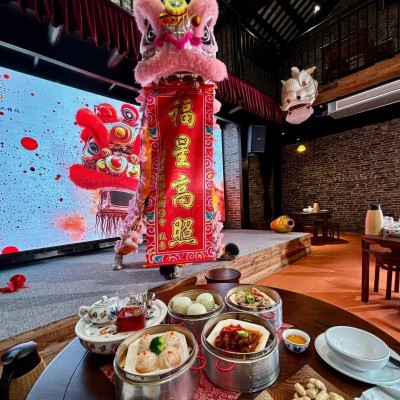
Yingge Dance — Known as "China's War Dance," this thunderous, acrobatic folk performance opens the film with electrifying energy. Yingge dance troupes from Chaoyang and Puning have gone viral on Chinese social media in recent years, and the film has only amplified interest. Performances are regularly held during festivals and can be arranged for tour groups.
Chaozhou Opera — Called "The Southern Flower," Chaozhou opera is a 400-year-old art form performed entirely in the Chaoshan dialect. In the film, elderly Shurou hums opera melodies as companionship. Live performances are staged regularly at the Chaozhou Opera Art Center.
Chaoshan Embroidery and Drawn Thread Work — The film shows women sitting under trees, stitching intricate patterns — a practice called chousha (drawn thread work). This tradition blends local embroidery with Western design motifs, a legacy of Chaoshan's overseas connections. Workshops in Chaozhou offer hands-on experiences.
Chaoshan Kueh-Making — Kueh are steamed or pan-fried snacks made from rice flour and local ingredients. In the film, Shurou's riceless kueh stall in Siam becomes her livelihood. Visitors can try making kueh at cooking workshops across the region.
Coming-of-Age Garden Ceremony — Chu Huayuan is a unique Chaoshan coming-of-age ritual for 15-year-olds, held on the seventh day of the seventh lunar month. The film includes this ceremony as a poignant marker of time passing. During festival periods, visitors may witness this tradition in local communities.
Olive Pickle Making — Shurou's daily routine of making olive pickle (ganlancai) in the film is a provincial-level heritage craft. This preserved condiment, simultaneously salty and savory, traveled with Chaoshan emigrants to Southeast Asia and became a taste of home for the diaspora. Tastings and workshops are available at local markets.
Taste the Story: Chaoshan Cuisine From Screen to Table
Food in A Love Letter to Grandma is never mere set dressing — it carries memory, identity, and love. The film's popularity has triggered a culinary pilgrimage to Chaoshan unlike anything the region has seen before.
Olive Pickle appears throughout the film as Shurou's daily companion — first bitter, then sweet, a metaphor for Chaoshan resilience. Once a humble condiment, it has become a viral food item, with visitors buying jars to take home.
Riceless Kueh (Wumi Guo) — Musheng's street-stall specialty in Siam — is a pan-fried snack made from sweet potato starch and vegetables. Crispy outside, chewy inside, it is a staple of Chaoshan breakfast culture.
Gongfu Tea — Not a dish but an experience, the film makes clear that wherever Chaoshan people gather, tea is brewed. The ritual is social, meditative, and deeply welcoming to newcomers.
Braised Goose — A centerpiece of Chaoshan feasting, slow-braised in a master stock of soy sauce, spices, and herbs. The film's domestic scenes frequently feature family meals built around this dish.
Ginger Yam Sweet Soup — A warming dessert that appears in moments of comfort and reunion, made from local jiangshu yam and ginger.
For food-focused travelers, Shantou's old town market streets and Chaozhou's riverside eateries offer an immersive culinary experience that follows the film's emotional arc — from the bitterness of separation to the sweetness of reunion.
Plan Your Chaoshan Cultural Adventure
Ready to walk in the footsteps of A Love Letter to Grandma and experience Chaoshan's living heritage for yourself? Whether you want to trace qiaopi history, learn the Gongfu tea ceremony, witness Yingge dance, or simply savor the cuisine that carries a century of stories — our expert travel specialists can design the perfect itinerary.
Contact Sam for Customized Tours: Sam@ChinaTravelPlus.com
Contact Luppy for Group Bookings: Luppy@ChinaTravelPlus.com
Visit ChinaTravelPlus.com
More Than Travel. It's the Plus That Matters.