240-Hour Visa-Free Transit Lands: First-Weekend Verified Vietnamese Inbound — 240-Person Dongxing First Group & 306 Qingdao Passengers, Guangxi's 4 Ports & 12 Cities and Multi-Point National Validation (CTP Blog #59)
Section 1. The Hook: From "Policy Release" to "First-Weekend Verification" — an Inbound Experiment Rapidly Proven by Data
If you rewind the lens one week to the time of Blog #57, the picture was this: the National Immigration Administration announced that, effective 20 August 2026, citizens of Vietnam and Kyrgyzstan could use China's 240-hour visa-free transit policy and the Hainan 30-day visa-free entry policy.Source: China News Service, 2026-08-21 That was the day of "policy release" — and in that edition CTP Research dissected the policy's coverage, its applicability logic, and the long-term dividends for Southeast Asian source markets.
In this edition (#59), we cut to the scene of "policy landing": at 17:55 on 20 August, a flight from Hanoi, Vietnam to Nanning — flight GX8972 — touched down smoothly at Nanning Wuxu International Airport. This was the first inbound flight from a newly covered country at Nanning Port on the very first day the expanded 240-hour visa-free transit policy took effect.Source: China News Service, 2026-08-21
Then, on 21 August, a 240-person weekend cross-border first group of Vietnamese tourists passed through inspection at Guangxi's Dongxing Port (Second Bridge) and entered China in an orderly manner, heading for sightseeing in Nanning and Chongzuo.Source: CCTV News, 2026-08-23 And on 22 August — the first weekend day after the policy took effect — Qingdao Airlines flight QW926 and Shandong Airlines flight SC4650, flying in from Ho Chi Minh City and Hanoi, landed at Qingdao Jiaodong International Airport carrying 306 passengers in total.Source: CCTV News, 2026-08-23
From policy effectiveness on 20 August, to the Dongxing first group entering on 21 August, to the Qingdao weekend flow landing on 22 August — the speed at which the 240-hour visa-free transit policy converted from "paper" to "ground" exceeds most operators' expectations. This is precisely the core question this edition seeks to answer: when a visa-free policy moves from text to reality, what do the first real passenger flows look like? Where do they come from, where do they go, what do they consume, and what do they need? How do destination sides (Guangxi's 4 ports & 12 cities, Qingdao, Kunming) receive them? And how can CTP's four provinces convert this new "weekend cross-border travel" model into sellable, replicable inbound products?
Let us begin with the "policy landing event" itself.
2.1 Policy Effectiveness and the Nanning Maiden Flight: A New Milestone for GX8972
20 August 2026 was the official effective date of the expanded 240-hour visa-free transit policy announced by the National Immigration Administration. At 17:55 that afternoon, flight GX8972 from Hanoi, Vietnam to Nanning touched down smoothly at Nanning Wuxu International Airport — the first inbound flight from a newly covered country at Nanning Port on the very first day of effectiveness.Source: China News Service, 2026-08-21
This flight's value goes far beyond "being the first." It simultaneously announced three things:
- The policy entered execution mode: the 240-hour visa-free transit policy switched from announcement text to port-level operations, with the border inspection, customs and airline service chains synchronously activated;
- Nanning became one of the first receiving ports: Nanning Wuxu International Airport, as the first Guangxi air port to welcome the maiden inbound flight from a newly covered country, entered the operational list for the 240-hour visa-free transit;
- The China-Vietnam air corridor directly benefited: the Hanoi–Nanning route is the most direct air link between northern Vietnam and southwest China; GX8972's maiden landing marked the official integration of the "Vietnam → Guangxi" air passenger corridor into the visa-free policy.
According to China News Service, on the day the policy landed, the Nanning border inspection station quickly strengthened communication with the relevant airlines, grasped flight dynamics in advance, set aside dedicated zones and manned dedicated counters to provide efficient clearance services for foreign travelers applying for transit visa-free entry; it also stepped up policy promotion, distributing a bilingual (Chinese-English) "240-Hour Visa-Free Transit Stay-Area Notice" at the port, monitoring passenger-flow changes dynamically, flexibly adjusting inspection lanes, strengthening diversion guidance, and adding multilingual-duty police forces to create a smooth, orderly clearance environment.Source: China News Service, 2026-08-21
One detail deserves attention: the bilingual "Stay-Area Notice." This shows that the port side was using "multilingual guidance" from day one of policy effectiveness to lower the comprehension cost for visa-free travelers — a typical case of "policy landing" and "service landing" advancing in parallel.
2.2 Guangxi's 4 Ports & 12 Cities: The "Guangxi Map" of the 240-Hour Visa-Free
On the day the policy took effect, Guangxi's receiving map lit up simultaneously. According to China News Service, Guangxi currently has 3 international airport ports — Nanning Wuxu, Guilin Liangjiang and Beihai Fucheng — plus the Beihai Seaport port (passenger), i.e., 4 ports in total applicable to the 240-hour visa-free transit; meanwhile, 12 Guangxi cities were included in the policy's implementation area.Source: China News Service, 2026-08-21
What does this mean? For Vietnamese tourists, "Guangxi" is no longer just "a port on the border" but a "4 ports × 12 cities" city-cluster visa-free receiving network:
- Nanning Wuxu International Airport Port: the capital's air gateway, receiving aviation inbound traffic and directly serving routes such as GX8972 (Hanoi–Nanning);
- Guilin Liangjiang International Airport Port: the landscape air gateway, receiving Vietnamese and wider Southeast Asian aviation traffic with direct flights, connecting to the world-class Lijiang and Yangshuo scenery;
- Beihai Fucheng International Airport Port + Beihai Seaport (passenger): the coastal gateway, receiving both aviation and sea-passenger traffic;
- 12 cities: from the border towns of Dongxing and Pingxiang (Youyiguan), to the capital Nanning, to Guilin, Beihai, Chongzuo and beyond, forming a "port → city → scenic area" deep receiving network.
This "4 ports × 12 cities" structure is precisely the underlying design of Guangxi's response to "weekend cross-border travel": tourists can drive a few hours from Hanoi to Dongxing or Youyiguan to enter, or fly directly to Nanning, Guilin or Beihai, then move quickly among the 12 cities by high-speed rail — the policy's visa-free dividend is amplified by the port network and the city network together.
2.3 From the "Starting Gun" to the "First Squeeze of the Throttle": Three Observations on Landing Speed
The first 48 hours after policy effectiveness is the best window for observing "policy sensitivity." CTP Research breaks it into three observations:
Observation 1: The Nanning maiden flight arrived the same day. On 20 August — the day the policy took effect — flight GX8972 landed at Nanning. This was not "a flight a few days after the policy" but "as soon as the policy landed, a flight arrived carrying travelers from a newly covered country." The aviation side's response was nearly instantaneous.
Observation 2: The Dongxing first group formed the next day. At 10:35 on 21 August, the 240-person Vietnamese first group passed through Dongxing Port in succession — barely 24 hours between policy effectiveness and first-group entry. Behind this lay careful prior organization by the Guangxi Department of Culture and Tourism, Fangchenggang City and Vietnamese tour operators (see Section 3), but it also indicates that the policy expectation of the 240-hour visa-free transit had long been fermenting in Vietnam's travel circles — policy landing was simply the "last kick."
Observation 3: Qingdao's weekend flow landed on the very first weekend. On 22 August (the first weekend day), Qingdao Airlines QW926 and Shandong Airlines SC4650 landed at Qingdao Jiaodong International Airport with 306 passengers — this is not Guangxi's "home turf" but Qingdao, Shandong, thousands of kilometers away. The policy dividend was realized simultaneously in multiple provinces and multiple points, validating a "one-nation, one-plan" receiving landscape.Source: CCTV News, 2026-08-23
Taken together, the conclusion is clear: the landing of the 240-hour visa-free transit was not a "slow-simmering" gradual seepage, but an "as soon as the starting gun fires, the throttle goes to the floor" instantaneous response. For destination cities and inbound operators, whoever receives the first flows during the "first weekend" captures the first wave of awareness of the policy dividend.
3.1 21 August, Dongxing Port: The Welcome Ceremony for the 240-Person Vietnamese First Group
On 21 August, the welcome ceremony for the "Ten Thousand Vietnamese Tourists Tour Guangxi · Weekend Cross-Border Travel" was held in the square in front of the Dongxing Port Second Bridge National Gate building. Su Weidong, second-level inspector of the regional Department of Culture and Tourism, attended and delivered remarks; Vice Mayor Tong Yidong participated in the event; Chinese and Vietnamese guests, Vietnamese tourists, and mainstream media — nearly 300 people — gathered on site to witness the official launch of this cross-border tourism campaign.Source: Fangchenggang Convergence Media, 2026-08-21
According to Fangchenggang Convergence Media, at 10:35 that morning the 240-person Vietnamese first group passed through Dongxing Port in succession, and the Chinese side had organized ethnic dance performances along both sides of the corridor to warmly welcome the Vietnamese friends; at the ceremony, the opening dance "Guangxi Welcomes You" instantly ignited the atmosphere; after leaders' remarks announced the launch of "Ten Thousand Vietnamese Tourists Tour Guangxi · Weekend Cross-Border Travel," the event awarded Vietnamese tourist representatives a first-group commemorative flag and presented gift packages; the melodious "Vietnam–China" was sung, with guests and tourists on site singing along, sincerely conveying the deep friendship between the two peoples. The first group then boarded vehicles to visit the Dongxing China-Vietnam Border River scenic area, officially starting their Guangxi journey, while Vietnamese travel-trade representatives simultaneously conducted route reconnaissance tours to explore cross-border cultural-tourism cooperation potential.Source: Fangchenggang Convergence Media, 2026-08-21
These on-site details reveal several key signals about this edition's "weekend cross-border travel":
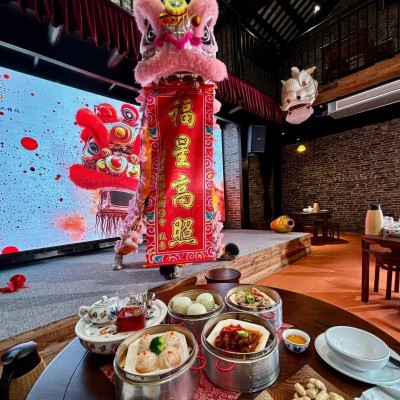
- Ritual is product power: ethnic dance performances, a first-group commemorative flag, gift packages, and the "Vietnam–China" sing-along — these are not optional "welcome pageantry" but product experiences that give the "cross-border trip" a sense of ceremony, commemorative value and shareability. For Gen-Z Vietnamese travelers, "an entry with ceremony" is itself social-media material;
- Official endorsement and trade reconnaissance ran in parallel: government platform-building (hosted by the culture-and-tourism department with leaders present) plus market players (Vietnamese travel-trade representatives doing reconnaissance) advanced simultaneously — evidence that Guangxi is deploying "attract flows–receive flows–convert flows" on all fronts at once;
- An annotated footnote to the China-Vietnam Tourism Cooperation Year: leveraging the 2026–2027 "China-Vietnam Tourism Cooperation Year," Fangchenggang continues to optimize the port clearance environment and precisely build cross-border tourism products tailored to Vietnamese tourists.Source: Fangchenggang Convergence Media, 2026-08-21
3.2 22 August, Qingdao Jiaodong: The 306 Passengers of the "First Weekend"
If Dongxing Port is the sample of "land-port-type" traffic, then Qingdao Jiaodong International Airport is the sample of "aviation-hub-type" traffic.
On 22 August — the first weekend day of the 240-hour visa-free transit policy for Vietnamese citizens — Qingdao Airlines flight QW926 and Shandong Airlines flight SC4650, flying in from Ho Chi Minh City and Hanoi, landed at Qingdao Jiaodong International Airport carrying 306 passengers in total.Source: CCTV News, 2026-08-23
The highlights of this data set:
- Two flights, two carriers: Qingdao Airlines QW926 (from Ho Chi Minh City) and Shandong Airlines SC4650 (from Hanoi) landed the same day — Qingdao's air supply to Vietnam is not a "single-point route" but a "Ho Chi Minh City + Hanoi dual corridor";
- The gold content of 306 passengers: this is not one or two transit stragglers but the first large-scale Vietnamese aviation flow, directly validating Qingdao's capacity as an "aviation hub facing Southeast Asia" to receive Vietnamese travelers;
- Support services upgraded in sync: CCTV News specifically noted that, to ensure convenient travel for inbound/outbound passengers, the airport, customs and border inspection authorities continued to upgrade supporting service measures, continuously raising the level of facilitation for passenger travel in both directions.Source: CCTV News, 2026-08-23 The "three-department coordinated upgrade" of airport/customs/border inspection is the standardized action for an aviation hub to receive visa-free traffic.
Qingdao's significance for the nation: it proves that flows under the 240-hour visa-free transit do not only go to border provinces like Guangxi, but to every city with genuine aviation-hub capacity. Vietnamese tourists can fly direct from Hanoi or Ho Chi Minh City to Qingdao — before the visa-free policy, this meant applying for a visa and waiting for approval; after the policy, the "weekend direct flight + visa-free entry" combination between Qingdao and Hanoi/Ho Chi Minh City directly opened up the medium-to-long-range aviation source market of northern and southern Vietnam.
3.3 400+ Vietnamese Tourists in Batches: The Dongxing + Youyiguan Dual-Port Inflow
Beyond the 240-person first group, larger flows were surging in batches. According to CRI Online, on 21 August, the "Ten Thousand Vietnamese Tourists Tour Guangxi · Weekend Cross-Border Travel" themed series, hosted by the Guangxi Zhuang Autonomous Region Department of Culture and Tourism, was launched in Dongxing City, Fangchenggang; more than 400 Vietnamese tourists entered in batches through Dongxing Port and Youyiguan Port, officially starting their Guangxi weekend cross-border journey, with an itinerary covering Fangchenggang, Chongzuo and Nanning, immersively experiencing border-region customs, mountain-and-water scenery and ethnic culture; Vietnamese travel-trade representatives accompanied the group, conducting on-site reconnaissance and resource matching.Source: CRI Online, 2026-08-24
This means that the Vietnamese flows Guangxi received in the first weekend formed a stacked structure of "240-person first group (Dongxing Second Bridge) + 400+ entering in batches (Dongxing + Youyiguan)." The addition of Youyiguan Port (Pingxiang) shows that Guangxi's port receiving is not a "single-point burst" but a "Dongxing–Youyiguan dual-port linkage."
According to CRI Online, at the welcome ceremony a first-group commemorative flag was presented to the Vietnamese group-organizing agency's representative, marking a new start for bilateral cross-border tourism cooperation; the event was a concrete move to implement the China-Vietnam Joint Statement, to deliver on the results of the Spring-New-Year talks among Guangxi and Vietnam's five provincial/municipal party secretaries, and to seize the important opportunity of the 2026–2027 "China-Vietnam Tourism Cooperation Year." During the launch, a cross-border tourism product release was held simultaneously, promoting multiple quality travel routes to the Vietnamese market; Vietnamese travel-trade representatives followed routes through Fangchenggang and Nanning, on-site inspecting key cultural-tourism sites such as Baisha Bay, Qingxiu Mountain, Sanjie Liangxiang (Three Streets Two Alleys), the Yongjiang River night cruise, and the Nanning Garden Expo Park, experiencing Guangxi's tourism resources first-hand and conducting supply-demand matching.Source: CRI Online, 2026-08-24
CRI Online also noted that the large influx of Vietnamese tourists will directly drive consumption across accommodation, catering, transport, scenic areas and commerce in the cities along the routes, boosting the inbound cultural-tourism market; based on the travel-trade reconnaissance and matching, Guangxi will continue optimizing the cross-border tourism product system, moving weekend cross-border travel from this first-group demonstration toward regular group operations.Source: CRI Online, 2026-08-24
3.4 Three Signals Behind the Verified Numbers
Putting the first-weekend verified data together — Dongxing 240 (21 Aug), Qingdao 306 (22 Aug), 400+ entering in batches (Dongxing + Youyiguan) — CTP Research reads three signals:
Signal 1: The "immediacy" of flows exceeded expectations. The policy took effect on 20 August; by 21 August there were already flows of 240 in the first group plus 400+ in batches, and by 22 August Qingdao's 306 landed. From policy release to large-scale verified flow took just one to two days. This shows that Vietnamese source-market response to visa-free policy has an extremely short cycle — "pack-and-go" is not marketing rhetoric but an observable behavioral pattern.
Signal 2: The "dual-channel" structure of flows is clear. The land corridor (Dongxing/Youyiguan ports) receives near-range, high-frequency, weekend-type flows; the aviation corridors (Qingdao Jiaodong/Nanning Wuxu) receive medium-to-long-range, direct-flight flows. Each channel has its own source logic, and destination cities need to build receiving systems that deploy "land and air in parallel."
Signal 3: The "organization level" of flows is high. The 240-person first group was "an organized first group by a group-organizing agency"; the 400+ batch entries came with "Vietnamese travel-trade reconnaissance + product release"; Qingdao's 306 came with "airport/customs/border-inspection three-department linkage." The first flows were not spontaneous individual behavior but the fruit of tripartite coordination among "government + travel operators + ports" — which means whoever positions early at the organizational level captures the advantage in the first wave of dividends.
Section 4. The New Weekend Cross-Border Model: The Demand Logic Behind "Pack-and-Go"
The first-weekend verified traffic is not an accidental "one-off wave." To understand why it works and why it can last, we must unpack the core of this new "Vietnamese weekend cross-border travel" model — which CTP Research summarizes as: spend two days and a few hundred yuan to live a weekend that is richer, more convenient and better value for money than at home.Source: Cai Yan Kan Da Shi, 2026-08-21
4.1 Model Definition: From "Visa-and-Long-Haul Travel" to "Pack-and-Go Weekend Trips"
Let us first see why this model is being activated at this moment. According to analysis by Cai Yan Kan Da Shi, for ordinary Vietnamese working people, spending a weekend in Guangxi is essentially trading two days for one consumption upgrade: northern cities such as Hanoi, Lang Son and Ha Long can reach Dongxing or Youyiguan by road in just a few hours, with no long leave and no cumbersome visa application — the 240-hour visa-free transit turned "pack-and-go" from a slogan into an operable option.Source: Cai Yan Kan Da Shi, 2026-08-21
The Guangxi Department of Culture and Tourism's invitation to Vietnamese friends puts it even more plainly: departing from Hanoi, Ha Long, Lang Son and beyond, entering via Dongxing Port or Youyiguan Port, in just a few hours you can walk from familiar street corners into brand-new scenery; Guangxi and Vietnam are connected by shared mountains and rivers — no need to wait for a long holiday, just pack and go.Source: Guangxi Department of Culture and Tourism, 2026-08-21
This model differs fundamentally from the traditional "Vietnamese travel to China":
| Dimension | Traditional Vietnam-to-China Travel | New Weekend Cross-Border Model
|-----------|------------------------------------|--------------------------------
| Entry barrier | Visa application, approval wait, long leave | Visa-free, weekend departure, back to work Monday
| Travel radius | Mainly day trips around the port | Port → urban hinterland (Nanning/Chongzuo/Guilin)
| Trip length | 1 day or long-holiday deep tour | 2-4 day weekend short trips
| Core motivation | Sightseeing and check-ins | Lifestyle consumption: food/shopping/wellness/photos
| Repeat logic | "Been there once" attraction tour | Repeatedly consumable lifestyle
According to Guangxi Daily, this shift is even more intuitive from the operators' perspective: in the early days, Vietnamese tourists mostly went to Beihai and Fangchenggang for one-day cross-border trips; today, the three-day-two-night weekend short trip is the most popular, with destinations extending to Nanning and Chongzuo, and more tourists are asking for Liuzhou and Guilin, stretching itineraries to three or four days.Source: Guangxi Daily, 2026-08-22
4.2 Demand Segmentation: Three Routes for Young / Family / Senior Travelers
The biggest structural change in "weekend cross-border travel" is demand segmentation. According to Cai Yan Kan Da Shi, Vietnamese tourists of different age groups have already split into three entirely different routes:Source: Cai Yan Kan Da Shi, 2026-08-21
Route one: Young travelers (18-30) — "photo-worthy + shopping + late-night food" social consumption. Young people's travel motives are "get great photos + shop + eat late-night snacks": antique-style architectural photo shoots at Taiping Ancient Town in Chongzuo, trendy shots at Baiyi Shanghecheng, scenic atmospherics in Yangshuo, then dinner at Nanning Night or Langxi Night Market — essentially treating the weekend trip as social currency; what you photograph matters more than what you see. On the shopping side, they target outlet discount apparel and small appliances, with value-for-money as the key word.
Route two: Family travelers — "low-friction" low-intensity experiences. Families want "no hassle": a relaxed pace, flat paths, stroller-friendly — these are hard thresholds. They care more about parent-child interactive programs such as intangible-heritage handicrafts and ethnic costume experiences, need light, child-friendly food, and reject forced shopping. In the current route recommendations of Guangxi's cultural-tourism authorities, these low-intensity family products have not yet been singled out the way the young people's internet-famous check-in routes have, but Vietnamese travel-trade custom requests have already clearly raised this direction.
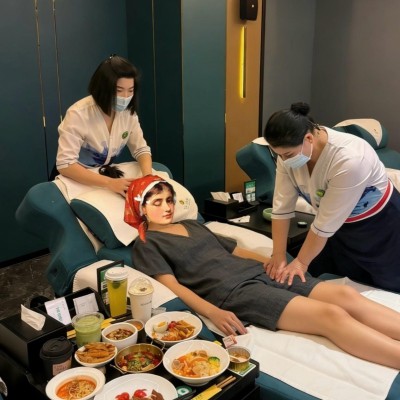
Route three: Senior travelers — the "TCM wellness revisit" core base. The senior segment is the core of wellness revisits. According to the judgment of Qin Qiaozhen, general manager of Nanning Lvjiale International Travel Service, Vietnamese people have high awareness of traditional Chinese medicine (TCM), but the local supply of compliant, large-scale TCM wellness institutions is insufficient — and this supply-demand gap is being filled by Guangxi's wellness resources: acupuncture, moxibustion, cupping, bone-setting, Zhuang-Yao herbal baths, and TCM medicinal meals all hold direct appeal for seniors suffering rheumatic bone pain and for office white-collar workers who sit all day. Guangxi's medicinal plant resources account for over 40% of the national total, with more than 2,800 varieties of Zhuang-Yao medicine, and Guangxi is among the first batch of national pilot provinces for integrated TCM service consumption and trade development — a resource endowment that is scarce across Southeast Asia as a whole.Source: Cai Yan Kan Da Shi, 2026-08-21
CTP Research believes this "three-tier demand segmentation" is the most instructive sample in this edition for destination cities and operators: Vietnamese weekend cross-border travel is not "one product for all" but a parallel supply of three product lines — "young photo-worthy, family low-intensity, senior wellness." Whoever identifies and matches its own customer structure first wins the lead on revisit rates — especially the senior wellness line, where "what wellness solves is not 'did you enjoy this trip' but 'should I come again next month' — that is the core engine of revisit rates."Source: Cai Yan Kan Da Shi, 2026-08-21
4.3 Consumption Support: Tax Refunds / Subsidies / Tickets / Multilingual AI — a "Combination Punch"
For "pack-and-go" to work, policy alone is not enough; the consumption side must keep up. According to Cai Yan Kan Da Shi, the consumption-support combination Guangxi has rolled out around Vietnamese weekend cross-border travel includes:Source: Cai Yan Kan Da Shi, 2026-08-21
- Tax-refund "buy-now, refund-instantly" expansion: the number of tax-refund shops in Guangxi grew 4x between end-2025 and H1 2026, combined with the "buy-now, refund-instantly" departure tax-refund mechanism for foreign visitors — shopping itself is one of the travel motives;
- "Gift on Arrival" subsidy vouchers: 50,000 vouchers ranging from ¥50-off-10 to ¥2,000-off-400, directly lowering Vietnamese tourists' decision threshold;
- Scenic ticket discounts: 200+ attractions offer 20% off first tickets, until 31 August;
- "Sanjie" multilingual AI mini-program: covering ticketing, hotel booking and scenic-area commentary across the whole journey, with the goal that from entry to departure, tourists need no one to translate at any step;
- Port "three-waiver" fast clearance: fingerprint-free, entry/exit-stamp-free, and foreigner-entry-card-free, with "manual + fast-track clearance" at ports such as the Detian (Ban Gioc) cooperation zoneSource: Guangxi Daily, 2026-08-22.
The logic of this combination is: replace traditional sightseeing check-ins with high-value-for-money everyday experiences, turning the weekend trip into a repeatedly consumable lifestyle. As Cai Yan Kan Da Shi summarizes, the official logic is clear — border-port duty-free shops alone cannot sustain the revisit rate of weekend trips; Vietnamese tourists must be drawn into the urban hinterland and into "the weekend life scene of ordinary Chinese people": browsing night markets, hiking hills, shopping malls, and doing wellness.Source: Cai Yan Kan Da Shi, 2026-08-21
4.4 From the Traveler's View: Food, Shopping, Convenience — Three Core Needs
If we rank the needs of Vietnamese weekend cross-border travel, according to Cai Yan Kan Da Shi the three things Vietnamese tourists care about most are, in order, food, shopping and convenience:Source: Cai Yan Kan Da Shi, 2026-08-21
Food is the No.1 driver. Qin Qiaozhen's observation is direct: Vietnamese tourists reject standardized group meals; what they want is what locals actually eat — these street-level flavors are the core incentive to cross the border for a weekend. This is not a vague "taste Guangxi cuisine" demand but precise category-level, street-stall-level check-in behavior.
Shopping is the other leg. Vietnamese tourists show strong interest in outlet discount apparel and bags, Chinese-made small appliances, and daily necessities; combined with Guangxi's "buy-now, refund-instantly" departure tax-refund mechanism, shopping sprees are themselves one of the travel motives. Guangxi Daily recorded a concrete case: at Sanjie Liangxiang in Nanning, Vietnamese tourist Hoang Nhu Quynh fell for a Chinese-brand handheld camera product — "the same product costs nearly RMB 400 less than in Vietnam."Source: Guangxi Daily, 2026-08-22
Convenience is the hidden need repeatedly raised. First-batch tourist Amin said "one phone solved all my consumption payments in Guangxi," while Tran Thi Lien said "registering in advance through a qualified travel agency to enter visa-free is so convenient." Read together, these two sentences point to the same need: don't make me worry; the shorter the process, the better.
It is worth noting that Cai Yan Kan Da Shi also flagged the "capillary" problem on the support side: full-scenario foreign-card payment coverage, foreign-exchange services at night-market micro-merchants, and passport-holder high-speed-rail ticket-checking verification were repeatedly mentioned in first-batch tourist feedback — "the big framework is built, but the smoothness of the capillaries determines the final quality of the experience."Source: Cai Yan Kan Da Shi, 2026-08-21 This carries a cautionary implication for CTP's four-province receiving as well.
4.5 Market Fundamentals: Vietnam's Growth Curve — Why "Pack-and-Go" Can Scale
To understand that "pack-and-go" is not merely short-term heat, we must also look at the medium-to-long-term fundamentals of the Vietnamese source market. CTP Research organizes this edition's market-fundamental data into a growth curve:
Layer one: Vietnamese passenger trips through Guangxi ports. According to CCTV News, in the first seven months of this year, Vietnamese passengers traveling in and out through Guangxi ports reached 4,116,000+ trips, up 10.1% year on year.Source: CCTV News, 2026-08-23 In other words, even before the 240-hour visa-free transit landed, tens of thousands of Vietnamese passenger trips were already crossing Guangxi ports every day — the policy dividend is an "incremental engine on a large existing base."
Layer two: A three-year doubling curve. According to Guangxi Border Inspection General Station data, Vietnamese passenger trips through Guangxi ports grew from 3.306 million in 2023, to 5.581 million in 2024, to 6.67 million in 2025 — doubling in three years.Source: Guangxi Daily, 2026-08-22 This curve shows that "Guangxi receiving" for the Vietnamese source market did not start with this policy but is a long-term trend of continuous climbing since the post-pandemic restart; this edition's policy simply accelerates the trend.
Layer three: Confirmation from the destination side. According to CRI Online, in H1 2026 Guangxi received Vietnamese inbound overnight visitors up 81.0% year on year, with Vietnam remaining Guangxi's No.1 inbound source market.Source: CRI Online, 2026-08-24 The "overnight visitor" metric is especially important — it means Vietnamese tourists are no longer just "round-tripping the port in a day" but actually staying, spending and lingering in Guangxi, which is the very cornerstone of the weekend cross-border model.
Layer four: The national view. According to National Immigration Administration data, more than 1.3 million Vietnamese tourists visited China in H1 2026, doubling year on year and putting Vietnam among China's top four source markets.Source: Tencent News, 2026-08-24 Read this together with Guangxi's 81.0% growth and 4,116,000 trips, and the conclusion is clear: the Vietnamese source market has upgraded from an "incremental market" to a "mainstay market," and the 240-hour visa-free transit dividend is landing on a high-growth curve.
For CTP Research, these four layers answer why the first weekend alone could produce verified flows of 240 + 400+ + 306 — because policy landing was only the "last kick," while the Vietnamese source base had long been primed.
Section 5. Guangxi Receiving: The "City-Cluster Receiving Network" of 4 Ports & 12 Cities
If the first-weekend verified traffic validated the "demand side's" immediacy, then Guangxi's "supply side" receiving network is the "showcase" worth studying in this edition.
5.1 Division of Labor Across the 4 Ports: A Three-Dimensional Network of Air × Sea × Land
The 4 ports in Guangxi included in the 240-hour visa-free transit implementation form a "3 air + 1 sea" three-dimensional structure:Source: China News Service, 2026-08-21
- Nanning Wuxu International Airport Port: the capital's air gateway, receiving traffic on routes such as Hanoi–Nanning, and the port where the maiden flight GX8972 landed on day one of effectiveness;
- Guilin Liangjiang International Airport Port: the landscape air gateway, receiving Vietnamese and wider Southeast Asian aviation traffic with direct flights to Guilin, linking the world-class Lijiang and Yangshuo scenery;
- Beihai Fucheng International Airport Port: the coastal air gateway, receiving Beihai coastal vacation traffic;
- Beihai Seaport Port (passenger): the sea passenger gateway, providing a channel for Vietnamese arrivals by cruise or passenger ferry.
At the same time, Dongxing Port and Youyiguan Port (Pingxiang), as land ports, actually carried the bulk of Vietnamese flows in the first weekend (the 240-person first group + 400+ batch entries) — although these two land ports are not themselves on the "4 airport/seaport ports" list, they relied on the policy of "12 Guangxi cities in the implementation area" to actually receive the main flows of Vietnamese weekend cross-border travel. This is exactly the sophistication of the "4 ports + 12 cities" design: air and sea ports "pull people in," land ports handle "high-frequency comings and goings," and the city cluster "keeps guests and monetizes them."
5.2 The Receiving Depth of the 12 Cities: From Border to Hinterland
With 12 cities in the 240-hour visa-free implementation area, Vietnamese tourists can legally move freely across 12 Guangxi cities during their visa-free stay. This constitutes a deep receiving network of "border ports—city cluster—landscape scenic areas":
- Border layer: Dongxing (Fangchenggang), Pingxiang (Chongzuo) — the first stop upon entry; the China-Vietnam Border River scenic area and the historical Youyiguan;
- City layer: Nanning — the capital hub, with Qingxiu Mountain, Sanjie Liangxiang, the Yongjiang River night cruise, Nanning Night, and the Shanshan/Chuangshou outlets; Chongzuo — Taiping Ancient Town photo shoots;
- Landscape layer: Guilin (Lijiang, Yangshuo, Two Rivers and Four Lakes), Beihai (coastal vacation).
The 3 short cross-border routes the Guangxi Department of Culture and Tourism designed for Vietnamese tourists are exactly the "productization" of this deep network: first, the "enter at Dongxing/Youyiguan → Taiping Ancient Town in Chongzuo → Nanning" 3-day route; second, the "Nanning + Guilin" 4-day route (Qingxiu Mountain → Guilin Two Rivers & Four Lakes/Elephant Trunk Hill → Yangshuo Xingping/Yinziyan/Impression Liu Sanjie → return); third, the Nanning team-building route for corporate/association groups (Shili Flower Corridor → Shanshan/Chuangshou outlets → Zhongshan Road Night Market → Nanning outdoor team-building spots).Source: Guangxi Department of Culture and Tourism, 2026-08-21
5.3 Transport Arteries: the Fangchenggang-Dongxing Railway, Nanning-Pingxiang HSR, and "Go to Guangxi and Ride the HSR"
For weekend cross-border travel to be "pack-and-go," transport must move "fast in, fast out." According to Guangxi Daily, facing continuously rising tourist flows, Guangxi has in recent years completed the Fangchenggang–Dongxing Railway and the Nanning–Pingxiang High-Speed Railway, bringing high-speed rail "to the doorstep" and greatly facilitating cross-border travel; in Vietnam's travel circles, "go to Guangxi and ride the HSR" has become a popular experience item.Source: Guangxi Daily, 2026-08-22
This "HSR chain" provides decisive support for weekend cross-border travel:
- Fangchenggang–Dongxing Railway: connects Dongxing Port with Fangchenggang and thus the national HSR network — Vietnamese tourists can move quickly into the city cluster after entering at Dongxing Port;
- Nanning–Pingxiang HSR: directly links Youyiguan Port (Pingxiang) with the capital Nanning;
- Intra-region bullet-train network: about 1 hour by bullet train from Dongxing/Pingxiang to Nanning, and about 2.5 hours from Nanning to Guilin, providing a low-cost, time-efficient transport mode for multi-city itineraries of "port → Nanning → Guilin."
For Vietnamese tourists, the "visa-free transit + HSR network" combination lowers the transport cost of "spending a weekend in China" to a level comparable with commuting between domestic cities — which directly supports the operability of "back to work on Monday" in weekend cross-border travel.
5.4 The China-Vietnam Detian (Ban Gioc) Waterfall Cross-Border Tourism Cooperation Zone and "Three-Waiver" Clearance
Guangxi's receiving network also contains a unique "crown jewel": the China-Vietnam Detian (Ban Gioc) Waterfall Cross-Border Tourism Cooperation Zone. According to Guangxi Daily, the zone has implemented "three-waiver" facilitation measures (no fingerprint collection, no entry/exit endorsement stamp, no foreigner entry card), supported by "manual + fast-track clearance" and "online joint review and quick approval," giving tourists a "second-level clearance" experience.Source: Guangxi Daily, 2026-08-22
As China's first cross-border tourism cooperation zone, the Detian (Ban Gioc) zone's innovative "one ticket, tour two countries" model has broken the barrier of mountains and borders, providing a cultural-tourism practice sample for building a higher-level, strategically significant China-Vietnam community with a shared future.Source: Guangxi Daily, 2026-08-22 According to Guangxi Daily, the zone has again been written into the joint statement of the two countries, and the next step focuses on advancing landmark projects such as the Monument No.53 Cultural Square to raise the zone's comprehensive carrying capacity.Source: Guangxi Daily, 2026-08-22
For CTP Research, the significance of the Detian (Ban Gioc) zone is: it upgrades "border tourism" from "port check-in" to "cross-border scenic destination" — tourists from both countries laugh and chat before the same waterfall, enjoying the same mountains and waters. This "cross-border tourism cooperation zone" model, stacking with the 240-hour visa-free transit policy, gives "Guangxi weekend cross-border travel" a product form with no parallel anywhere else in the country.
Section 6. Multi-Point Bloom: Qingdao/Kunming Validate the "Multi-Point Receiving" Logic
Guangxi is this edition's "primary receiving ground," but by no means the only one. Qingdao's first-weekend verification and Kunming aviation hub's ongoing operation together validate the logic of "nationwide multi-point receiving under the 240-hour visa-free transit."
6.1 Qingdao: Aviation-Hub Receiving of Southeast Asian Transit Travelers
On 22 August, Qingdao Airlines QW926 and Shandong Airlines SC4650 (flying in from Ho Chi Minh City and Hanoi respectively) landed at Qingdao Jiaodong International Airport with 306 passengers, and the airport, customs and border inspection authorities continued to upgrade supporting service measures.Source: CCTV News, 2026-08-23
Qingdao's receiving logic complements Guangxi's "land-port" logic:
- Aviation-hub receiving: Qingdao Jiaodong International Airport is an important international aviation hub in northern China, with direct-flight coverage to Hanoi and Ho Chi Minh City in Vietnam, receiving "medium-to-long-range direct-flight" Vietnamese flows;
- Transit + city-tour stacking: Vietnamese tourists can transit through Qingdao to a third country (using the "transit" nature of the 240-hour visa-free transit), or stay briefly in Qingdao and surrounding cities for sightseeing;
- Extension into the northern market: Qingdao's first-weekend verification shows that Vietnamese flows do not only go to the southwest border but can radiate to northern coastal cities — an indicator of the balancing of the national inbound market.
6.2 Kunming: An Aviation Hub Facing South and Southeast Asia
If Qingdao is this edition's new bright spot, then Kunming is the sample of "deep cultivation of the existing base." According to CCTV News, as an important aviation hub facing South and Southeast Asia, Kunming Changshui International Airport in Yunnan operates more than 570 international (regional) flights per week, with an average daily inbound/outbound passenger flow of about 11,000; it has already opened multiple passenger routes to Vietnamese cities including Hanoi, Ho Chi Minh City, Nha Trang and Phu Quoc, and Vietnamese passengers have long ranked among the top five foreign sources of inbound travelers at Kunming Airport.Source: CCTV News, 2026-08-23
The Kunming data carries three layers of meaning:
- High supply density: more than 570 international (regional) flights per week means ample flight supply to support Vietnamese and Southeast Asian sources;
- Broad route coverage: four Vietnam routes — Hanoi, Ho Chi Minh City, Nha Trang and Phu Quoc — cover northern Vietnam, south-central Vietnam and island vacation destinations, diversifying the source structure;
- Thick existing base: Vietnamese passengers have long ranked in the top five foreign inbound sources at Kunming Airport, meaning Kunming has long been a "traditional receiving ground" for Vietnamese sources; after the 240-hour visa-free transit landed, the existing base stacked with policy increment further amplifies receiving momentum.
6.3 From "Single Point" to "Network": The Strategic Significance of Multi-Point Receiving
Put Guangxi (Dongxing/Nanning/Youyiguan), Qingdao (Jiaodong) and Kunming (Changshui) on one map, and this edition's "first-weekend verification" validates not just "can Guangxi receive Vietnamese tourists" but "can multiple points nationwide receive Vietnamese tourists simultaneously":
- Southwest corridor: Guangxi Dongxing/Youyiguan (land) + Nanning Wuxu (air), receiving near-range sources from northern Vietnam;
- Southern hinterland: Kunming Changshui (air), receiving Vietnamese nationwide plus South/Southeast Asian transit sources;
- Northern hub: Qingdao Jiaodong (air), receiving medium-to-long-range direct Vietnamese flights and extending into the northern city cluster.
This multi-point receiving network of "southwest land + southern air hub + northern hub" is a direct embodiment of the "nationwide open ports" attribute of the 240-hour visa-free transit policy. For CTP's four-province (Guangdong / Jiangsu-Zhejiang / Hunan / Yunnan) plus Hainan receiving map, the multi-point bloom data means: the policy dividend is not "enjoyed by one," but "shared by the whole network" — whoever aligns its product supply with Vietnamese travelers' real needs earliest will win in the multi-point competition.
Section 7. CTP Four-Province Receiving: The "Four Fronts" Where the Policy Dividend Lands
Returning to CTP's core proposition: what does the first-weekend verification of the 240-hour visa-free transit landing mean for the four provinces CTP has long cultivated — Yunnan, Guangdong, Jiangsu-Zhejiang and Hunan (plus Hainan)? CTP Research believes these four fronts correspond precisely to the receiving chain of Vietnamese/Southeast Asian sources "from south to north, from ports to hinterland," with each assuming a different receiving role.
7.1 Yunnan: Kunming Hub + Yunnan-South Land Route — "Corridor-Type Receiving" for Southeast Asian Sources
Yunnan is the front among CTP's four provinces with the most direct relationship to Vietnamese sources in this edition:
- Kunming Changshui Airport: operates more than 570 international (regional) flights per week with an average daily inbound/outbound passenger flow of about 11,000, has opened four Vietnam routes (Hanoi, Ho Chi Minh City, Nha Trang, Phu Quoc), and Vietnamese passengers have long ranked in the top five foreign inbound sources at Kunming Airport.Source: CCTV News, 2026-08-23 This provides a solid supply base for Yunnan to receive Vietnamese aviation flows;
- Yunnan-south land-route linkage: Yunnan shares mountains and rivers with Vietnam, and the China-Laos Railway land corridor (connecting Blog #53) further builds Yunnan into a land hub for "Southeast Asia–southwest China," enabling Vietnamese travelers to form "multi-country linked tours" through Kunming/Yunnan-south nodes with Laos, Thailand and other Southeast Asian sources;
- ASEAN group-visa stacking: the ASEAN tourist-group visa-free arrangement in Xishuangbanna, Yunnan, combines with the 240-hour visa-free transit to form a dual-track product mix of "individual visa-free + group visa-free."
CTP recommends Yunnan focus on "corridor-type receiving": combine Kunming hub's flight volumes, Yunnan-south land convenience, Xishuangbanna's ethnic flavor and the ASEAN group-visa policy into a "land-air dual corridor + multi-country linked tour" product line for Vietnamese and wider Southeast Asian sources.
7.2 Guangdong: Southern Gateway and Port Hub — "Gateway-Type Receiving" for Vietnamese Sources
Guangdong (Guangzhou / Shenzhen / Greater Bay Area) is China's "southern gateway" for Southeast Asian sources:
- Dual-airport hub: Guangzhou Baiyun International Airport and Shenzhen Bao'an International Airport are both high-density aviation hubs facing Southeast Asia, with dense routes to Hanoi and Ho Chi Minh City;
- Port network: Shenzhen, Zhuhai and other ports link with Hong Kong and Macao, forming an important channel for Southeast Asian sources to "enter the mainland via Hong Kong/Macao";
- Urban spending power: the Greater Bay Area's high-end malls, cuisine and theme parks hold strong appeal for young Vietnamese and family travelers, fitting the "consumption upgrade" logic of weekend cross-border travel.
For Vietnamese sources, Guangdong and Guangxi form "twin engines": Guangxi receives "landscape + wellness + border experience," while Guangdong receives "urban + business + high-end consumption." CTP recommends Guangdong pursue "gateway-type receiving," forming a complementary source-market split with Guangxi.
7.3 Hunan: Landscape-City Receiving — "Hinterland-Type Receiving" for Vietnamese Sources
Hunan (Changsha / Zhangjiajie) is the "landscape destination" where Southeast Asian sources penetrate deep into China's hinterland:
- Zhangjiajie: a world-class landscape brand and a well-known "Chinese landscape IP" to Vietnamese and Southeast Asian tourists, strongly appealing to senior and family travelers;
- Changsha: an internet-famous city whose cuisine, night economy and cultural-tourism performances have natural appeal to young Vietnamese, fitting the young demand segmentation of "photos + food + late-night snacks";
- HSR network: Hunan sits at the hub of the national high-speed rail network, enabling "port + HSR" hinterland connection with the entry ports of Guangxi and Guangdong.
CTP recommends Hunan pursue "hinterland-type receiving": combine Zhangjiajie's landscape with Changsha's urban experiences into a "landscape-urban dual-core route" that receives Vietnamese sources entering via Guangxi/Guangdong ports and extends them deeper into the hinterland.
7.4 Jiangsu-Zhejiang: East-China Hub Receiving — "High-Quality Receiving" for Southeast Asian Sources
Jiangsu-Zhejiang (Shanghai / Hangzhou / Suzhou / Nanjing) is China's "East China hub" for inbound tourism:
- Shanghai Pudong/Hongqiao dual airports: one of China's largest international aviation hub clusters, receiving direct Southeast Asian flights and global transit flows;
- Jiangnan cultural IP: West Lake in Hangzhou, the classical gardens of Suzhou and the historical-and-cultural city of Nanjing strongly appeal to Vietnamese tourists seeking quality experiences;
- Business + leisure stacking: the Yangtze River Delta's dense business exchanges enable receiving "business + leisure" (bleisure) Vietnamese travelers.
CTP recommends Jiangsu-Zhejiang pursue "high-quality receiving": focus on Jiangnan culture, urban quality and business-leisure combined products, receiving Vietnamese mid-to-high-end travelers and global travelers transiting East China.
7.5 The Coordination Logic of CTP's Four Provinces: From "Four Fronts" to "One Network"
CTP Research believes the four provinces must not receive in isolation but form "one network across four provinces":
- Source-tier coordination: Guangxi/Yunnan receive "high-frequency weekend" sources; Guangdong/Jiangsu-Zhejiang receive "medium-to-long-range hub" sources; Hunan receives "hinterland-extension" sources;
- Route-chain coordination: leveraging the "free movement within designated areas" attribute of the 240-hour visa-free transit, design cross-province products of "enter at port → multi-city chain → exit at port" (e.g., enter at Dongxing → Nanning → Guilin → Changsha → Zhangjiajie → exit at Guangzhou);
- Service-standard coordination: "capillary" services such as multilingual guides, departure tax refunds, foreign-card payment and HSR ticket verification should be standardized across the four provinces to reduce the friction of Vietnamese travelers moving across provinces.
This "one network across four provinces" logic is precisely the design foundation for this edition's "four CTP flagship routes."
Section 8. Four CTP Flagship Routes: Turning the "First-Weekend Verification" into Sellable Products
The first-weekend verified data proves one thing: the demand for Vietnamese weekend cross-border travel is real, immediate and scalable. The next question is how to turn this flow into sellable, replicable, profitable inbound products. Based on this edition's verified data and the Guangxi Department of Culture and Tourism's 3-route design, CTP Research distills four flagship routes.
Route 1 | Guangxi Dongxing-Nanning Weekend Cross-Border Line (Land-Port Type · High-Frequency Weekend Line)
Target market: weekend-type sources from northern Vietnam (Hanoi, Lang Son, Ha Long, etc.), mainly young travelers and senior wellness travelers.
Itinerary skeleton (3 days, 2 nights):
- DAY 1: enter at Dongxing Port or Youyiguan Port → Taiping Ancient Town in Chongzuo (antique-style photo shoots / local cuisine) → bullet train (about 1 hour) → Nanning, check into downtown hotel;
- DAY 2: Qingxiu Mountain (flower seas / Guanyin Temple / urban green lung) → Guanglv Nanning Wellness Center (TCM / medicinal meals / tuina) → Shanshan/Chuangshou outlets (discount shopping) → Sanjie Liangxiang (historical-cultural district / souvenirs) → Nanning Night (laoyou noodles / folk performances);Source: Guangxi Department of Culture and Tourism, 2026-08-21
- DAY 3: Xiangsi Lake Ethnic Customs Tourist Area (ethnic costume photo shoots / wind-and-rain bridges and drum towers) → bullet train back to Dongxing/Pingxiang → exit and return.
Product points: fits the dual customer groups of "young photo-worthy + senior wellness"; embeds the 200+ attractions at 20% off, the 50,000 "Gift on Arrival" vouchers and "buy-now, refund-instantly" departure tax refunds; sells the weekend concept of "pack-and-go, back to work on Monday."
Route 2 | Yunnan Kunming-Yunnan-South Cross-Border Line (Aviation-Hub Type · Connecting the China-Laos Railway)
Target market: Vietnamese aviation sources nationwide (direct flights from Hanoi / Ho Chi Minh City / Nha Trang / Phu Quoc to Kunming), plus "multi-country linked tour" sources connecting Laos, Thailand and other Southeast Asian countries via Yunnan.
Itinerary skeleton:
- Enter at Kunming Changshui Airport (relying on 570+ international flights per week and four Vietnam routes) → downtown Kunming (Green Lake / Dianchi Lake / Ethnic Villages) → Yunnan-south nodes (connecting the China-Laos Railway land corridor, linking with multi-country linked-tour products) → Xishuangbanna (ASEAN group-visa stacking / ethnic flavor) → exit.Source: CCTV News, 2026-08-23
Product points: sells the "aviation hub + land corridor" dual engine; forms a story-chain link with Blog #53's China-Laos Railway land corridor; uses Xishuangbanna's ASEAN group visa to supplement "group-type" Vietnamese sources.
Route 3 | Qingdao/Guangdong Ports Receiving Southeast Asian Transit Travelers (Aviation-Hub Type · Transit + City Tour)
Target market: Southeast Asian transit sources passing through China to third countries (Japan, South Korea, Europe, the US, etc.) — precisely the core customer group of the "transit" attribute of the 240-hour visa-free transit. Vietnamese travelers can save China visa fees and stay 2-3 extra days in China.
Itinerary skeleton:
- Qingdao: direct flights from Ho Chi Minh City/Hanoi to Qingdao Jiaodong International Airport (QW926/SC4650) → downtown Qingdao (Zhanqiao Pier / Badaguan / beer culture) → transit through Qingdao to a third country;
- Guangdong: enter at Guangzhou/Shenzhen → Greater Bay Area city tour (shopping / food / theme parks) → transit to a third country.
Product points: sells "transit + city tour" linked products, echoing the "one trip, two experiences" linked-tour trend in Vietnam's travel circles (Vietnamese operators such as Vietravel are jointly launching China-transit linked products with airlines); Qingdao's 306 first-weekend passengers are the field verification of this route.
Route 4 | Hunan Landscape-Tour Connecting Line (Hinterland Type · Cross-Province Link)
Target market: Vietnamese sources entering via Guangxi/Guangdong ports and extending into China's hinterland.
Itinerary skeleton: enter via Guangxi Dongxing/Nanning → bullet train/HSR to Hunan (Changsha/Zhangjiajie) → Zhangjiajie landscape + Changsha urban night economy → exit via Hunan or continue toward East/South China.
Product points: sells "port + HSR" cross-province linking; uses Zhangjiajie's world-class landscape IP to attract Vietnamese family/senior travelers; uses Changsha's internet-famous night economy to attract young travelers, forming a "landscape + urban" dual core.
8.1 Four Key Design Points for Productizing the Routes
To move the four routes from "concept" to "product," CTP Research suggests four key design points:
- Day-by-day itinerary + quotation templates: design itineraries at hourly granularity (including port clearance time, bullet-train transfers and dining points), with calculable quotation models;
- Multilingual service package: Vietnamese-speaking guides, multilingual AI mini-programs (extensions of the "Sanjie" model), and bilingual signage and notices;
- Embedding consumption support: policy dividends such as departure tax refunds, subsidy vouchers and ticket discounts should be written into product copy as part of the sales narrative;
- Return-leg controllability: the 240-hour visa-free transit requires "interline tickets with confirmed dates and itinerary"; product design must ensure a closed "entry-itinerary-exit" ticket chain to avoid travelers being refused for non-compliant tickets.
Section 9. Industry Extension: From "Policy Dividend" to "Service Ecosystem"
The first-weekend verified traffic is only the "first shot" of the realization phase of the 240-hour visa-free transit policy. Pulling the lens back, this policy dividend is giving rise to a complete "service ecosystem":
Airlines: Vietnamese travel companies are jointly launching "one trip, two experiences" linked products with airline partners — staying 2-4 days in Beijing, Shanghai or Chengdu before connecting to Japan or South Korea; or cooperating with Air China, China Southern and China Eastern to lower group fares for transit via China to Europe, the US and Australia. Some Vietnamese travel agencies predict that during peak season the market share of Vietnamese tourists transiting China to Europe or Northeast Asia could grow 15-25%.Source: Tencent News, 2026-08-24 China's hub attributes for routes to/from Japan, South Korea, Europe and the US are being repriced by Vietnam's aviation and tourism industry.
Travel agencies: Vietnamese agency Top One Travel is researching China-Japan, China-Korea or China-Europe linked-tour products, hoping to turn transit time into part of the experience rather than merely a transfer point; the three biggest beneficiary groups are travelers who enjoy multi-country linked tours, passengers transiting China to Japan/Korea/Europe, and "business + leisure" combined travelers; Kim Luu Tourism's general manager Nguyen Tran Hoang Phuong believes southern travelers prefer direct single-destination flights while northern travelers lean toward linked tours, and that the policy lowers the entry threshold and may benefit business, meetings and market-research exchanges between the two countries.Source: Tencent News, 2026-08-24
Consumers: a typical case is 35-year-old Nguyen Thu Minh of Hanoi — after learning of China's visa-free transit policy effective 20 August, she replanned her November trip to Japan: Hanoi–Japan round-trip airfare is about VND 15 million; transiting via Shanghai, the three-leg total fare is comparable, but she saves VND 2.7 million in China visa fees and can spend 2-3 extra days in Shanghai.Source: Tencent News, 2026-08-24 This case shows: "transit through China" is becoming an "added-value option" in Vietnamese travelers' itineraries to Japan, Korea, Europe and the US — visa fees saved, more stopover days, more destinations; China is shifting from "transit point" to "value-added stopover."
Destinations: from Guangxi's 4 ports & 12 cities and Qingdao's aviation hub to Kunming Changshui's existing route network, a "multi-point receiving" service ecosystem is taking shape — multilingual services at airports/customs/border inspection, tax-refund shop expansion, multilingual AI mini-programs, and HSR network connectivity are all the "capillaries" of this ecosystem.
CTP Research's judgment is: the policy dividend of the 240-hour visa-free transit is evolving from a "Guangxi-province experiment" into a "nationwide service-ecosystem upgrade." For inbound operators, this is both a window and a competition — whoever first assembles the four elements of "policy + routes + products + services" will take the lead in this ecosystem race.
Section 10. Risks & Outlook: A Calm Look Beneath the Hype
The first-weekend verified data is exciting, but CTP Research must also remind operators: behind the traffic heat, there are risks and uncertainties that deserve a calm look.
10.1 Risk Notices
Risk 1: Compliance risk around the ticket chain and policy boundaries. The core requirements of the 240-hour visa-free transit are "interline tickets with confirmed dates and itinerary" and "transiting China to a third country (region)." If a traveler fails to depart per the interline ticket or the itinerary does not match the declaration, they may face port inspection issues. Operators' "entry-itinerary-exit" ticket-chain design must be rigorous to avoid mistaking "transit visa-free" for "entry visa-free."
Risk 2: Flow tide patterns and supply mismatches. Weekend cross-border travel naturally has a "Friday peak, Monday trough" tide. If destination cities design supply only around weekends, hotel, guide and transport resources may sit idle on weekdays; conversely, insufficient weekend supply loses traffic. Refined capacity management is a long-term challenge.
Risk 3: The smoothness of service "capillaries." As Cai Yan Kan Da Shi noted, full-scenario foreign-card payment, foreign-exchange services at night-market micro-merchants, and passport-holder HSR ticket-checking verification were repeatedly mentioned in first-batch feedback — the big framework is built, but the smoothness of the capillaries determines the final quality of the experience.Source: Cai Yan Kan Da Shi, 2026-08-21
Risk 4: The give-and-take of source-market competition. China has already implemented the 240-hour visa-free transit for Japan, South Korea, Singapore, Brunei, Indonesia and others; after Vietnam's addition, competition among Southeast Asian sources across multiple receiving grounds — and against destination countries (such as Japan and South Korea) — will intensify. Whoever consistently offers "value for money + experience" will retain sources (linking the Korea source-market comparison logic of Blog #54).
10.2 Outlook: From "First Weekend" to "Regular Weekends"
Looking ahead, CTP Research offers four directional judgments:
Judgment 1: Weekend cross-border travel will move from "first-group demonstration" to "regular group operations." As CRI Online reported, Guangxi will push weekend cross-border travel from this first-group demonstration toward regular group operations.Source: CRI Online, 2026-08-24 Regularization means a more stable source curve, a more mature supply chain and a more predictable revenue model.
Judgment 2: Sources will move from "Vietnam single point" to "Southeast Asia multi-point." This edition's verification is about Vietnamese sources, but the structural dividend of the 240-hour visa-free transit for Southeast Asia as a whole is comprehensive. Kunming's 570+ weekly international flights and Qingdao's dual-flight verification both point to a long-term "Southeast Asia multi-point receiving" landscape.
Judgment 3: Products will move from "sightseeing check-ins" to "lifestyle consumption." The core of Vietnamese weekend cross-border travel is not "seeing sights" but "living a weekend" — food, shopping, wellness and photos. Whoever designs products as "repeatedly consumable lifestyles" holds the revisit rate.
Judgment 4: The service ecosystem will become the new competitive moat. From Guangxi's tax-refund expansion and multilingual AI mini-programs to the customs/border-inspection upgrades at Qingdao/Kunming airports and the linked-product innovation of Vietnam's aviation-tourism industry, the 240-hour visa-free transit is forcing an upgrade of the entire inbound service chain. The policy dividend is the "entry ticket"; the service ecosystem is the "long-term meal ticket."
> CTP Outlook: The first-weekend verification of the 240-hour visa-free transit is a landmark sample of China's inbound tourism entering its "policy realization phase." It proves that when policy, product and service resonate at the same frequency, Southeast Asian sources can convert from "policy expectation" to "real traffic" quickly. In the next half year, whoever productizes, regularizes and ecosystemizes "weekend cross-border travel" will capture the largest share of this Southeast Asian source-market dividend.
Q1: When did the 240-hour visa-free transit take effect for Vietnamese citizens?
A: According to the National Immigration Administration's notice, from 20 August 2026 Vietnamese citizens may use the 240-hour visa-free transit policy to enter China, arriving visa-free through open ports including Beijing and Shanghai and staying up to 240 hours within the designated area.Source: China News Service, 2026-08-21
Q2: How many Vietnamese tourists did Guangxi and Qingdao receive in the first weekend (21-22 August)?
A: On 21 August, a 240-person weekend cross-border first group of Vietnamese tourists entered via Guangxi's Dongxing Port (Second Bridge); on the same day, more than 400 Vietnamese tourists entered in batches through Dongxing Port and Youyiguan Port. On 22 August, Qingdao Airlines QW926 and Shandong Airlines SC4650 landed at Qingdao Jiaodong International Airport carrying 306 passengers.Source: CCTV News, 2026-08-23;Source: CRI Online, 2026-08-24
Q3: How many ports and cities in Guangxi are in the 240-hour visa-free implementation area?
A: Guangxi has 3 international airport ports — Nanning Wuxu, Guilin Liangjiang and Beihai Fucheng — plus the Beihai Seaport port (passenger), i.e., 4 ports in total applicable to the 240-hour visa-free transit, with 12 cities in the policy's implementation area.Source: China News Service, 2026-08-21
Q4: Which was the maiden flight at Nanning Port on day one of policy effectiveness?
A: At 17:55 on 20 August, flight GX8972 from Hanoi, Vietnam to Nanning touched down at Nanning Wuxu International Airport — the first inbound flight from a newly covered country at Nanning Port on the very first day the expanded policy took effect.Source: China News Service, 2026-08-21
Q5: Why is Vietnamese weekend cross-border travel "pack-and-go"?
A: Because three factors stack: visa-free policy + geographic proximity + transport convenience. Northern Vietnam cities such as Hanoi, Lang Son and Ha Long can reach Dongxing or Youyiguan by road in just a few hours; the 240-hour visa-free transit removes the visa step; and the Fangchenggang-Dongxing Railway and Nanning-Pingxiang HSR make "go to Guangxi and ride the HSR" a popular experience.Source: Guangxi Daily, 2026-08-22
Q6: What do Vietnamese tourists value most on a Guangxi weekend trip?
A: According to market observation, the three things Vietnamese tourists care about most are, in order, food, shopping and convenience — they reject standardized group meals and pursue authentic local street flavors; they are keenly interested in outlet discount apparel, small appliances and daily necessities; and they want "one phone to solve all consumption payments."Source: Cai Yan Kan Da Shi, 2026-08-21
Q7: What consumption support has Guangxi provided for Vietnamese weekend cross-border travel?
A: Mainly: tax-refund shops grew 4x since end-2025 in H1 2026 with "buy-now, refund-instantly" departure tax refunds; 50,000 "Gift on Arrival" subsidy vouchers (from ¥50-off-10 to ¥2,000-off-400); 200+ attractions offering 20% off first tickets (until 31 August); and the "Sanjie" multilingual AI mini-program covering ticketing, hotel booking and scenic-area commentary.Source: Cai Yan Kan Da Shi, 2026-08-21
Q8: How does the China-Laos Railway (connecting Blog #53) relate to Yunnan's receiving in this edition?
A: Yunnan shares mountains and rivers with Vietnam; Kunming Changshui Airport operates 570+ international flights per week with routes to Hanoi, Ho Chi Minh City, Nha Trang and Phu Quoc; the China-Laos Railway land corridor further builds Yunnan into a land hub for "Southeast Asia–southwest China," forming "aviation + land" dual-corridor receiving with this edition's Vietnamese aviation flows (a story-chain connection; this edition does not expand the freight agenda).Source: CCTV News, 2026-08-23
Q9: What is the value for Vietnamese travelers transiting China to Japan, South Korea, Europe or the US?
A: Taking Hanoi resident Nguyen Thu Minh's Japan trip as an example: transiting via Shanghai, the three-leg total fare is comparable to direct, but she saves VND 2.7 million in China visa fees and can spend 2-3 extra days in Shanghai — China shifts from "transit point" to "value-added stopover."Source: Tencent News, 2026-08-24
Q10: What services can CTP provide for receiving Vietnamese sources?
A: CTP has long cultivated the inbound markets of Yunnan, Guangdong, Jiangsu-Zhejiang and Hunan plus Hainan, and can provide day-by-day itineraries and quotation templates for the four flagship routes, the 240-hour visa-free transit port-clearance SOP, Vietnamese-speaking guide and ground-service resources, and multi-city linked product design and operations training (see the CTA in Section 12).
Section 12. CTA · Contact CTP
ChinaTravelPlus (CTP) has long cultivated inbound tourism across Yunnan, Guangdong, Jiangsu-Zhejiang and Hunan, stacked with Hainan Free Trade Port receiving capacity; our principal team provides "policy + corridor + product" one-stop services for Southeast Asian and global inbound operators. Around the first-weekend verified Vietnamese inbound under the 240-hour visa-free transit, CTP can provide:
- Day-by-day itineraries and quotation templates for the four flagship routes (Guangxi Dongxing-Nanning / Yunnan Kunming-Yunnan-South / Qingdao & Guangdong transit / Hunan landscape link);
- The 240-hour visa-free transit port-clearance SOP and "entry-itinerary-exit" ticket-chain design;
- Vietnamese-speaking guides, translation and ground-service resources;
- Multi-city linked product design and operations training for Vietnamese/Southeast Asian sources;
- Embedded solutions for consumption support such as tax refunds, subsidies and ticket discounts.
📩 Sam · Sam@ChinaTravelPlus.com · WhatsApp: +86 150 9633 5677
📩 Luppy · Luppy@ChinaTravelPlus.com
🌐 Official site: https://chinatravelplus.com
Reply "Weekend-59-EN" to receive the bilingual PDF of this blog + day-by-day itineraries for the four CTP flagship routes + the 240-hour visa-free transit port-clearance SOP. We look forward to joining hands with you to convert the "first-weekend verification" dividend of the 240-hour visa-free transit landing into regular growth momentum for CTP's four provinces in receiving Vietnamese and Southeast Asian sources — and to help more Vietnamese friends see a real, three-dimensional and comprehensive China.
Appendix A: Guangxi 4-Port / 12-City Receiving Quick Reference
| Receiving Layer | Port / City | Main Function | Related Flow
|-----------------|-------------|---------------|--------------
| Air port | Nanning Wuxu International Airport | Capital aviation gateway | Maiden flight GX8972 / Hanoi–Nanning routes
| Air port | Guilin Liangjiang International Airport | Landscape aviation gateway | Direct-flight traffic to Guilin
| Air port | Beihai Fucheng International Airport | Coastal aviation gateway | Beihai vacation traffic
| Sea port | Beihai Seaport (passenger) | Sea passenger gateway | Cruise/ferry inbound traffic
| Land port | Dongxing Port (Fangchenggang) | High-frequency land gateway | 240-person first group / 400+ batch entries
| Land port | Youyiguan Port (Pingxiang) | Historical land gateway | 400+ batch-entry traffic
| City cluster | Nanning/Chongzuo/Guilin/Beihai and 12 cities | Weekend cross-border receiving depth | Qingxiu Mountain/Taiping Ancient Town/Lijiang/Two Rivers & Four Lakes
Appendix B: Quick Points for Vietnamese Weekend Cross-Border Travel Operations
| Check Item | Key Point
|------------|-----------
| Policy basis | 240-hour visa-free transit (effective for Vietnamese citizens from 20 Aug 2026)
| Entry conditions | Ordinary passport + interline ticket with confirmed dates and itinerary
| Visa-free stay | Up to 240 hours (10 days) within the designated area
| Guangxi receiving | 4 ports applicable + 12 cities in the implementation area
| Land options | Dongxing Port / Youyiguan Port (Pingxiang)
| Air options | Nanning Wuxu / Guilin Liangjiang / Beihai Fucheng airport ports
| Consumption support | "Buy-now, refund-instantly" departure tax refund / "Gift on Arrival" vouchers / 20% off tickets
| Multilingual services | "Sanjie" AI mini-program / bilingual notices / Vietnamese-speaking guides
Appendix C: Glossary
- 240-hour visa-free transit: a policy under which eligible nationals holding an ordinary passport and interline ticket may transit China to a third country (region) and stay visa-free for up to 240 hours (10 days) within the designated area;
- Weekend cross-border travel: a China-Vietnam cross-border short-trip tourism model characterized by the weekend as the time window and "pack-and-go" as its hallmark, typically 2-4 days;
- Interline ticket: a continuous ticket or related proof with confirmed dates and itinerary for transiting China to a third country (region);
- "Buy-now, refund-instantly" departure tax refund: a facilitated departure tax-refund model for foreign visitors, allowing on-the-spot refund processing at the point of purchase;
- "Three-waiver" clearance: port clearance facilitation of no fingerprint collection, no entry/exit endorsement stamp, and no foreigner entry card;
- China-Vietnam Detian (Ban Gioc) Waterfall Cross-Border Tourism Cooperation Zone: China's first cross-border tourism cooperation zone, with the "one ticket, tour two countries" model.
> Appendix note: The quick-reference tables and glossary above aim to help operators get started quickly; for specific policy-execution details, please defer to the National Immigration Administration's official releases.
Section 14. URL Matrix (20 Official/Authoritative Sources)
- CCTV News, "240-Hour Visa-Free Transit Expansion Brings New Cross-Border Travel Opportunities" (2026-08-23): https://news.cctv.cn/2026/08/23/ARTIylCd3u5d7KJeACwb8x7T260822.shtml
- China News Service, "China's Transit Visa-Free Policy Expands Again; Nanning Port Welcomes Vietnam's Maiden Inbound Flight" (2026-08-21): http://m.chinanews.com/wap/detail/chs/zw/10681681.shtml
- Fangchenggang Convergence Media, "'Ten Thousand Vietnamese Tourists Tour Guangxi · Weekend Cross-Border Travel' Officially Launched" (2026-08-21): http://m.toutiao.com/group/7676504869779292708/
- CRI Online, "400+ Vietnamese Tourists Begin Their Guangxi Weekend Cross-Border Journey" (2026-08-24): http://m.toutiao.com/group/7677433406032019978/
- Guangxi Department of Culture and Tourism, "240-Hour Visa-Free Transit for Vietnamese Citizens — Pack-and-Go Weekend Cross-Border Travel to Guangxi!" (2026-08-21): http://m.toutiao.com/group/7676144474937917992/
- Cai Yan Kan Da Shi, "The 240-Hour Visa-Free Transit Just Landed — How Do Vietnamese Tourists Want to Spend Their Weekend in Guangxi?" (2026-08-21): http://m.toutiao.com/group/7676485006038024755/
- Guangxi Daily, "Across Mountains and Rivers" (2026-08-22): https://mini.gxnews.com.cn/a/21984075
- Tencent News / Mianmian Chinese News, "Save VND 2.7 Million in Visa Fees and Stay Longer! China's 240-Hour Visa-Free Transit Ignites Vietnamese Outbound Travel" (2026-08-24): http://news.qq.com/rain/a/20260824A06RL000
- Yunnan Daily, "Kunming Changshui Airport — Aviation Hub Facing South and Southeast Asia" (2026-08-24): https://m.weibo.cn/detail/5335408902670042
- National Immigration Administration, "Notice on Adding Kyrgyzstan and Vietnam to the Countries Applicable to the 240-Hour Visa-Free Transit and Hainan 30-Day Visa-Free Entry Policies" (2026-08-20): https://www.nia.gov.cn/n741440/n741542/c1796294/content.html
- National Immigration Administration, "Transit Visa-Free Policy" (2026-08-20): https://www.nia.gov.cn/n741440/n741577/c1731205/content.html
- People's Daily, "China's 240-Hour Visa-Free Transit Circle Expands" (2026-08-21): http://paper.people.com.cn/rmrb/pc/content/202608/21/content_30176359.html
- Beijing Daily, "240-Hour Visa-Free Transit Coverage Expands Again! Reflecting China's March Toward a 'World Consumption Market'" (2026-08-20): http://m.toutiao.com/group/7676091492095509035/
- Xinhua via China.org.cn, "China Adds Kyrgyzstan, Vietnam to 240-Hour Visa-Free Transit Program" (2026-08-20): http://www.china.org.cn/china/Off_the_Wire/2026-08/20/content_118656588.shtml
- People's Daily Online, "China's 240-Hour Visa-Free Transit Circle Expands Again" (2026-08-21): http://world.people.com.cn/n1/2026/0821/c1002-40783894.html
- State Council of China, "NIA Notice on Further Relaxing and Optimizing the Foreigner Transit Visa-Free Policy" (2024-12-17): https://www.gov.cn/zhengce/zhengceku/202412/content_6993191.htm
- National Immigration Administration, "China Comprehensively Relaxes and Optimizes Its Transit Visa-Free Policy" (2024-12-17): https://www.nia.gov.cn/n897453/c1688948/content.html
- China Railway 12306 (English): https://www.12306.cn/en/index.html
- Yunnan Provincial Department of Culture and Tourism: https://dct.yn.gov.cn/
- CTP Official Site: https://chinatravelplus.com
SEO Description (150 characters): 240-hour visa-free transit: first weekend verified, 240 Vietnamese at Dongxing, 306 at Qingdao; Guangxi 4 ports & 12 cities receive weekend cross-border travel.
Disclaimer: This blog is written by ChinaTravelPlus (CTP) Research based on public media reports and official announcements, for industry information reference only; it does not constitute investment, business or policy advice. The data cited herein comes from public sources including CCTV News, China News Service, CRI Online, Fangchenggang Convergence Media, the Guangxi Department of Culture and Tourism, Guangxi Daily and Tencent News (see the URL Matrix in Section 14); individual figures may vary slightly due to media statistical differences; please defer to the latest official releases. For specific implementation details of policies such as the 240-hour visa-free transit, please defer to the National Immigration Administration's official announcements.
About the Author — Sam · Senior Travel Planner
Sam designs custom itineraries for solo travelers, families and food lovers, delivering a complete plan within 48 hours.
Frequently Asked Questions
Where do they come from, where do they go, what do they consume, and what do they need?
How do destination sides (Guangxi's 4 ports & 12 cities, Qingdao, Kunming) receive them And how can CTP's four provinces convert this new "weekend cross-border travel" model into sellable, replicable inbound products
How do destination sides (Guangxi's 4 ports & 12 cities, Qingdao, Kunming) receive them?
And how can CTP's four provinces convert this new "weekend cross-border travel" model into sellable, replicable inbound products Let us begin with the "policy landing event" itself.
And how can CTP's four provinces convert this new "weekend cross-border travel" model into sellable, replicable inbound products?
Let us begin with the "policy landing event" itself.
Ready to Plan Your China Trip?
Email Sam — your personal China travel planner, for customized itineraries (solo, family, food, roots) delivered within 48 hours.
Email Luppy — for group travel and business missions (10+ travelers), with hotels, transport and logistics fully handled.
WhatsApp Sam for instant trip planning.
WhatsApp Luppy for group bookings.
Visit ChinaTravelPlus.com for the full collection.
More Than Travel. It's the Plus That Matters.