What Makes China Spa Culture Unique? Traditional Wellness Practices Every Traveler Should Know
into a Beijing bathhouse and was "completely blown away." For about 50 USD, she gained 24-hour access to soaking pools, unlimited fruit and drinks, a library, KTV rooms, mahjong tables, and multiple spa treatments — all under one roof. Her video went viral, and "China Spa" became one of the most searched travel trends of the year.
But here's what the social media clips don't tell you: China's wellness culture is not a new phenomenon. It's a 2,000-year-old tradition rooted in Traditional Chinese Medicine (TCM), seasonal rhythms, and a philosophy that treats bathing as medicine — not just luxury. Understanding this depth transforms a fun afternoon into a genuinely meaningful cultural experience.
This guide breaks down what makes China Spa culture genuinely unique, what to expect as a first-timer, and how to plan a wellness-focused itinerary across China's best destinations.
---
The Roots of China Spa: Where Ancient Wellness Meets Modern Indulgence
China's bathing culture traces back to the Han Dynasty (206 BCE–220 CE), where public bathhouses were common in major cities. But the philosophical foundation goes even deeper. The Huangdi Neijing (Yellow Emperor's Inner Canon), written over 2,000 years ago, established the principle that water, herbs, and heat could harmonize the body's qi (vital energy) and restore balance.
The four-season soaking philosophy remains central to Chinese wellness thinking today. Ancient practitioners prescribed different soaking routines for each season:
- Spring: "Bathing lifts yang and consolidates the body" — warm soaks help the body emerge from winter stagnation - Summer: "Hot springs expel summer dampness" — counterintuitively, warm soaks in summer help release trapped humidity from the body - Autumn: "Autumn soaks moisten lungs and soothe the intestines" — addressing the dryness that comes with falling temperatures - Winter: "Winter bathing warms the dantian" — deep core warmth that strengthens immunity during the coldest months
This seasonal logic explains why Chinese bathhouses adjust their herbal formulas throughout the year. A winter soak might feature mugwort and ginger to drive out cold, while a summer formula leans toward honeysuckle and chrysanthemum to clear heat.
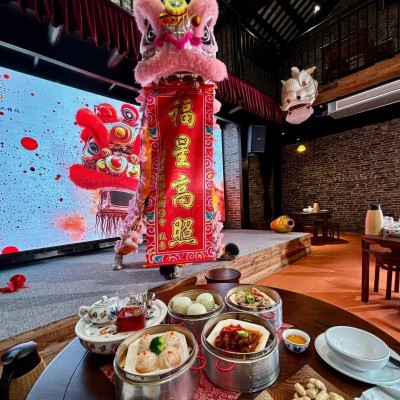
What makes it different from Western spa culture? In the West, spa visits are typically brief, clinical, and expensive — a 60-minute massage booked weeks in advance. In China, the bathhouse is a social space where families spend entire days. You eat, you nap, you play mahjong, you soak, you repeat. It's communal, affordable, and woven into the rhythm of daily life rather than reserved for special occasions.
In 2026, this cultural gap is exactly what international travelers find so captivating. Over 17 Russian tourists visited Zhangjiajie's Wulingyuan district in May 2026 specifically to experience TCM therapies including acupuncture, tuina massage, and fire dragon cupping — proof that Chinese wellness is becoming a travel motivation in its own right.
---
Inside a Chinese Bathhouse: What First-Timers Really Experience
If you've never set foot in a Chinese bathhouse, the experience can feel overwhelming in the best possible way. Here's a step-by-step walkthrough based on what international visitors actually encounter.
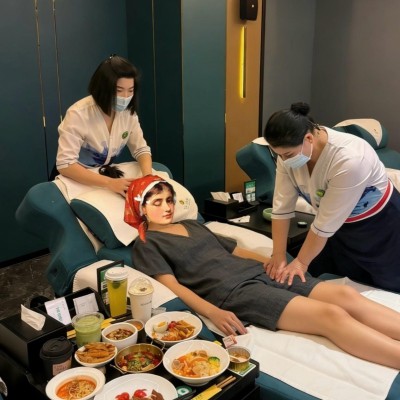
Step 1: Check-in and shoe exchange. Upon arrival, you'll hand over your shoes in exchange for a numbered wristband or electronic tag. This tag tracks all your purchases — food, drinks, treatments — so you settle everything at the end. No need to carry a wallet inside.Step 2: The changing room. Separate facilities for men and women. You'll be given a set of cotton pajamas or a robe. Complete nudity is standard in the wet areas (soaking pools, steam rooms, saunas), while the dry leisure areas require your provided attire.Step 3: The soaking area. This is the heart of the experience. Most bathhouses offer multiple pools at different temperatures — typically ranging from 35°C (95°F) to 45°C (113°F). Many include herbal pools infused with mugwort, szechuan lovage, or ginger. Start with the warmest pool you can comfortably tolerate, soak for 10–15 minutes, then cool down in a milder pool or the resting area.Step 4: The scrub. This is where many first-timers have their most memorable (and slightly intimidating) moment. A trained attendant will give you a full-body exfoliating scrub on a wet table. The "gray rolls" of dead skin that come off are considered a badge of honor — it means the treatment worked. The scrub typically costs 80–150 RMB (roughly 11–21 USD) and takes 20–30 minutes. It's vigorous, effective, and leaves your skin smoother than any product you've ever bought.Step 5: The leisure zone. After soaking and scrubbing, you'll enter a vast common area with restaurants, fruit stations, juice bars, relaxation loungers, entertainment rooms, and often outdoor terraces. This is where families and friends spend hours — reading, snacking, getting additional treatments, or simply dozing off. The 24-hour format means you can arrive in the evening, enjoy a full night of soaking and resting, and leave refreshed the next morning.What it costs. A full day at a Chinese bathhouse typically runs 200–400 RMB (28–55 USD) including entry, food, and basic treatments. Premium locations in Beijing, Shanghai, and Guangzhou may charge more, but even the most upscale venues rarely exceed 600 RMB (83 USD) for a complete experience. Compare that to a single 60-minute massage in New York or London, and the value proposition becomes obvious.
---
TCM Herbal Soaks and Meridian Massage: The Healing Core
The bathhouse is the fun, social entry point. But for travelers seeking genuine therapeutic benefit, the deeper layer of China Spa culture lies in its TCM treatments — specifically herbal soaks and meridian-based bodywork.
Herbal soaks (药浴, yàoyù). These are not your standard aromatherapy baths. TCM herbal soaks use concentrated decoctions of medicinal herbs chosen for specific conditions. Common formulas include:
| Herb | Purpose | Best For | |------|---------|----------| | Mugwort (艾草) | Warms meridians, dispels cold | Winter visits, joint pain | | Safflower (红花) | Promotes blood circulation | Muscle recovery, bruising | | Ginger (生姜) | Drives out cold, warms stomach | Digestive issues, cold extremities | | Honeysuckle (金银花) | Clears heat, reduces inflammation | Summer soaks, skin conditions | | Szechuan lovage (川芎) | Activates blood, relieves pain | Headaches, menstrual discomfort |
At dedicated TCM wellness centers in Guangzhou and Beijing, practitioners will assess your constitution before recommending a specific herbal formula. The soak itself lasts 20–30 minutes in water heated to 40–42°C. You'll typically feel a deep warmth radiating from your core afterward — this is the herbs "entering the meridians," as TCM practitioners describe it.
Meridian massage (经络按摩, jīngluò ànmó). Unlike Swedish or Thai massage, meridian massage targets the body's 12 primary meridian channels — the same energy pathways used in acupuncture. The therapist uses thumb pressure, elbow pressure, and sometimes cupping tools to stimulate specific acupoints along these channels.
In May 2026, 20 international students from Anhui University of Chinese Medicine and Hefei University of Technology participated in a "winter disease, summer treatment" (冬病夏治) wellness event at the Anhui Acupuncture Hospital. They experienced acupoint patching, meridian stimulation, and herbal therapy firsthand — and their enthusiastic response was widely covered in Chinese media. This growing international interest validates what Chinese practitioners have known for centuries: these treatments work.
What to try as a traveler. If you only have time for one TCM treatment, make it a 60-minute meridian massage combined with a 30-minute herbal foot soak. The foot soak alone addresses dozens of acupoints connected to the liver, kidneys, and spleen. Most TCM spas in major cities charge 200–400 RMB for this combination.
---
China's Best Hot Spring Destinations for International Travelers
While bathhouses thrive in cities, China's hot spring resorts offer the full spa experience in stunning natural settings. Here are the top destinations that combine authentic wellness culture with traveler-friendly infrastructure.
Zhangjiajie, Hunan. Famous for the Avatar mountains, Zhangjiajie also sits atop rich geothermal reserves. Several hot spring resorts in the Wulingyuan area offer mineral-rich soaks with views of the sandstone pillars. The springs here contain fluoride, radon, and silicate — minerals valued in TCM for joint health and skin conditions. Many resorts offer TCM consultation alongside the hot spring experience, making this a two-in-one wellness and nature destination.Conghua, Guangdong. Just 80 km from Guangzhou, Conghua is China's original hot spring town. The springs here have been documented since the Qing Dynasty and are classified as radon-containing mineral springs — believed to benefit cardiovascular health and regulate the nervous system. Several resorts cater to international visitors with English-speaking staff and private soaking pools.Tengchong, Yunnan. In western Yunnan near the Myanmar border, Tengchong's volcanic geothermal field produces over 80 hot spring outlets. The most famous is the "Hot Sea" (热海), where boiling springs create dramatic steam columns. The mineral composition here is exceptionally rich, with sulfur, calcium, and magnesium content among the highest in China. Combine a soak with a visit to the ancient town for a full-day cultural and wellness experience.Lushan, Jiangxi. In May 2026, the China (Lushan) Xinglin Cultural Park opened as the country's first integrated "TCM culture + immersive performance + wellness experience" destination. Overseas media from seven ASEAN countries visited during its opening month. For travelers, this means you can experience TCM consultations, herbal soaks, and cultural performances all in one location — a uniquely Chinese approach to wellness tourism.Mount Emei, Sichuan. The hot springs at the foot of this sacred Buddhist mountain combine spiritual and physical wellness. After soaking in the 40°C mineral pools, many visitors take the cable car up to the Golden Summit for sunrise — a deeply meditative experience that pairs perfectly with the physical relaxation of the springs below.
---
Practical Tips: How to Enjoy China Spa Like a Local
First-timers often feel unsure about bathhouse etiquette. These practical guidelines will help you navigate confidently.
Book smart. In major cities, popular bathhouses can fill up on weekends. Weekday visits offer a more relaxed experience and sometimes discounted rates. Many venues accept walk-ins, but booking through WeChat or Dianping (China's Yelp equivalent) ensures availability.What to bring. Most bathhouses provide everything: towels, robes, toiletries, hair dryers, and even basic skincare products. You only need to bring yourself. Some travelers prefer to bring their own contact lens case and preferred skincare, but nothing else is required.The nudity factor. Yes, the wet areas are fully nude and gender-segregated. This is non-negotiable and completely normal in Chinese culture. Locals of all ages — from children to elderly grandparents — share these spaces without self-consciousness. If you feel uncomfortable, start with a private soaking room (available at most premium bathhouses) and gradually ease into the communal experience.Timing your visit. Arrive around 4–5 PM for the best experience. Soak first, enjoy dinner at the in-house restaurant, then relax in the leisure area. Many bathhouses offer overnight stays — you'll sleep on a recliner in the common area, wrapped in a warm blanket. It's not a hotel room, but it's surprisingly comfortable and costs a fraction of accommodation.Hydration is critical. Soaking in hot water dehydrates you faster than you'd expect. Chinese bathhouses provide unlimited drinking water, fruit, and herbal tea — take full advantage. Avoid alcohol during your soak; save the beer for after you've cooled down.Tipping. Tipping is not expected at Chinese bathhouses or spas. If a therapist provides exceptional service, a sincere "xièxie" (thank you) and a positive review on Dianping is more appreciated than cash.Language tips. In major cities, staff at premium bathhouses may speak some English. But downloading a translation app (Baidu Translate or Google Translate with offline Chinese) will smooth over any communication gaps. Key phrases: "yàoyù" (herbal soak), "cuībèi" (body scrub), "ànmó" (massage), and "pàowēnquán" (hot spring soak).
---
Plan Your China Wellness Adventure
China Spa culture is more than a trending hashtag — it's a genuine wellness tradition that has sustained communities for over two millennia. From the 24-hour bathhouses of Beijing and Shanghai to the volcanic hot springs of Yunnan and the newly opened TCM cultural parks of Jiangxi, the opportunities for authentic, transformative experiences are extraordinary.
Whether you want to spend a full day soaking and snacking at a city bathhouse, or design a week-long wellness itinerary combining TCM consultations, herbal soaks, and hot spring resorts across multiple provinces, our team can make it happen.
📧 Contact Sam for Customized Tours
📧 Contact Luppy for Group Bookings
🌐 https://www.chinatravelplus.com
More Than Travel. It's the Plus That Matters.