
Unattended Luggage Wall: China's Safety Phenomenon 2026
Key Takeaways
For International Travelers:
- China ranks 88th globally in the 2025 Global Peace Index with a score of 2.093, demonstrating a high level of societal safety
- The "unattended luggage wall" phenomenon appeared in multiple cities during May Day 2026, showing remarkable public safety
- At least 7 major cities offer free or low-cost luggage storage at metro stations, including Changsha, Wuhan, and Nanchang
- Travelers can safely store luggage at designated areas with real-time monitoring and police patrolling
- Safety is the top consideration for international travelers choosing destinations, and China's city security offers strong assurance
Content Outline
- The Phenomenon: What is the "Unattended Luggage Wall"?
- Real Stories from Cities Across China
- Behind the Scenes: What Makes This Possible?
- Practical Guide: Where Can You Store Luggage?
- Why Safety Matters for International Travelers
- Plan Your Safe China Adventure
The Phenomenon: What is the "Unattended Luggage Wall"?
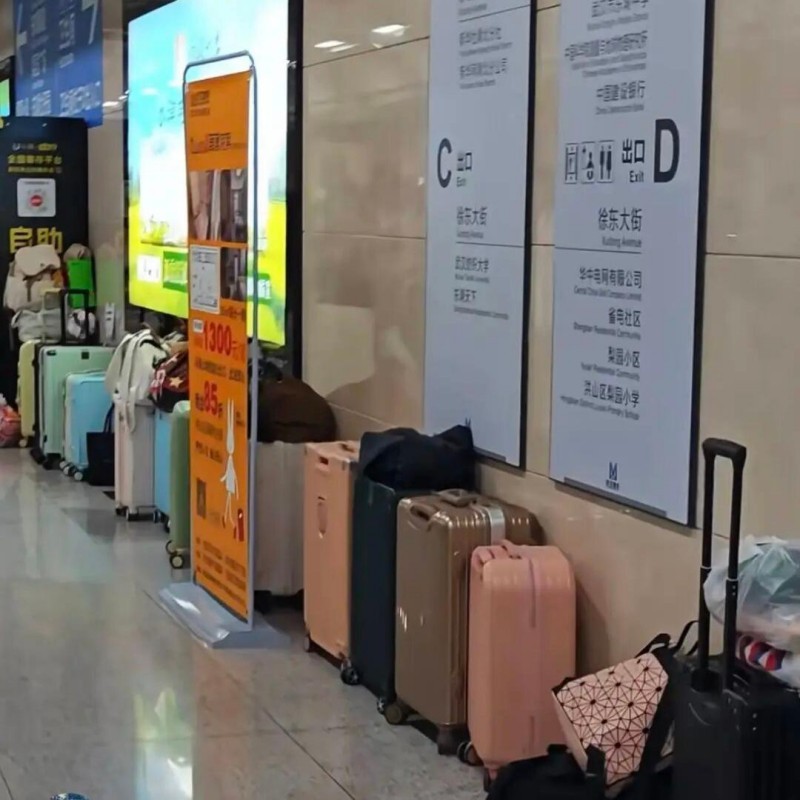
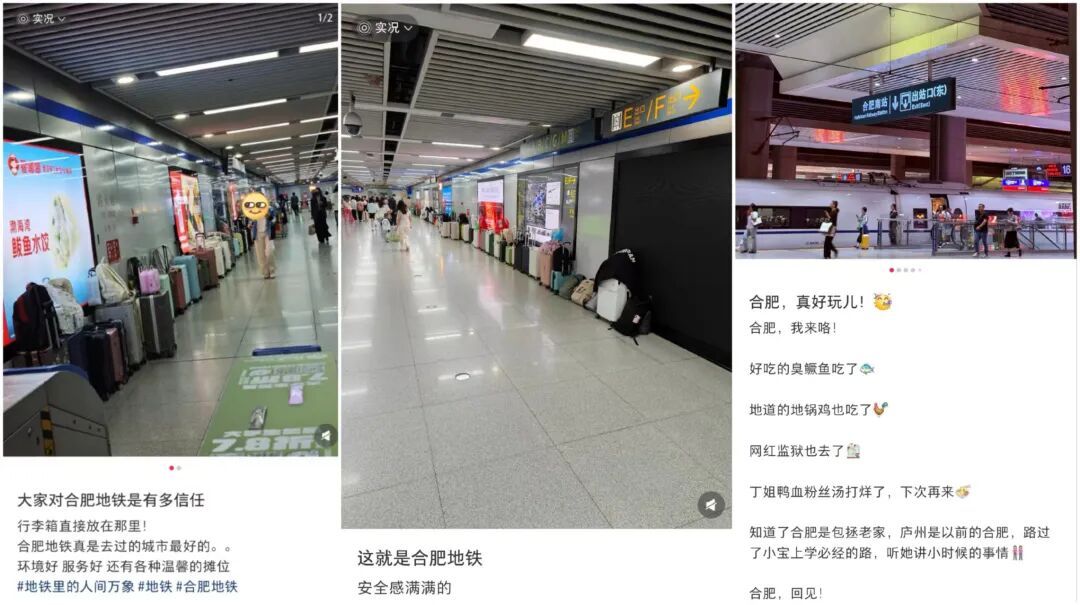
During the May Day 2026 holiday, a remarkable phenomenon captured attention across Chinese social media: hundreds of luggage boxes lined up against subway station walls, completely unattended yet perfectly safe.
This "unattended luggage wall" emerged spontaneously in major cities including Wuhan, Changsha, Hefei, Nanchang, and Fuzhou. Travelers arriving by train or plane would place their luggage neatly along station walls before heading out to explore the city. No guards. No locks. No payment. Yet throughout the entire holiday period, there were virtually no incidents of theft or disorder.
The sight became a viral sensation on platforms like Xiaohongshu (Little Red Book), with millions of views and comments. One traveler posted: "Leaving my luggage here like this, I know I've come to the right place." Another commented: "This is what true city safety looks like."
But this isn't just about luggage. It's about trust – between strangers, between citizens and visitors, and between people and the city itself.
Real Stories from Cities Across China
Wuhan, Hubei Province
At Lihuan Station on Metro Line 8, near the entrance to East Lake Greenway, over 200 luggage boxes were lined up daily during the May Day holiday peak hours from 12 PM to 5 PM. The first group of four young travelers arrived at 6:29 AM on May 3rd, found the storage lockers full, and simply placed their luggage against the wall – starting the trend that day.
Station staff didn't prohibit this practice. Instead, they organized the scattered luggage into neat rows against walls that wouldn't block pedestrian flow. Station managers and patrol officers maintained regular surveillance. If anyone took the wrong luggage or lost theirs, staff resolved the issue within hours.
Changsha, Hunan Province
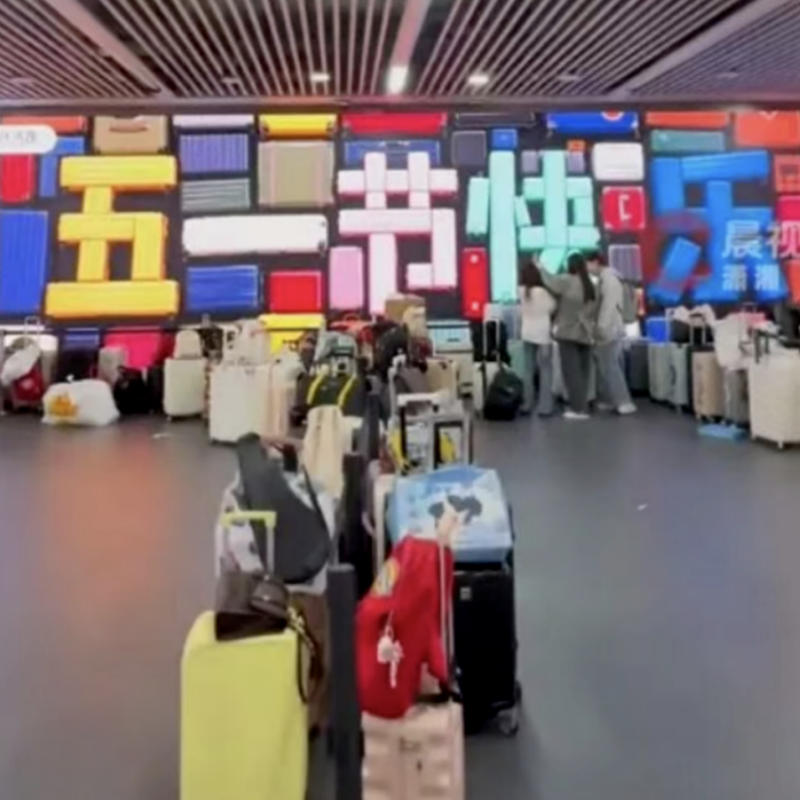
Wuyi Square Station recorded over 320,000 passenger trips on both April 30th and May 1st alone. The "luggage wall" first gained online attention during last year's May Day holiday. In response to its popularity, the local government transformed this spontaneous arrangement into an organized volunteer service.
The government allocated a dedicated 200-square-meter area, removed unused equipment, installed protective barriers, set up comprehensive monitoring coverage, and arranged for regular police presence. Each bag was tagged with a numbered wristband and a "luggage passport" for identification. This official endorsement turned a temporary phenomenon into a permanent service.
Nanchang, Jiangxi Province
Nanchang took a different approach: comprehensive smart storage lockers at 51 stations across Metro Lines 1, 2, 3, and 4. The system covers three major railway hubs and popular attractions including Tengwang Pavilion, Wanshou Palace, and Bayi Square. Travelers need a 20 RMB deposit to use these lockers, which is refundable upon retrieval.
Hefei, Anhui Province
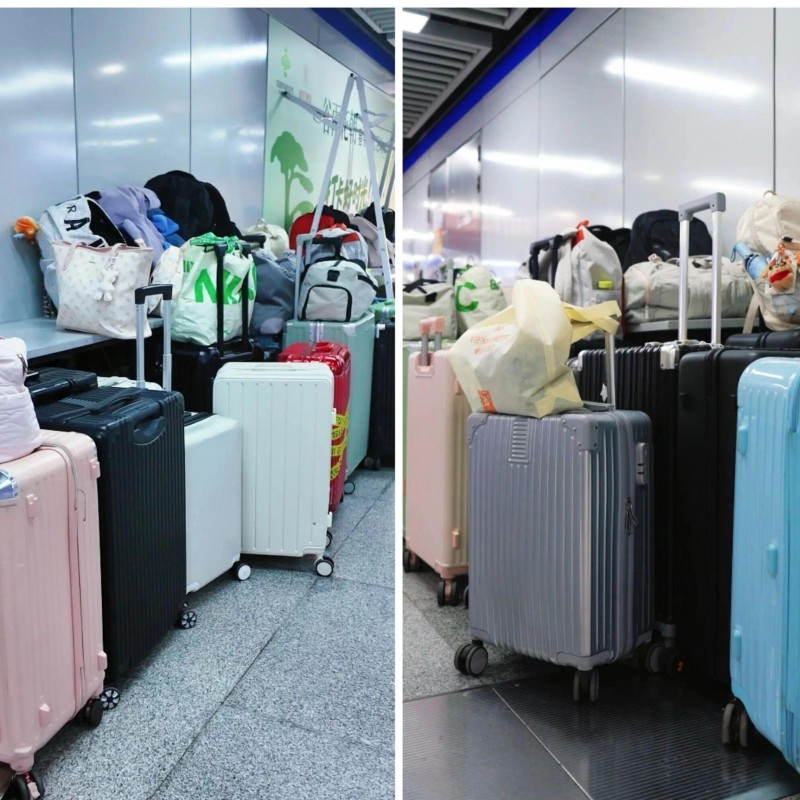
At stations like Sanli'an and Sipailou, volunteers organized luggage storage without building any new facilities. When locker capacity was full, volunteers guided travelers to place luggage in designated areas along walls, ensuring clear passage. This "zero-cost" approach relied entirely on social trust and minimal organizational intervention.
Fuzhou, Fujian Province
Similar to Wuhan and Changsha, Fuzhou's metro stations also saw the emergence of unattended luggage areas during the holiday period, demonstrating this as a nationwide trend rather than an isolated incident.
Shenzhen, Guangdong Province
Shenzhen Metro expanded its luggage storage service across 55 stations on 13 lines, installing 70 self-service locker units. Major transport hubs including Shenzhen North Railway Station, Airport Station, and central transit hubs like Futian and Luohu now offer convenient storage options for short-term visitors and cross-border travelers moving between Shenzhen and Hong Kong.
Pricing is reasonable: small lockers cost 2 RMB per hour, medium lockers 4 RMB, and large lockers 5 RMB, with a 24-hour cap at 30 RMB. This provides a more structured alternative to the free unattended areas.
Hangzhou, Zhejiang Province
Hangzhou introduced a "Relaxed Travel" luggage storage pilot program at stations near scenic spots and transport hubs. The system offers three locker sizes and charges 2-5 RMB per hour depending on size, with the first 30 minutes free. This represents another tier of service – free unattended areas for short stops and paid lockers for longer-term needs.
Behind the Scenes: What Makes This Possible?
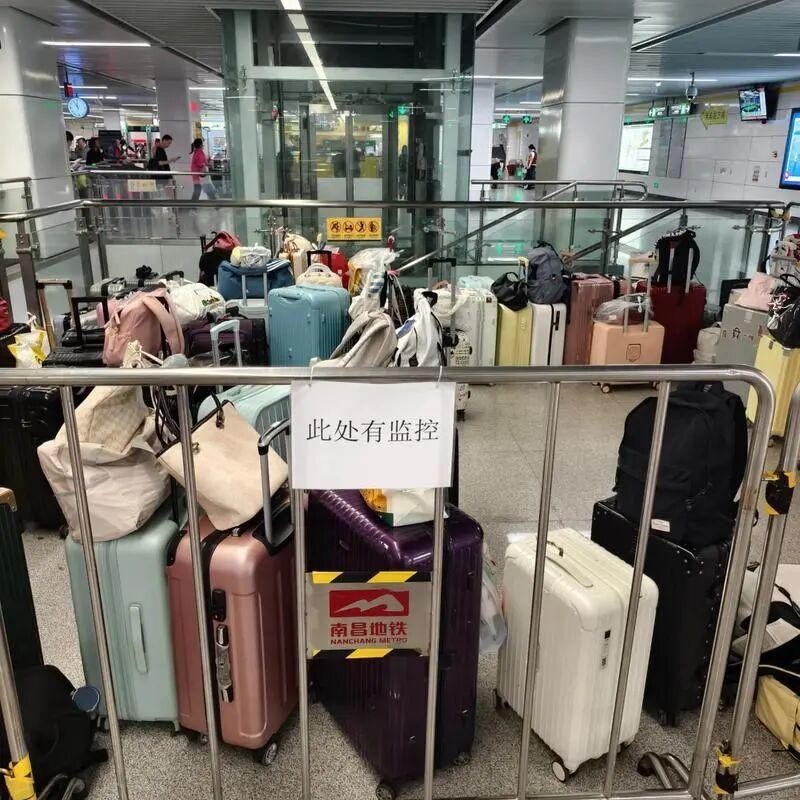
The "unattended luggage wall" phenomenon works because of three interconnected factors:
1. Strong Societal Safety and Security
According to the 2025 Global Peace Index (GPI) published by the Institute for Economics and Peace, China ranks 88th out of 163 countries worldwide with a score of 2.093. This places China in the "high state of peace" category, alongside countries like Italy (66th), France (67th), and the United Kingdom (27th).
The GPI measures peacefulness across three domains: the level of societal safety and security; the extent of ongoing domestic and international conflict; and the degree of militarization. China's strong performance in societal safety and security specifically underpins the luggage wall phenomenon.
2. Effective Urban Governance and Social Trust
What appears to be "unattended" is actually "unobtrusively monitored." In Changsha, authorities designated 200 square meters specifically for luggage storage, installed protective barriers, comprehensive monitoring, and regular police patrols. In Wuhan, station staff and police maintained order through regular patrols. In Hefei, volunteers actively organized luggage and provided guidance.
This combination of low-profile management and high-profile service creates what sociologists call "social trust" – the confidence that strangers will follow social norms and that institutions will maintain order.
3. Citizen Awareness and Mutual Respect
Travelers self-organized into neat lines, ensuring they didn't block walkways, fire exits, or ticket machines. They took only what space they needed. This collective behavior reflects both civic consciousness and mutual respect. As one netizen commented: "Trust and understanding – this is what makes a city truly welcoming."
The phenomenon represents what urban management experts call "soft governance" – achieving public order through social norms rather than coercive measures. It's more efficient and more sustainable than traditional top-down control.
Practical Guide: Where Can You Store Luggage?
For international travelers visiting China, here's what you need to know about luggage storage options:
Free Unattended Storage Areas
Available in: Wuhan, Changsha, Hefei, Fuzhou, and several other cities during peak travel periods
How it works:
- Arrive at designated metro stations during high-traffic periods (typically 12 PM-5 PM during holidays)
- Look for luggage already lined up against walls – this indicates an unofficial but accepted storage area
- Place your luggage neatly against the wall in an orderly fashion
- Avoid blocking walkways, fire exits, or ticket machines
- Keep valuable items with you (cash, electronics, passports)
- Return before station closing time (usually around 10:30-11:00 PM)
Pros: Free, extremely convenient, quick access
Cons: No formal responsibility, limited to certain stations and peak periods, not suitable for valuable items
Paid Smart Storage Lockers
Available in: Nanchang (51 stations), Shenzhen (55 stations on 13 lines), Hangzhou (selected stations), Shanghai (32 stations)
Pricing examples:
- Shenzhen: 2-5 RMB/hour, 30 RMB daily cap
- Hangzhou: 2-5 RMB/hour, first 30 minutes free
- Nanchang: 20 RMB deposit (refundable)
How to use:
- Scan QR code on locker (WeChat/Alipay)
- Select locker size and duration
- Complete payment (usually via mobile payment)
- Store luggage and keep the access code
- Retrieve before station closing
Locker sizes:
- Small: backpacks, documents, small items
- Medium: 20-21 inch suitcases
- Large: 28 inch suitcases
Pros: Secure, formal service, available year-round, suitable for valuable items
Cons: Costs money, may require deposit, limited availability during peak periods
Volunteer-Managed Service
Available in: Changsha (Wuyi Square and other major stations)
How it works:
- Volunteers provide free storage with numbered wristbands
- Each bag receives a "luggage passport" for identification
- Service available during holiday periods
Pros: Free but organized, good security, volunteer assistance
Cons: Limited to holiday periods, specific stations only
General Tips
- Timing Matters: During peak travel periods (May Day, National Day, Spring Festival), storage demand is highest. Arrive early in the day (before 10 AM) for better availability.
- Plan Ahead: If you have valuable items or need long-term storage, use paid lockers. For short stops (2-4 hours), free areas work well.
- Keep Essentials: Always carry passports, cash, electronics, and medications with you. Never store these in any luggage facility.
- Check Station Hours: Most metro stations close between 10:30-11:00 PM. Retrieve luggage before closing time.
- Use Trusted Apps: For paid lockers, use the designated WeChat/Alipay mini-programs (e.g., "Xiaotie" for Shanghai, "Xiaotie" or "Fengchao" for Shenzhen).
- Ask for Help: Station staff can direct you to storage options. Don't hesitate to ask for assistance.
Why Safety Matters for International Travelers
Safety is consistently ranked as the #1 consideration for international travelers when choosing destinations. A 2024 travel industry survey found that 87% of travelers from Europe and North America cite "personal safety" as their primary concern when considering travel to unfamiliar countries.
The "unattended luggage wall" phenomenon in China sends a powerful message to international visitors: this is a country where you can let your guard down and truly relax. It's visible, tangible proof of the everyday safety that statistics capture but travelers often can't see.
For first-time visitors to China, especially those from countries with different cultural norms around public safety, this visible demonstration of social order provides immediate reassurance. It transforms abstract concepts like "safe travel" into concrete experiences.
Business travelers also benefit from this environment. The ability to move freely through cities without constant concern for personal security translates to greater productivity and more authentic engagement with local culture.
The economic impact is significant as well. Cities perceived as safer attract more tourists, longer stays, and higher spending. The "luggage wall" phenomenon, which went viral on social media, served as free marketing for Chinese cities, showcasing their welcoming environments to potential international visitors.
Plan Your Safe China Adventure
Ready to experience China's remarkable safety culture for yourself? The "unattended luggage wall" is just one example of the welcoming environment that awaits international visitors. From the bustling streets of Shanghai to the ancient lanes of Xi'an, from the tropical beaches of Hainan to the karst mountains of Guilin, China offers endless opportunities for exploration in an environment where you can truly relax and focus on the journey.
Our expert travel specialists can help you design the perfect itinerary that balances must-see attractions with authentic local experiences, all while ensuring your comfort and safety throughout your trip.