From Sightseeing to Immersion: How 'Chinamaxxing' Is Rewriting Inbound Travel
From Sightseeing to Immersion: How 'Chinamaxxing' Is Rewriting Inbound Travel
On May 10, TikTok travel blogger Christian Grossi posted a video about his China trip. He did not point his camera at the Great Wall or the Forbidden City. Instead, he filmed himself at a rural guesthouse in Guilin—mountains and water in the background, a cup of unexpectedly good coffee in hand. That single video earned nearly 20,000 likes within 24 hours.
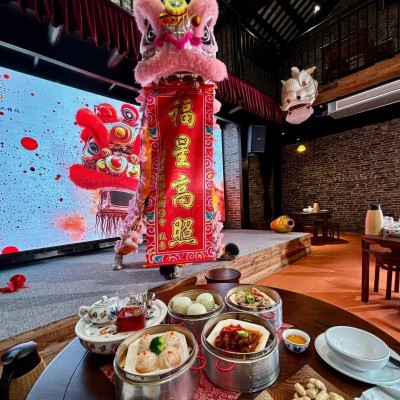
Grossi is not alone. A search for "China Travel" on TikTok now returns over 380,000 videos, and the fastest-growing content is not about landmarks—it is about everyday life. High-speed rail rides, street-side QR-code ordering, night market energy, county-town guesthouses, a cup of bubble tea, a hotpot dinner, a mobile payment. These are the new frames through which foreign visitors are re-understanding China.
The Shift: From "See China" to "Live China"
The shift has a name. On April 23, European Council on Foreign Relations policy researcher Alicja Bachulska published a report labeling the phenomenon "Chinamaxxing"—the viral social media trend in which Western users embrace and showcase Chinese daily lifestyle practices, from drinking hot water to practicing tai chi, as "attractive, interesting, and aspirational."
On April 16, New York University professor Yuan Shaoyu explained the trend's persuasive power to the Associated Press: it is not top-down propaganda but a form of "everyday appeal." Chinese culture and "Chineseness," he noted, are "becoming familiar, repeatable, and globally consumable in daily life."
The shift is visible in the data. National Immigration Administration figures show 1.26 million foreign entries and exits during the May Day holiday (+12.5% YoY), with visa-free entries up 14.7%. But the more revealing metric is behavioral: Australian travel agency head Simon Bell told the Brisbane Times before May Day that "Australians increasingly want to experience China in depth—they are realizing that traveling to China is not just about checking off landmarks, but about gaining deeper, more meaningful travel experiences."
What "Inbound 2.0" Looks Like on the Ground
The "Inbound Tourism 2.0" label, used by Chinese state media including China News Service and China Youth Daily on May 13, captures three concurrent shifts:
| Dimension | Inbound 1.0 | Inbound 2.0 |
|---|---|---|
| Traveler mindset | "I want to see what China looks like" | "I want to experience China like a local" |
| Content on social media | Landmarks, panoramas, tourist sites | HSR rides, night markets, village guesthouses, mobile payments |
| Booking pattern | Group tours, fixed itineraries | Small-group customization, 2-8 person private tours |
| Decision driver | Destination reputation | Experience depth and authenticity |
| Repeat intention | "Saw it, done it" | "Want to come back and go deeper" |
The HBX Group's January 2026 Travel Trends Report confirms the structural shift: nearly 50% of travelers now choose destinations based on social media influence, and AI has evolved from an auxiliary tool into a full-journey travel assistant. When digital convenience meets immersive daily experience, Western stereotypes about China are dissolving in the most incidental ways.
The Digital Gap: Where the Story Gets Complicated
But the higher the inbound heat, the higher the expectations—and the harder the friction when reality falls short. The very digital tools that make China futuristic for residents can become the first barrier for foreign visitors who have not prepared.
The Wall Street Journal and Reuters have repeatedly flagged the "digital divide" as a core pain point for international tourists. For travelers who have not pre-loaded local apps and payment tools, landing in China can feel disorienting. Le Figaro reported in March that some visitors discover upon arrival that their "digital life" has essentially stopped working.
Hotel reception remains another flashpoint. Despite policy directives requiring hotels to accept foreign guests, "system doesn't support it" or "not qualified for foreign guests" still surface in practice. A Bloomberg commentary in April put it plainly: China has opened the door to attract foreign tourists, but making visitors "willing to come, able to come conveniently, and wanting to come back" still requires improvements in language services, international payments, hotel reception, platform usability, and tourism information transparency.
Why the Friction Is Actually a Positive Signal
These complaints, paradoxically, are a sign of progress. They arise precisely because more foreign visitors are coming, going deeper, and expecting more. When inbound tourism was small-scale and surface-level, the gaps were invisible. Now that visitors are living like locals, every rough edge gets noticed—and reported.
The ECFR's "Chinamaxxing" framework captures this duality: the everyday-ization of Chinese culture is what draws visitors in, but the everyday-ization of their experience is what determines whether they return. The gap between aspiration and infrastructure is the space where the next wave of inbound innovation will happen.
As China's Ministry of Foreign Affairs spokesperson Lin Jian said on May 6: "China's door of opening up will only open wider. The prosperity of 'Mobile China' crosses national borders and will inevitably bring more vitality and positive expectations to the global economy."
The question for the tourism industry is no longer whether foreign visitors will come—it is whether China can make their everyday experience seamless enough that "Chinamaxxing" becomes not just a social media trend, but a sustainable travel movement.
---
📧 Contact Sam for Customized Tours